
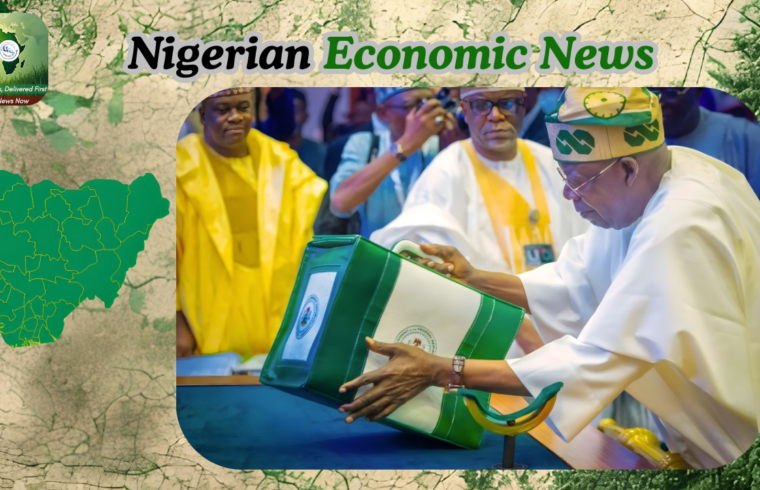
An in-depth review of Nigeria’s 2026 budget reveals that at least ₦3.50 trillion has been allocated to new projects, defying explicit federal directives that Ministries, Departments, and Agencies (MDAs) should prioritize completing ongoing initiatives.
The Federal Government had instructed that 70 percent of 2025 capital allocations be carried over into 2026, discouraging the creation of fresh projects amid revenue shortfalls. Nevertheless, the 2026 Appropriation Bill shows that MDAs introduced over 400 new project lines, including multibillion-naira infrastructure schemes, health initiatives, vocational training programs, and constituency-focused interventions like boreholes and equipment purchases.
Service-Wide Votes Dominate New Allocations
Of the total ₦3.5 trillion in fresh projects, Service-Wide Votes account for ₦2.66 trillion. The largest single allocation—₦1.70 trillion—targets outstanding contractors’ liabilities from 2024, comprising nearly half of all new spending. Other significant allocations include three N100 billion entries for the Nigeria Development Finance Corporation, Economic Transformation Finance Programme, and Nigeria Growth Investment Fund. Smaller but notable provisions cover INFRACO capitalisation (₦20 billion), DSS special operations (₦30 billion), and ₦110.31 billion for the Nigerian Air Force’s helicopter obligations.
Additionally, ₦283.85 billion has been designated for presidential air fleet operations, including support for the National Forest Guard.
MDAs Leading in New Project Spending
The Budget Office of the Federation tops the list with ₦375 billion allocated for a multilateral/bilateral loan under the Power Sector Recovery Operation, accounting for nearly 45 percent of MDA-level new projects. The Federal Ministry of Transport follows with ₦210.53 billion for consultancy on rail projects and construction of six national bus terminals.
Other allocations include:
- National Library of Nigeria: ₦24 billion for nationwide structural upgrades.
- National Blood Service Commission: ₦15 billion for a national center and state office renovations.
- Sokoto Rima River Basin Development Authority: ₦9.14 billion for solar mini-grids, irrigation pumps, rural roads, and youth empowerment.
- Vehicle acquisitions: ₦5.85 billion across MDAs including FUT Iyin Ekiti, FUADSI, and Jos University Teaching Hospital.
- Office furnishings: ₦2.93 billion.
- Renovations/refurbishments: ₦29.88 billion, largely for the National Library.
- Staff accommodation: ₦25.29 billion, including Defence HQ and DSS housing.
Historical Pattern of New Project Introductions
This is not the first instance of new projects bypassing federal instructions. In the 2025 budget, MDAs were similarly urged to limit fresh projects to those directly tied to ongoing work. Guidelines emphasized alignment with national priorities such as security, education, health, infrastructure, energy, agriculture, and social welfare, with focus on youth and women empowerment. However, enforcement has historically been weak, leading to recurring oversights.
Expert Commentary
Professor Adeola Adenikinju, National President of the Nigerian Economic Society, highlighted that the late submission of the 2026 budget hampers proper legislative scrutiny. “Rushed approvals limit ministries’ ability to defend proposals and create unpredictability in fiscal planning,” he warned.
Development economist Dr. Aliyu Ilias added that the persistent introduction of new projects may be systemic rather than accidental. “Government performance on budget discipline is unsatisfactory, and the legislature is tolerating inefficiencies that should not occur,” he noted. Dr. Ilias suggested that these lapses undermine both fiscal responsibility and long-term national planning.
Analysis: The pattern of introducing new projects despite explicit federal directives raises questions about budgetary discipline and oversight effectiveness. While the additional spending may target critical sectors, the disregard for carry-over mandates could jeopardize fiscal sustainability, complicate project completion, and weaken the predictability of Nigeria’s capital budgeting framework.
© 2025 Gossip News Now , a division of CHIEJOS HARBIAN DIGITAL MEDIA LTD. Contact us via admin@gossipnewsnow.online