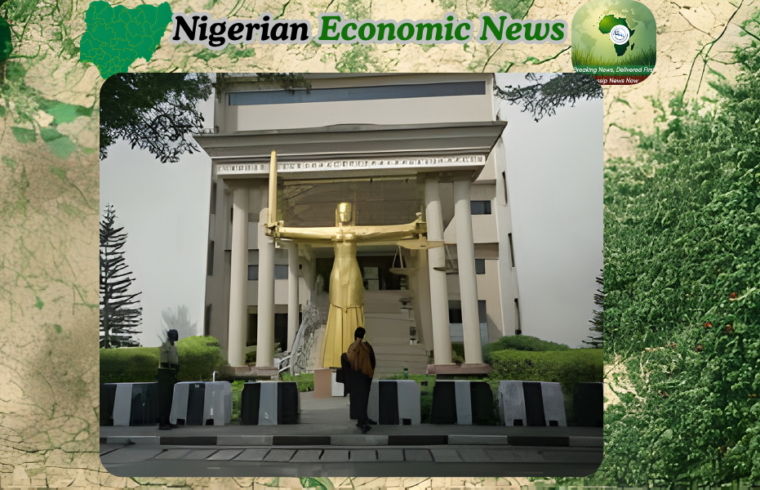
Tension surrounded proceedings at the Federal High Court in Abuja on Monday after journalists were prevented from witnessing a crucial hearing involving individuals accused of plotting to overthrow the government of Bola Tinubu.
The courtroom, presided over by Joyce Abdulmalik, was cleared of reporters shortly before the session began. Security personnel, including operatives of the Department of State Services (DSS), enforced the directive, leaving members of the press outside despite arriving early to cover the case.
Gossip News Now reports that officials attributed the restriction to instructions from the bench, although no immediate explanation was provided at the time. Journalists complied with the order and exited the premises, even as interest in the case continues to grow nationwide.
The matter centers on six defendants facing serious allegations tied to an alleged failed coup attempt. Among those in court are Mohammed Ibrahim Gana, Erasmus Victor, Ahmed Ibrahim, and Zekeri Umoru, alongside Bukar Goni and Abdulkadir Sani. The charges against them include treason, terrorism-related offences, and financial crimes, all of which they have denied.
Earlier, the court had ordered an expedited hearing schedule and directed that the accused remain in DSS custody pending the outcome of their bail applications. Monday’s sitting was expected to address those requests, making the exclusion of journalists particularly notable.
Adding another layer to the case, Timipre Sylva, a former governor of Bayelsa State, was referenced in several counts, though he has not been formally listed among the defendants. Reports indicate he is yet to be apprehended.
Investigations into the alleged plot have reportedly led to a wider crackdown, with dozens of suspects—both military personnel and civilians—taken into custody. A significant number of serving officers are already facing separate proceedings before a military tribunal in Abuja.
Concerns Over Transparency and Access
The decision to bar journalists has sparked renewed concerns about transparency in high-profile cases. Observers note that restricting media access, especially in matters of national importance, may raise questions about public accountability.
This is not the first time access has been limited in proceedings under Justice Abdulmalik. Similar restrictions have reportedly occurred in the past, sometimes linked to logistical issues such as courtroom capacity, though critics argue that such explanations may not fully address transparency concerns.
Analysis: Balancing Security and Open Justice
While national security considerations can justify certain courtroom restrictions, the consistent exclusion of the press risks undermining public trust in the judicial process. Open trials are widely regarded as a cornerstone of democratic systems, ensuring that justice is both done and seen to be done.
In cases involving allegations as serious as treason, maintaining this balance becomes even more critical. Authorities may need to provide clearer communication on such decisions to avoid speculation and reinforce confidence in the legal process.
© 2025 Gossip News Now, a division of CHIEJOS HARBIAN DIGITAL MEDIA LTD. Contact us via admin@gossipnewsnow.online