Nigeria’s news cycle opened on Friday with major developments spanning politics, governance, entertainment, sports, defence, and the economy. From fresh defections in the House of Representatives to policy shifts on fuel imports and reactions to controversial public comments, the day’s top stories reflect a country navigating power, pressure, and public debate on multiple fronts.
One of the biggest political stories came from the National Assembly, where the ruling All Progressives Congress further tightened its grip on the House of Representatives. Six lawmakers from opposition parties switched allegiance, giving the APC a stronger two-thirds majority in the lower chamber. The lawmakers who moved to the ruling party included representatives from Plateau, Imo, and Enugu states, with most of them previously elected on the platform of the Peoples Democratic Party, while one came from the Labour Party.
Their explanations, read during plenary by Speaker Abbas Tajudeen, centered on internal instability in their former parties. The defections pushed APC’s strength in the House to 242 seats, while the PDP’s number dropped further, highlighting the growing imbalance in legislative power and deepening concerns over the weakening opposition structure ahead of future political contests.
The PDP also found itself in the spotlight for another reason, as party elder Chief Bode George warned former Jigawa State Governor Sule Lamido that persistent disregard for party rules could attract disciplinary action, including possible expulsion. Lamido had earlier threatened legal steps after alleging that he was denied access to the nomination form for the party’s national chairmanship position. In response, George insisted that the PDP must remain governed by its constitution and internal procedures, making it clear that personal grievances cannot override party order.
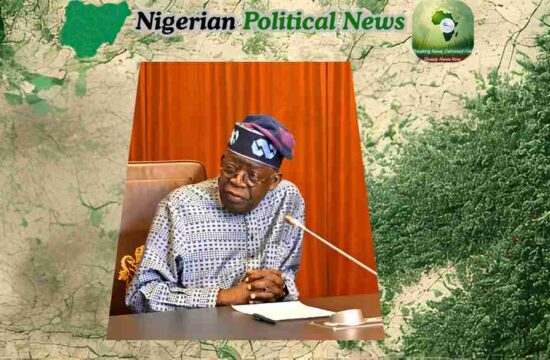
At the Presidency, attention shifted to President Bola Tinubu’s revised mercy decisions, with presidential spokesman Bayo Onanuga defending the partial reversal of an earlier pardon list. He argued that correcting an error is a mark of responsible leadership, not weakness. In his remarks, he explained that the treatment of some cases, including that of Maryam Sanda, was based on clemency considerations rather than outright pardon, with issues like remorse, rehabilitation, and humanitarian context taken into account.
The Presidency’s defence of the review also came with an institutional adjustment. The secretariat of the Presidential Advisory Committee on the Prerogative of Mercy has now been moved to the Ministry of Justice from the Ministry of Special Duties. That administrative change is being presented as an attempt to strengthen transparency and improve oversight in how future mercy-related decisions are processed.
In the economic space, a major policy shift emerged after President Tinubu approved a 15 percent import duty on petrol and diesel. The measure reportedly followed a request for adjustment in line with prevailing domestic market realities and is expected to affect imported fuel based on its cost, insurance, and freight value. One projected consequence of the policy is an increase in the pump price of petrol, estimated at nearly ₦100 per litre.
Beyond the immediate impact on prices, the directive also carries a broader energy strategy. Authorities have been instructed to favour locally refined petroleum products before approving fresh import licences, while periodic reviews of the tariff policy will determine whether it should remain, change, or be removed as domestic refining capacity improves. Reframed from the original arrangement, the government appears to be balancing revenue, market control, and local production priorities in one move.
Security matters also featured prominently as President Tinubu decorated newly appointed service chiefs and charged them to intensify efforts against threats facing the country. He told the officers that Nigerians are eager to see victory over forces undermining national peace and stability. The ceremony at the State House included top government officials and the spouses of the officers, reinforcing the symbolic importance attached to the leadership change in the armed forces.
The newly decorated military heads include General Olufemi Oluyede as Chief of Defence Staff, Lieutenant-General Wahidi Shaibu as Chief of Army Staff, Air Marshal Kennedy Aneke as Chief of Air Staff, and Vice Admiral Idi Abbas as Chief of Naval Staff. In a related development, former Senate Leader Ali Ndume urged the new defence leadership to push aggressively for improved welfare, better salaries, and stronger funding for troops, arguing that morale and remuneration remain central to military effectiveness.
According to Gossip News Now, Ndume also called for the military budget to be placed on first-line charge status, saying Nigeria’s pay structure for personnel compares poorly with what obtains in some other West African countries. His argument was that a better-funded and better-motivated force would be in a stronger position to tackle insurgency, banditry, and related security challenges.
Outside politics and defence, a viral sermon by Abuja-based cleric Pastor Femi Lazarus triggered heated reactions online after remarks he made about menstruation and women’s mood changes. Actress Yvonne Jegede strongly objected to the comments, saying men should be careful about speaking dismissively on experiences they do not personally understand. Her response added to the widespread criticism from Nigerians who viewed the remarks as insensitive to women’s health realities.
In the religious entertainment space, gospel singer Nathaniel Bassey revealed that he has often been criticised for refusing to monetise the immensely popular Hallelujah Challenge on YouTube. He explained during a live session that he believes the worship programme is a divine assignment rather than a commercial platform, despite speculation that it could have generated enormous advertising income. He also lamented that some people have created fake pages to rebroadcast the programme for profit.
European football and transfer conversations also made the headlines. Real Madrid and the promoters of the European Super League are reportedly seeking more than $4 billion in damages from UEFA, arguing that the football governing body used its dominance to frustrate the breakaway competition. The legal fight has gained momentum after a Madrid court rejected UEFA’s appeal, adding another layer to a dispute that has continued since the failed launch of the Super League in 2021.
In another football-related update, transfer expert Fabrizio Romano dismissed reports linking Victor Osimhen to Barcelona. Despite the striker’s impressive form in Turkey and ongoing speculation about Barcelona’s long-term attacking plans, Romano said there are currently no talks between the player and the Spanish side. He maintained that although Barcelona are thinking ahead in their striker search, Osimhen remains focused on Galatasaray for now.
Commentary and Analysis
Today’s major stories show how quickly power can shift in Nigerian public life. The APC’s expanding dominance in the House points to a political environment where the opposition is struggling to maintain cohesion, while internal wrangling within parties such as the PDP continues to weaken alternative centres of influence. If the pattern continues, legislative opposition may become even less effective in checking executive power.
At the same time, the fuel import duty decision highlights the difficult balancing act facing the federal government. Policies designed to protect local refining and improve market structure may still impose short-term pain on consumers already burdened by inflation and high living costs. That tension between reform and hardship remains one of the defining economic themes in the country.
The day’s security and welfare discussions also underline a recurring national reality: military appointments alone do not guarantee better outcomes unless they are matched with improved support systems, credible strategy, and sustained funding. Meanwhile, the public reactions to Pastor Femi Lazarus and Nathaniel Bassey’s comments show that cultural, religious, and social debates continue to shape online discourse just as much as politics and policy.
From the National Assembly to the entertainment world and from fuel policy to military reform, Friday’s headlines capture a Nigeria where nearly every sector is experiencing pressure, transition, or public scrutiny. That combination is exactly why daily headline roundups remain essential for readers trying to make sense of the country’s rapidly changing landscape.
© 2025 Gossip News Now, a division of CHIEJOS HARBIAN DIGITAL MEDIA LTD. Contact us via admin@gossipnewsnow.online