

Nigeria woke up on Sunday, November 2, 2025, to a mix of political tension, international controversy, party realignments, human rights developments, entertainment updates, and sports drama. From fresh reactions to the United States’ latest stance on Nigeria to deepening cracks inside the Peoples Democratic Party, the day’s headlines reflect a country navigating difficult debates at home and abroad.
One of the biggest talking points remains the international reaction to insecurity in Nigeria. Fresh criticism followed reports that the United States classified Nigeria as a country of particular concern over alleged religious persecution. Several prominent Nigerian voices pushed back strongly against that position, arguing that the violence ravaging parts of the country affects citizens across both major faiths. According to Gossip News Now, former presidential aide Hakeem Baba-Ahmed warned that foreign powers may be exploiting religion as a tool to weaken national unity and stir fresh divisions.
Baba-Ahmed argued that killings and insecurity in Nigeria cannot honestly be reduced to a simple Muslim-versus-Christian narrative. In his view, communities of different ethnic and religious backgrounds have all suffered from criminal violence, banditry, and conflict. He also suggested that powerful foreign actors may be uncomfortable with the rise of strong African countries blessed with natural resources, pointing to a broader geopolitical calculation behind the pressure.
Another northern voice, Islamic cleric Ahmad Gumi, also dismissed the genocide narrative, insisting that the issue is political and not a religious war. He said attempts to brand Nigeria as hostile to Christians are linked to a wider political agenda ahead of the 2027 elections. Gumi accused some local and foreign interests of using the situation to deepen mistrust, while also alleging that certain humanitarian structures may be masking more troubling activities in conflict zones.
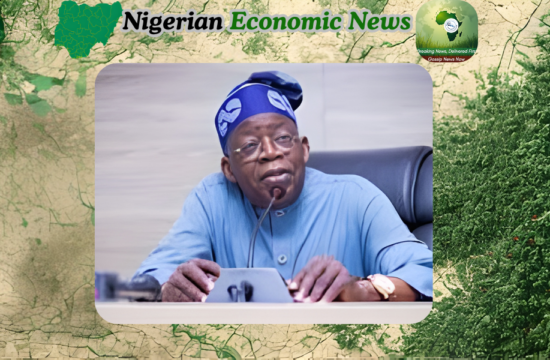
Meanwhile, President Bola Tinubu moved quickly to reject the American claim. In his response, he maintained that Nigeria remains a constitutional democracy where citizens are guaranteed the freedom to worship as they choose. The President stressed that his government has consistently engaged religious leaders across divides since taking office and said portraying Nigeria as a state that encourages persecution misrepresents the country’s legal framework and national values.
The debate around the U.S. designation drew further reaction from the camp of detained IPOB leader Nnamdi Kanu. His lawyer, Aloy Ejimakor, said the development did not come as a surprise, arguing that the Nigerian state has created the conditions for such foreign criticism by dealing harshly with peaceful agitators while allegedly showing tolerance toward violent actors. He tied the issue to his own recent experience during protests calling for Kanu’s release, using it as an example of what he sees as troubling double standards.
Away from the diplomatic storm, the political map in Kaduna recorded a major shift after Senator Sunday Katung officially dumped the Peoples Democratic Party for the All Progressives Congress. He described the decision as difficult but necessary, saying it followed wide consultation with his supporters, family, political allies, and constituents. Katung explained that his goal is to position Kaduna South for stronger development and better access to top-level decision-making.
The senator said he was motivated by the possibility of building productive ties with the presidency and the Kaduna State Government for the benefit of his district. He also revealed that some lawmakers from the area moved with him, presenting the development as evidence of the APC’s expanding strength in Kaduna South. His message framed the defection less as personal ambition and more as a strategic move for inclusion and regional progress.
In Abia State, another political controversy emerged after former Information Commissioner Eze Chikamnayo accused Governor Alex Otti of withholding local government funds. During a television appearance, Chikamnayo alleged that the administration had weakened grassroots governance by centralizing money meant for the councils. He argued that local governments were being left unable to function effectively or pursue meaningful development at the community level.
He also denied claims that tensions between Governor Otti and Deputy Speaker Benjamin Kalu stem from personal rivalry. Instead, he said the real issue is the demand for openness in how state resources are managed. The comments add to a growing atmosphere of scrutiny around governance and accountability in the state.
Inside the PDP, the crisis tearing through the opposition party worsened dramatically. A faction aligned with the Minister of the Federal Capital Territory, Nyesom Wike, announced the suspension of Acting National Chairman Umar Damagum and several members of the National Working Committee. The move came just after Damagum’s leadership had taken disciplinary action against other party figures, showing how the struggle for control has entered a more confrontational phase.
The Wike-backed bloc went further by naming a replacement to take over the acting chairmanship, adding another layer of uncertainty to an already unstable party structure. What was once an internal disagreement has now grown into a full-scale leadership battle with serious implications for the PDP’s future ahead of the next electoral cycle.
Beyond politics, the Federal Government praised Ghanaian authorities after a Nigerian trafficking kingpin, Chukwudi Nwachukwu, was convicted and sentenced to ten years in prison with hard labour. The case followed the rescue of ten Nigerian teenage girls who had reportedly been trafficked to Ghana and forced into prostitution. The successful prosecution was made possible through cooperation involving Nigerian and Ghanaian institutions, including diplomatic officials, diaspora groups, and security agencies.
Authorities also secured financial restitution for the victims, with the court ordering compensation payments to each of them. The rescued girls have since been brought back to Nigeria and handed over to the National Agency for the Prohibition of Trafficking in Persons before reuniting with their families. The case stands out as a rare example of cross-border anti-trafficking collaboration producing a clear judicial outcome.
In the entertainment industry, veteran Nollywood actress Peju Ogunmola publicly addressed the death of her only son, Ayomikun, after weeks of mourning. The family had earlier battled online speculation over the circumstances surrounding his passing, but a spokesperson clarified that he died after a brief illness and was buried in Ibadan. Reports suggesting accidental causes were dismissed as false.
Now gradually returning to public life, the actress shared a heartfelt message expressing gratitude for the support she received during the painful period. She described the past months as deeply heavy but said the prayers, condolences, and love shown to her family gave her strength. Her message also confirmed that she is preparing to return to acting, marking an emotional but determined new chapter after personal tragedy.
The family has not been alone in grief. Many respected Nollywood names visited the home of Peju Ogunmola and her husband, veteran actor Sunday Omobolanle, to offer support and condolences. Their presence reflected the level of affection and respect the couple commands in the Yoruba film industry.
Outside Nigeria, Chelsea defender Wesley Fofana also made headlines after escaping a jail term despite being convicted over dangerous driving. The footballer admitted to another serious road offence, adding to a long list of driving-related violations already attached to his name. The court instead ordered him to perform 300 hours of unpaid work and extended his driving ban, meaning he will remain off the road until May 2027.
Prosecutors relied on dashcam footage that reportedly showed the player speeding dangerously, weaving through traffic, and misusing the hard shoulder. The judge criticized his actions sharply, reminding him that many young people admire public figures like him and could be influenced by such behaviour. The case once again raises questions about athlete responsibility and public conduct beyond the pitch.
Why These Stories Matter
Taken together, today’s headlines reveal a nation pulled in several directions at once. On one hand, Nigeria is facing renewed international scrutiny over security and religious freedom. On the other, local actors are fiercely debating whether those concerns reflect reality or are being weaponized for political ends. That argument is likely to remain central in both domestic politics and foreign relations in the months ahead.
The day’s stories also show how political instability is not limited to one region or party. From defections in Kaduna to accusations in Abia and factional battles in the PDP, the competition for power is intensifying well before the next major national election season. These developments suggest that alliances are being redrawn earlier than many expected.
At the same time, the conviction of a trafficking suspect in Ghana provided a rare moment of institutional success, while Peju Ogunmola’s return to public life offered a more human story of resilience in the midst of loss. In sports, Wesley Fofana’s case served as a reminder that celebrity status does not erase public accountability.
Nigeria’s headline cycle today is therefore more than a list of events. It is a portrait of a country wrestling with image, power, justice, grief, and public trust all at once.
© 2025 Gossip News Now, a division of CHIEJOS HARBIAN DIGITAL MEDIA LTD. Contact us via admin@gossipnewsnow.online