Electoral Watch
As Nigeria prepares for another electoral cycle, fresh debate has emerged over who should bear responsibility for ensuring credible elections.
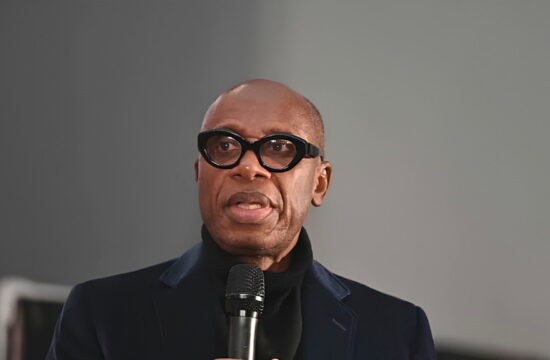
Speaking at the convocation ceremony of Adeleke University in Osun State, businessman and education advocate Deji Adeleke argued that expecting the Chairman of the Independent National Electoral Commission (INEC) to single-handedly prevent election malpractice ignores the realities of how elections are conducted across thousands of polling units nationwide.
Political Snapshot
Key Highlights
- Deji Adeleke says election credibility depends on more than the INEC Chairman.
- He alleges that some polling officials and security personnel contribute to electoral malpractice.
- Osun State’s 3,763 polling units were cited as an example of the difficulty of direct supervision.
- He urged every stakeholder to protect the integrity of Nigeria’s electoral process.
- Adeleke also warned that election violence continues to undermine democratic development.
Election Brief
According to Adeleke, the credibility of any election is ultimately determined at the polling-unit level rather than at the headquarters of the electoral commission.
While the INEC Chairman provides national oversight, the actual voting, collation and transmission of results are handled by thousands of officials deployed across the country.
For that reason, he argued that public criticism should extend beyond institutional leadership and examine the conduct of everyone entrusted with election responsibilities.
Grassroots Challenge
Adeleke claimed that electoral malpractice often begins where votes are cast.
He alleged that some election officials assigned to polling units, alongside certain security personnel, compromise the democratic process by accepting inducements to manipulate results.
Using the forthcoming Osun State governorship election as an illustration, he noted that supervising 3,763 polling units simultaneously would be practically impossible for any INEC Chairman.
His argument was that the integrity of elections depends largely on the honesty and professionalism of officials working closest to voters.
Governance Perspective
Beyond concerns over result manipulation, Adeleke raised broader issues affecting Nigeria’s democratic system.
He expressed concern over recurring election-related violence, describing the loss of lives during political contests as unacceptable in any democratic society.
According to him, peaceful elections remain essential for strengthening public confidence and ensuring long-term national stability.
National Significance
The remarks draw attention to one of Nigeria’s enduring governance challenges—how to guarantee free, fair and transparent elections across thousands of polling locations.
If confidence in polling officials weakens, public trust in electoral outcomes and democratic institutions may also decline.
The discussion therefore extends beyond one election or one electoral commission, touching on the broader credibility of Nigeria’s democratic process.
Constitutional Perspective
Adeleke’s comments reinforce an argument frequently raised by election observers: institutional leadership alone cannot guarantee credible elections.
Effective electoral administration also depends on proper recruitment, training, monitoring and accountability for ad hoc officials, security agencies and other personnel directly involved in voting operations.
His position suggests that meaningful electoral reform should address weaknesses across the entire election management structure rather than focusing solely on the commission’s leadership.
Timeline of Events
| Development | Details |
|---|---|
| Public Address | Convocation ceremony at Adeleke University |
| Core Argument | Election integrity requires collective responsibility |
| Main Concern | Polling-unit manipulation and inducement |
| Example Used | Osun State’s 3,763 polling units |
| Reform Proposal | Greater accountability for all election stakeholders |
The Next Phase
As preparations continue for future elections, discussions around electoral reform are expected to remain central to Nigeria’s political landscape.
Debates over election management, polling-unit accountability, security deployment and judicial oversight are likely to intensify ahead of major polls, particularly in states preparing for governorship elections.
Public Debate
The discussion has raised important questions about the future of Nigeria’s democracy.
- Should greater responsibility for election credibility rest with polling officials rather than national leadership?
- Would stricter monitoring of election personnel reduce electoral malpractice?
- What reforms would most improve public confidence in Nigeria’s elections?
Share your perspective and contribute to the national conversation on strengthening democratic institutions.
Closing Perspective
Deji Adeleke’s remarks shift attention from personalities to the broader structure of election administration.
Whether or not Nigerians agree with his assessment, the debate underscores a fundamental point: credible elections depend on every institution and individual entrusted with protecting the ballot. As future elections approach, sustained attention to accountability, transparency and professionalism at every level will remain critical to strengthening Nigeria’s democracy.
© 2025 Gossip News Now, a division of CHIEJOS HARBIAN DIGITAL MEDIA LTD. Contact us via admin@gossipnewsnow.online.