Public Scrutiny Shifts to Candidates’ Educational Records
Nigeria’s 2027 presidential race has taken an unexpected turn as attention moves beyond campaign promises to the personal records submitted by candidates seeking the country’s highest office.
The latest controversy erupted after Arise Television presenter Rufai Oseni questioned why some presidential hopefuls were unable to provide details relating to their primary school education in official nomination documents released by the Independent National Electoral Commission (INEC).
Rather than focusing on political manifestos, the conversation has now centred on transparency and the level of disclosure expected from those aspiring to lead the nation.
A Social Media Comment That Triggered National Attention
The debate gathered pace on Sunday when Oseni published a brief but pointed message on Facebook after reviewing documents made public by INEC.
“People that can’t tell you their primary school want to be your president, and Nigerians will vote them.”
Although the statement contained only a single sentence, it immediately redirected public attention to the educational records contained in the nomination papers of presidential candidates.
The broadcaster’s comment has since become one of the most discussed reactions following INEC’s publication of the documents.
Why the Documents Are Being Examined
The nomination papers released by INEC include personal particulars required under Nigeria’s electoral process.
Among the information submitted are candidates’ educational qualifications, academic history and sworn affidavits accompanying their nomination.
Because these records are open for public inspection, political observers, legal practitioners and ordinary citizens have begun comparing the information supplied by various candidates.
That comparison is what fuelled the latest controversy.
The Different Educational Records Drawing Attention
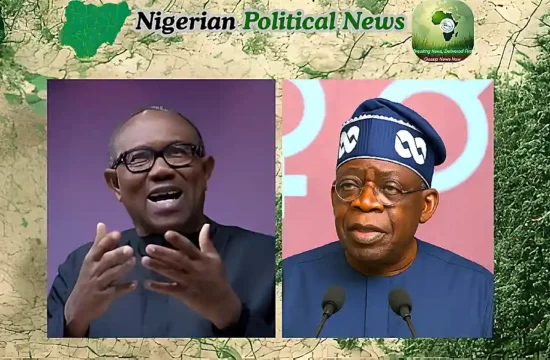
A review of documents attributed to President Bola Tinubu, the presidential candidate of the All Progressives Congress (APC), shows that he listed a Bachelor of Science degree obtained from Chicago State University among his educational qualifications.
However, the sections requesting the years of his primary and secondary school education reportedly contained the entry “0000.”
Those entries immediately generated questions from political commentators and members of the public seeking clarification.
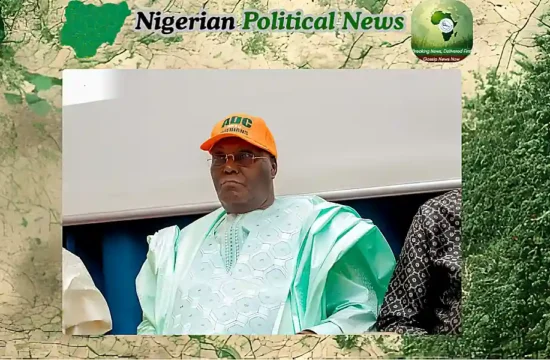
By contrast, nomination papers reportedly submitted by Peter Obi, representing the Nigeria Democratic Congress (NDC), and Atiku Abubakar of the African Democratic Congress (ADC) included educational histories tracing back to their primary school education.
The difference in the information supplied has become the central issue driving public discussion.
Transparency Becomes the Bigger Political Conversation
While Oseni did not accuse any candidate of wrongdoing, his remarks reinforced a broader argument that anyone seeking Nigeria’s presidency should be prepared for detailed public examination.
Supporters of that position believe nomination documents should provide voters with sufficient information to assess candidates before elections.
Others maintain that the decisive issue is whether candidates satisfy the constitutional and legal requirements for contesting the presidency, rather than the amount of historical detail contained in the forms.
The contrasting viewpoints have kept the discussion active across political circles and social media.
INEC’s Role Ends With Publication
INEC has explained that displaying nomination papers forms part of the statutory electoral process.
The commission’s responsibility is to publish the documents submitted by candidates within the period prescribed by law, allowing members of the public to inspect their contents.
The publication itself does not amount to verification of every declaration made by candidates, but creates an opportunity for public scrutiny under the Electoral Act.
What the Law Provides
Nigeria’s Electoral Act gives citizens a legal pathway where questions arise over information contained in nomination documents.
Anyone who believes a candidate submitted false information in a sworn affidavit may approach a competent court to challenge that declaration.
Consequently, any dispute over information contained in the published nomination papers ultimately falls within the jurisdiction of the courts rather than the court of public opinion.
Beyond Politics: Why This Debate Matters
Educational records have repeatedly surfaced as issues during Nigerian election cycles because they touch on credibility, transparency and public confidence in candidates seeking national leadership.
For many voters, complete disclosure strengthens trust in the electoral process.
For others, constitutional qualification remains the more important legal test.
The latest debate illustrates how nomination documents have become more than administrative paperwork—they are increasingly viewed as public records that invite scrutiny from journalists, political stakeholders and citizens alike.
As campaigns gather momentum ahead of the 2027 presidential election, discussions surrounding official disclosures are likely to remain an important part of the political conversation.
Key Points
- Rufai Oseni questioned omissions relating to primary school education in some presidential nomination documents.
- His remarks followed INEC’s publication of candidates’ personal particulars for the 2027 election.
- Documents attributed to President Bola Tinubu reportedly showed “0000” in sections requesting primary and secondary school years.
- Peter Obi and Atiku Abubakar reportedly listed educational histories dating back to their primary school education.
- The Electoral Act allows individuals to challenge allegedly false declarations in court.
© 2025 Gossip News Now, a division of CHIEJOS HARBIAN DIGITAL MEDIA LTD.
Contact us via admin@gossipnewsnow.online