Timeline Lead
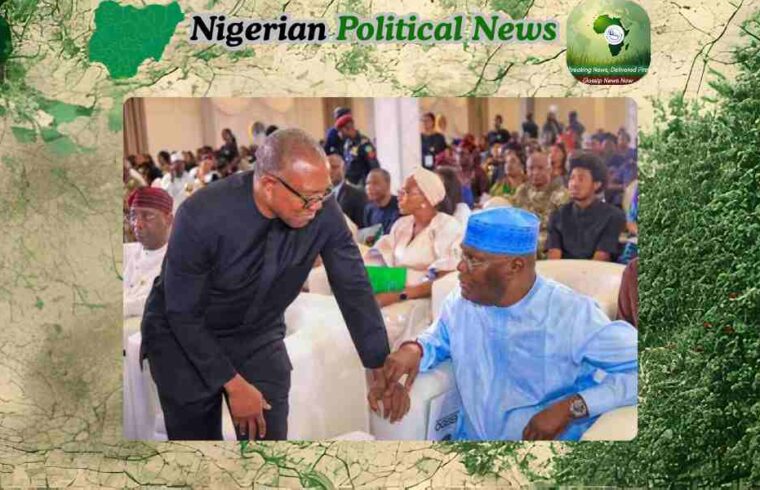
The push for Nigeria’s opposition parties to unite behind a single presidential candidate ahead of the 2027 election has met resistance from the camps of Atiku Abubakar and Peter Obi, even as both sides remain open to broader cooperation among opposition forces.
The proposal, championed by the G-100 political pressure group, seeks to prevent votes from being divided among several candidates opposed to President Bola Tinubu and the ruling All Progressives Congress (APC).
But while the proposal has generated discussions about opposition unity, the camps of Atiku and Obi have maintained that defeating the APC does not necessarily require every opposition party to surrender its presidential ambition and rally behind one candidate.
Executive Summary
- The G-100 is advocating for opposition parties to support a single presidential candidate in the 2027 election.
- Atiku Abubakar’s camp says it has moved beyond prolonged discussions about bringing opposition politicians together for a summit.
- Atiku’s camp maintains that he has already presented his policy alternatives to Nigerians and will allow voters to decide in 2027.
- Peter Obi’s camp also rejects the argument that all opposition parties must adopt one presidential candidate to defeat the APC.
- The NDC, however, says Obi would be its preferred choice if opposition parties eventually agree on a consensus presidential ticket.
- The debate highlights a strategic question for the opposition: whether cooperation requires a single candidate or can take place while parties retain separate presidential contenders.
Key Players
Atiku Abubakar
The former Vice President and presidential candidate of the African Democratic Congress (ADC) is one of the major opposition figures being discussed in connection with efforts to build a broader political alliance ahead of 2027.
His camp, through his Senior Special Assistant on Public Communication, Phrank Shaibu, said Atiku was no longer interested in prolonged discussions about bringing opposition politicians together for a summit.
Peter Obi
The former Anambra State governor and presidential candidate of the Nigeria Democratic Congress (NDC) is another major figure in the opposition discussions.
Obi contested the 2023 presidential election under the Labour Party (LP) before moving to the NDC as opposition parties began exploring ways of working together ahead of 2027.
G-100
The political pressure group, convened by former Director-General of the Progressive Governors Forum Salihu Lukman, has been advocating greater opposition unity.
Its argument is that opposition parties could improve their chances against the APC by avoiding a situation where several presidential candidates divide the opposition vote.
Phrank Shaibu
Shaibu, Atiku’s Senior Special Assistant on Public Communication, communicated the ADC candidate’s position on the proposal.
Osa Director
Director, the National Publicity Secretary of the NDC, explained the party’s position on whether opposition parties must unite behind a single presidential candidate.
Stakeholder Positions
Atiku Camp: The Conversation Has Moved On
Atiku’s camp has signalled that it does not intend to remain engaged in prolonged discussions over a proposed opposition summit.
Shaibu said Atiku had already presented his policy proposals to Nigerians and would leave the final decision to the electorate in 2027.
He said:
“We have moved beyond this conversation.”
According to Shaibu, Atiku had already placed his policy alternatives before Nigerians, including his position on petroleum subsidy if elected.
He also urged voters to examine the programmes of the various presidential contenders before deciding who should lead the country.
Shaibu further argued that Atiku remained an opposition politician with the experience and preparedness required to take over the country’s leadership.
Obi’s Camp: One Candidate Is Not the Only Route
The NDC has also rejected the argument that opposition parties must all adopt one presidential candidate before they can defeat the APC.
The party’s National Publicity Secretary, Osa Director, said the NDC welcomed efforts to promote cooperation among opposition parties but did not believe that every opposition party had to collapse its presidential ambition into a single platform.
Director pointed to the 2015 presidential election as an example of how an incumbent could be defeated in a multi-party system without every opposition party becoming one political platform.
He argued that the opposition should not approach the 2027 election from the assumption that the APC could only be defeated if all opposition parties came together behind one candidate.
NDC’s Preferred Consensus Candidate
Although the NDC does not regard a single opposition candidate as the only path to victory, Director disclosed that the party already had a preferred candidate if opposition parties eventually agreed to a consensus presidential ticket.
He identified Peter Obi as the NDC’s preferred choice.
According to Director, the party believes the opposition should select what it considers the strongest candidate if a coalition eventually decides to adopt a single presidential candidate.
Key Quotes
The competing positions are captured in two statements from the camps.
On Atiku’s position, Shaibu said:
“We have moved beyond this conversation.”
The NDC, meanwhile, made clear that while it does not believe a single candidate is mandatory, it would support Obi if a consensus arrangement emerges.
Director said:
“We in the NDC believe that Peter Obi is the best if he is allowed to lead the coalition.”
The two positions illustrate the distinction between supporting opposition cooperation and agreeing that all opposition parties must nominate one presidential candidate.
Story in Context
The debate is unfolding as political groups begin considering how opposition parties could approach the 2027 presidential contest.
The G-100’s proposal is based on the concern that several opposition presidential candidates could divide votes among themselves, potentially making it easier for the ruling APC to retain power.
A single-candidate arrangement would seek to consolidate opposition support around one contender.
However, the positions expressed by the Atiku and Obi camps show that opposition cooperation does not necessarily mean that all parties agree on how such cooperation should be structured.
Atiku’s camp is presenting his policy proposals and political experience as the basis on which voters should assess his candidacy, while the NDC maintains that opposition parties can compete in a multi-party environment without automatically merging behind one candidate.
Comparative Perspective: The 2015 Election
The NDC has invoked the 2015 presidential election to support its argument that an incumbent can be defeated without every opposition party presenting a single candidate.
According to Director, political parties and groups that formed alliances around the APC at the time were able to defeat then-President Goodluck Jonathan without the entire opposition field being reduced to one political organisation.
The comparison is being used by the NDC to challenge the assumption that a single opposition presidential candidate is necessarily the only formula capable of defeating an incumbent.
However, the 2015 example is being presented in this story as the NDC’s political argument for its current position, rather than as proof that the same electoral circumstances will automatically apply to 2027.
Strategic Assessment
The disagreement presents the opposition with a strategic choice ahead of the 2027 election.
One approach is to attempt to consolidate opposition support around a single presidential candidate in order to reduce the possibility of votes being divided among several contenders.
The alternative is to allow multiple opposition candidates to contest while seeking cooperation or alliances in other areas.
The first approach could provide a clearer single challenger to the ruling party, but it would require competing political camps to agree on which candidate should step aside and which candidate should receive the collective backing.
The second approach would allow parties and candidates to maintain their individual political identities and presidential ambitions, but it would leave voters with several opposition choices.
The positions of Atiku’s and Obi’s camps show that this question remains unresolved.
There is also a further complication: even if opposition parties agree in principle to a consensus arrangement, they would still have to determine how the consensus candidate should be selected.
That question becomes particularly significant because the NDC has already indicated that it believes Obi should lead such an arrangement.
Political Implications
The disagreement could become an important issue in opposition politics as the 2027 election approaches.
The G-100’s campaign places emphasis on consolidation, arguing that opposition parties stand a better chance if they prevent their supporters from being divided among several presidential candidates.
Atiku’s position, as communicated by his camp, places greater emphasis on presenting his policy alternatives and allowing Nigerians to choose among competing candidates.
The NDC’s position occupies another point in the debate: the party supports cooperation but does not accept that opposition parties must all unite behind one candidate to defeat the APC.
At the same time, its willingness to identify Obi as its preferred consensus candidate shows that the possibility of a single-ticket arrangement has not been completely removed from the political discussion.
The central issue, therefore, is not simply whether opposition parties will cooperate, but what form that cooperation will ultimately take.
Key Questions for Readers
As the opposition debate continues, several questions remain relevant ahead of 2027:
- Can opposition parties defeat an incumbent without presenting a single presidential candidate?
- Would a single opposition candidate reduce vote splitting enough to make a significant electoral difference?
- If a consensus candidate becomes necessary, how should opposition parties determine who leads the arrangement?
- Can parties with different presidential ambitions cooperate effectively without merging their candidacies?
- If the opposition eventually agrees on one candidate, will all major camps accept the outcome?
What’s Next?
The G-100 is continuing to argue that opposition parties would be better positioned against the APC if they rally behind a single presidential candidate.
For now, however, the positions expressed by the Atiku and Obi camps indicate that no such consensus has been reached.
Atiku’s camp says it has moved beyond prolonged discussions over an opposition summit, while the NDC maintains that defeating the APC does not require all opposition parties to adopt one candidate.
At the same time, the NDC’s declaration that it would prefer Peter Obi to lead any eventual consensus arrangement leaves open the possibility of further negotiations.
The major question ahead is therefore whether opposition parties will eventually find common ground on cooperation, candidate selection and the structure of any coalition before the 2027 presidential contest.
The answer could shape how the opposition approaches one of Nigeria’s most closely watched political contests.