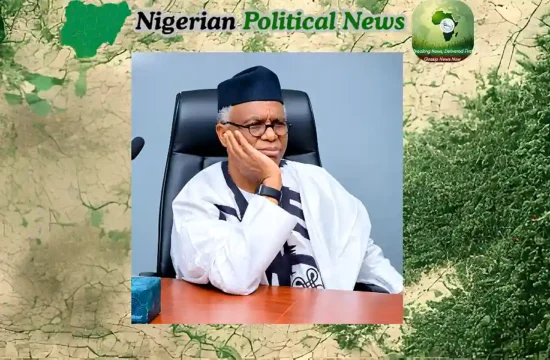
A former North-West National Vice Chairman of the African Democratic Congress (ADC), Jafar Ibrahim Sani, has urged Northern elders and political leaders to ensure that due process is followed in the trial of former Kaduna State governor, Nasir El-Rufai.
Sani also called on political stakeholders within the ADC to put aside their differences and support what he described as a fair and just process in the former governor’s case.
Sani’s Appeal To Northern Leaders
The ADC chieftain made the appeal in a statement titled “El-Rufai, The North, Our Elders and the Test of Loyalty.”
In the statement, Sani argued that the situation surrounding El-Rufai should prompt broader reflection on the political culture being developed for future generations.
He urged Northern elders, political stakeholders and leaders not to allow political disagreements to override the principles of fairness and due process.
According to Sani, whatever differences political actors may have with El-Rufai should not prevent them from supporting a process that allows the law and the courts to determine the outcome of his case.
Who Is Involved In The Appeal?
Sani is the political figure making the appeal and is presenting the matter as both a question of justice and a test of political loyalty.
El-Rufai, the former Kaduna State governor, is at the centre of the situation referenced in Sani’s statement.
The appeal is directed particularly at Northern elders, political leaders and stakeholders, while Sani also called on members of the ADC to set aside their differences over the matter.
The supplied report does not contain responses from the Northern elders, El-Rufai or other political stakeholders addressed by Sani.
The Question Of Political Loyalty
Beyond the immediate issue involving El-Rufai, Sani used the situation to criticise what he sees as a changing culture of political loyalty.
He lamented that some political actors appear willing to remain close to associates when there are benefits to be gained but become less supportive when those associates encounter difficulties.
Sani argued that adversity is precisely the period when loyalty should be tested.
“It is therefore concerning to see limited support from some who once stood closest to him. Adversity is precisely when loyalty matters most,” he said.
His argument was not that political leaders must agree with everything El-Rufai has done, but that political differences should not be allowed to undermine fairness in the legal process.
Why Sani Says The El-Rufai Case Matters
Sani said the situation should be viewed beyond individual political relationships.
For him, the response to El-Rufai’s situation could say something about the political culture being established for future generations.
His position is that political disagreements and personal relationships should not determine whether an individual receives due process.
Instead, he argued that justice should remain the foundation of the response.
That principle, according to Sani, should apply regardless of whether political stakeholders personally support or oppose El-Rufai.
A Call For Justice, Not Political Alignment
Sani further urged Northern elders and political leaders to ensure that the legal process is allowed to run its course.
He maintained that the appropriate outcome should ultimately be determined by the law and the courts.
“If justice is done, it should lead to whatever outcome the law and courts determine, including the lawful release of Mallam El-Rufai where appropriate,” he said.
The statement therefore presents Sani’s intervention primarily as an appeal for due process and fairness, rather than a demand for a predetermined political or judicial outcome.
His reference to El-Rufai’s possible release was specifically framed around what the law and courts may determine.
A Wider Regional Political Message
Sani’s appeal also places responsibility on Northern political leaders to consider how they respond to politically difficult situations involving prominent figures from the region.
His emphasis on loyalty suggests that the issue is not simply about El-Rufai personally, but about how political relationships are handled when circumstances change.
For Sani, standing by principles of fairness during adversity is an important measure of political loyalty.
The statement consequently combines a call for due process in El-Rufai’s case with a broader appeal for political stakeholders to reconsider how loyalty, disagreement and justice should coexist within Nigerian politics.
The Test Of Loyalty
At the centre of Sani’s message is the argument that political loyalty should not depend entirely on personal benefit.
His appeal to Northern elders and political leaders is that differences with El-Rufai should not become a reason to abandon fairness or due process.
While the supplied report does not provide responses from those addressed, Sani has clearly presented the situation as a test—not only of how political actors treat a former governor facing adversity, but also of the political values they want to pass on to future generations.
For him, justice should remain the determining principle, with the courts and the law ultimately deciding the outcome of El-Rufai’s case.