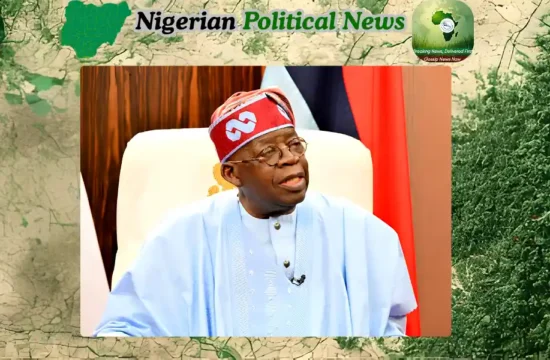
The political alliance linked to Nyesom Wike is creating fresh concerns within the All Progressives Congress (APC), with party figures reportedly worried that its strategy could weaken APC candidates even as the coalition maintains support for President Bola Tinubu’s 2027 re-election bid.
At the centre of the disagreement is a potentially unusual voting arrangement: supporters could back Tinubu for president while choosing candidates from other political platforms in legislative and state-level contests.
That possibility has reportedly unsettled some APC governors and party figures across several states.
The Political Tension Behind The Coalition
Wike, the Minister of the Federal Capital Territory and a prominent figure in the Peoples Democratic Party (PDP), has repeatedly maintained that the coalition is committed to helping Tinubu return to office in 2027.
The former Rivers State governor has also argued that criticism against him is largely connected to his decision to support the President.
But within APC circles, the concern is different.
Some party figures and individuals close to the governors reportedly believe that supporting Tinubu at the presidential level while backing candidates on other party platforms could produce conflicting voting patterns.
The issue has reportedly become particularly noticeable in Rivers, Kwara, Gombe and Cross River, among other states.
How The Coalition Could Create A Different Voting Pattern
The concern is not necessarily that coalition supporters would reject Tinubu.
Rather, APC figures fear that voters could support the President in the presidential election while voting for candidates outside the APC in contests for the National Assembly or other offices.
The coalition has reportedly fielded candidates under the PDP for National Assembly positions that will be contested alongside the 2027 presidential election.
For APC officials, that creates a potential problem.
A voter could support Tinubu on one ballot and then choose a coalition-backed opposition candidate on another.
Sources cited in the report also raised the possibility that such voting instructions could be communicated privately while public support for Tinubu remains unchanged.
They argued that the result could be a divided voting pattern capable of affecting APC candidates and, potentially, the President’s performance in some areas.
Wike Says His Priority Is Tinubu
Wike has rejected the suggestion that his political activities amount to an attempt to work against Tinubu.
Speaking during a media chat in Port Harcourt, Rivers State, he accused Hope Uzodimma, the Imo State governor and Chairman of the Progressives Governors Forum, and AbdulRahman AbdulRazaq, the Kwara State governor and Chairman of the Nigeria Governors’ Forum, of leading opposition against him.
Wike said:
“Take for example, Kwara, he has been the one championing this campaign against me everywhere. Yes, I have confronted him too. I don’t talk about what I cannot defend.”
He alleged that AbdulRazaq had accused him of supporting candidates who were opposed to the governor’s preferred choices in Kwara.
Wike’s argument is that his political involvement should instead be viewed through his stated support for Tinubu.
He said he had provided a political platform for aggrieved APC members who moved to the PDP, arguing that such individuals could otherwise have joined groups working against the President.
The FCT minister also recalled his disagreement with Uzodimma and said the Imo governor had previously failed to support him despite assistance he claimed to have offered.
Wike maintained that his priority remained the return of Tinubu to the presidency.
Why Kwara Has Become A Major Flashpoint
Kwara is one of the states where the competing political interests have become particularly visible.
The report links Wike’s political network with former Senate President Bukola Saraki, who is described as a political rival of Governor AbdulRazaq.
That relationship has raised questions within APC circles about how an alliance that says it supports Tinubu could simultaneously work with political figures whose interests may conflict with APC candidates at the state and legislative levels.
The Kwara dispute therefore reflects the broader issue confronting the coalition: presidential support does not automatically mean support for every candidate associated with the President’s party.
The Concern Extends Beyond Kwara
The reported disagreement is not limited to Kwara.
Sources cited in the report said similar political alignments were emerging in Gombe, Cross River, Zamfara and other states.
Cross River presents another example.
Elements associated with the PDP, Labour Party, the Obi movement and ADC supporters have reportedly formed an alliance aimed at challenging Governor Bassey Otu.
For some APC governors, developments of this nature raise the possibility that alliances built around opposition to particular APC candidates could influence voting patterns beyond the presidential contest.
The governors are therefore reportedly seeking intervention from the party leadership.
What Previous Elections Show
The concerns have also been linked to voting patterns witnessed in previous elections.
The report points to Oyo State during the 2023 election, where the PDP reportedly lost National Assembly seats despite controlling the state, while voters backed Tinubu’s presidential bid.
It also references the South-West in 2003, when supporters of then-President Olusegun Obasanjo backed his re-election while the Alliance for Democracy lost several governorship and National Assembly contests in the region.
Then-Lagos State Governor Bola Tinubu was reportedly among the prominent political figures who survived that broader voting trend.
These examples are being cited by APC figures to illustrate how presidential support and support for candidates of the same party can diverge during an election.
They do not, however, establish that the same pattern will necessarily occur in 2027.
Atiku And The Wider Opposition Realignment
The APC’s concern is also taking place against the backdrop of wider opposition realignment.
Atiku Abubakar, the presidential candidate of the African Democratic Congress, has continued to campaign for voters to support ADC candidates across different levels.
According to the report, his strategy is expected to place considerable emphasis on the North-West and North-East.
An APC source warned that Tinubu could become more vulnerable if the President fails to secure strong support in other regions.
“This will hurt Tinubu badly if he does not get maximum votes from North-Central and South-East,” the source said.
The statement reflects the strategic concern within the ruling party, although it is an assessment from an unnamed source rather than an established electoral outcome.
What APC Figures Are Watching
The central issue for APC governors is therefore not simply whether Wike supports Tinubu.
It is whether the coalition’s structure could produce different choices across different ballots.
If voters who support Tinubu choose coalition-backed candidates for legislative or state contests, APC candidates could face a different electoral environment from the one created by the presidential race.
That is why the reported political alignments in several states have attracted attention within the ruling party.
A source described the coalition as a threat to the President’s re-election prospects and called for the party leadership to respond quickly.
“The rainbow coalition poses more dangers to the president’s re-election and needs to be addressed urgently,” the source stated.
What Remains Uncertain
The reported concerns from APC governors and party sources do not by themselves establish how voters will behave in 2027.
Wike continues to maintain that his political position is aligned with Tinubu’s re-election, while APC figures are focused on the possibility that coalition candidates could compete directly against APC candidates in other contests.
The significance of the alliance will ultimately depend on how the various political groups organise their candidates, campaigns and voter mobilisation as the 2027 elections approach.
For now, the dispute exposes a broader strategic question for the APC: can support for Tinubu at the presidential level coexist with competing political alliances in state and legislative races without weakening the party’s wider electoral position?