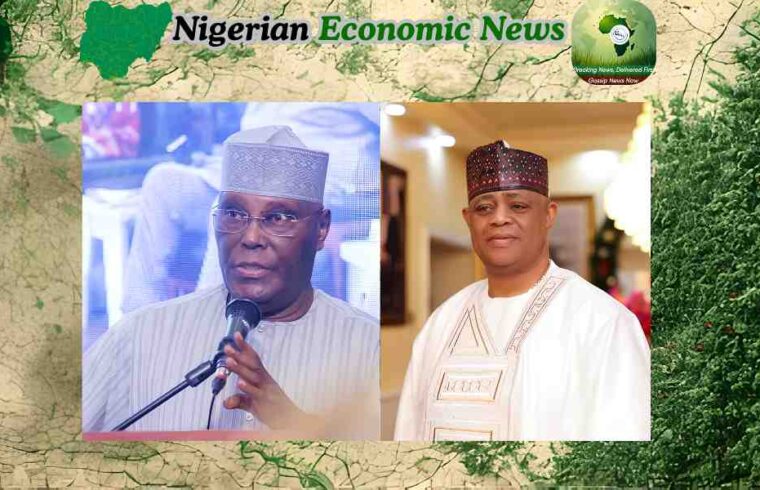
Nigeria’s Ambassador to South Africa, Femi Fani-Kayode, has criticised former Vice President Atiku Abubakar over his Independence Day address, particularly his repeated reference to President Bola Tinubu as “Bola” rather than by his presidential title.
Fani-Kayode said Atiku’s approach was disrespectful but added that he would not retaliate by referring to the former Vice President as “Kachalla,” saying he still believed Atiku deserved respect.
Key Takeaways
- Femi Fani-Kayode criticised Atiku Abubakar over his October 1 Independence Day address.
- Fani-Kayode objected to Atiku repeatedly referring to President Bola Tinubu as “Bola.”
- He said he would not respond by calling Atiku “Kachalla.”
- Fani-Kayode used the disagreement to raise broader criticisms about Atiku’s political conduct.
- Several of the claims about Atiku’s past actions and statements were made by Fani-Kayode and should be understood as his allegations and political assessment.
What Fani-Kayode Objected To
The immediate disagreement centres on the way Atiku addressed President Tinubu during his Independence Day message.
According to Fani-Kayode, Atiku deliberately avoided using Tinubu’s presidential title and instead repeatedly referred to him by his first name.
Fani-Kayode described the decision as disrespectful and argued that Atiku could have criticised the President without abandoning what he considered appropriate political decorum.
The ambassador said Atiku had the right to disagree with Tinubu, but took particular exception to the manner in which he believed the former Vice President addressed the President.
The ‘Bola’ and ‘Kachalla’ Exchange
Fani-Kayode said Atiku’s repeated use of “Bola” was particularly provocative.
In his statement, he argued that the approach represented an unnecessary level of political pettiness.
Rather than responding in the same manner, however, Fani-Kayode said he would continue to address Atiku respectfully.
He specifically said he would not refer to the former Vice President as “Kachalla,” despite saying he had been tempted to do so in retaliation.
Fani-Kayode said he still considered Atiku worthy of respect despite the disagreement.
Fani-Kayode’s Wider Criticism of Atiku
The ambassador’s criticism went beyond the Independence Day address.
Fani-Kayode referred to comments attributed to Akin Osuntokun, a former Special Adviser on Political Affairs to ex-President Olusegun Obasanjo, who he said had also criticised Atiku’s decision to repeatedly call Tinubu “Bola.”
According to Fani-Kayode, Osuntokun’s position was that Atiku was entitled to criticise Tinubu but should still observe a level of decorum when addressing the President.
Fani-Kayode said he agreed with that assessment and used it as part of a broader argument about Atiku’s political conduct.
Political History Cited in the Dispute
Fani-Kayode also brought previous political disagreements involving Atiku into his criticism.
He alleged that Atiku fell out with Obasanjo after their administration came to power in 1999 and later worked with some governors to challenge Obasanjo’s leadership ahead of the 2003 presidential election.
He further referred to public disagreements between the two politicians during the period from 2003 to 2007.
Fani-Kayode said Atiku had previously justified his opposition to Obasanjo by pointing to the former President’s alleged ambition to seek a third term in office.
These historical references were used by Fani-Kayode to support his broader criticism of Atiku’s political relationships and conduct.
Other Issues Raised by Fani-Kayode
Fani-Kayode also criticised Atiku over his reported description of former President Goodluck Jonathan as an “inexperienced young man” who made mistakes while in office.
He further recalled Atiku’s response to Vice President Kashim Shettima after Shettima challenged him to account for his record in government and his contributions to Nigerians.
Fani-Kayode questioned Atiku’s reference to northern culture during that exchange.
He argued that Atiku had not demonstrated some of the qualities he associated with northern values, including decency, restraint, patience, humility, good manners, faith in God, loyalty, fortitude, kindness, generosity, charity, compassion and honour.
Those descriptions represent Fani-Kayode’s own assessment of Atiku and were part of his wider political criticism.
Fani-Kayode’s Reference to Deborah Samuel
The ambassador also referred to the 2022 killing of Deborah Samuel, a Christian student who was lynched and burnt by a mob in Sokoto State following an allegation of blasphemy.
Fani-Kayode alleged that Atiku initially issued a condolence message following the incident but later deleted it.
He further accused Atiku of subsequently denying that he had removed the message.
The allegation was raised by Fani-Kayode as another example in his wider criticism of Atiku’s political conduct.
What the Statement Represents
At the centre of Fani-Kayode’s statement is a disagreement over political language and respect for presidential office.
While Atiku’s criticism of President Tinubu is part of the broader political contest, Fani-Kayode’s response focused heavily on the manner in which the President was addressed.
He also used the dispute to revisit several episodes from Atiku’s political career and previous exchanges involving other Nigerian political figures.
Fani-Kayode ultimately accused Atiku of being driven by what he described as an “inordinate ambition” and a “pathological obsession” with political power.
Those characterisations are Fani-Kayode’s political assessment rather than an independently established finding.
What Happens Next?
The exchange adds another layer to the continuing political disagreement between supporters and critics of President Tinubu and the opposition figures positioning themselves ahead of future political contests.
For now, the immediate issue raised by Fani-Kayode remains Atiku’s Independence Day address and his decision to refer to Tinubu by his first name rather than his presidential title.
The broader political arguments cited by Fani-Kayode are likely to remain part of the wider debate over Atiku’s political record and his relationship with other Nigerian leaders.
Frequently Asked Questions
Why did Fani-Kayode criticise Atiku?
Fani-Kayode criticised Atiku primarily because he said the former Vice President repeatedly referred to President Bola Tinubu as “Bola” rather than using his presidential title during his Independence Day address.
What did Fani-Kayode say about calling Atiku ‘Kachalla’?
Fani-Kayode said he would not refer to Atiku as “Kachalla,” despite saying the former Vice President’s comments had provoked him.
Did Fani-Kayode criticise Atiku only over the Independence Day address?
No. He also raised several other political issues, including Atiku’s past disagreements with Olusegun Obasanjo, comments about Goodluck Jonathan, his exchange with Kashim Shettima and the 2022 Deborah Samuel case.
Are all the accusations against Atiku established facts?
No. Several of the claims in the statement are Fani-Kayode’s allegations, interpretations or political assessments and should be understood as such.
Conclusion
Femi Fani-Kayode’s response to Atiku Abubakar goes beyond a disagreement over an Independence Day address. While his immediate objection was Atiku’s repeated reference to President Bola Tinubu as “Bola,” the ambassador used the opportunity to revisit several episodes involving Atiku’s political relationships and public statements.
His decision not to respond by calling Atiku “Kachalla,” he said, was intended to preserve what he considered appropriate respect despite the political disagreement.
The exchange highlights how disputes over political language and protocol can quickly become part of broader arguments over leadership, political history and ambition in Nigeria.
What do you think about Fani-Kayode’s response to Atiku’s Independence Day address? Share your thoughts in the comments.
© 2025 Gossip News Now, a division of CHIEJOS HARBIAN DIGITAL MEDIA LTD. Contact us via admin@gossipnewsnow.online.