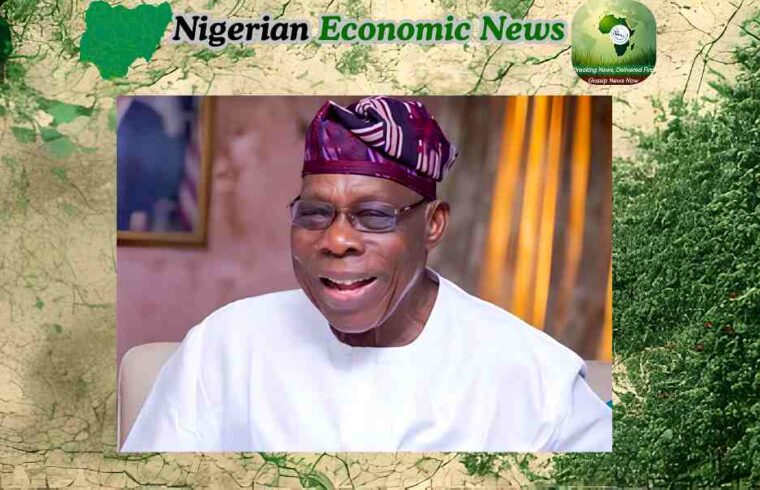
Former President Olusegun Obasanjo has called on survivors and families of victims of the 1967 Asaba Massacre to embrace forgiveness and reconciliation, but the Asagba of Asaba, Epiphany Azinge, says forgiveness should not mean forgetting the tragedy.
Azinge also said there would be no full closure or healing for the people of Asaba until a sitting Nigerian president publicly apologises to them.
Key Takeaways
- Olusegun Obasanjo urged Asaba survivors and victims’ families to embrace forgiveness and reconciliation.
- The former president described the massacre as one of the most painful episodes of the Nigerian Civil War.
- Asagba Epiphany Azinge said the people of Asaba could forgive without forgetting what happened.
- Azinge called for an apology from a sitting president, saying it would help bring closure.
- The monarch also questioned Obasanjo’s “never again” appeal by referring to the Odi killings during Obasanjo’s presidency.
Obasanjo Makes Appeal For Forgiveness
Obasanjo made the appeal while participating virtually as chairman of the occasion at the 59th anniversary memorial of the Asaba Massacre on Wednesday.
Addressing the gathering, the former president described the massacre as one of the most painful and terrible aspects of the Nigerian Civil War.
He said the war itself was an unfortunate event that should never be repeated.
Obasanjo also recalled his emotional reaction after receiving documents relating to the massacre from Chief Chuks Nduka-Eze.
His central message to the people of Asaba was forgiveness.
“To all of you assembled: let us keep one thing in mind, forgiveness, forgiveness, and forgiveness again,” Obasanjo said.
He urged the community to work towards reconciliation while stressing the importance of ensuring that such a tragedy does not happen again.
Asagba Says Forgiveness Does Not Mean Forgetting
The appeal, however, received a measured response from the Asagba of Asaba, Epiphany Azinge.
Azinge said the people could forgive those responsible for the tragedy while still preserving the memory of what happened.
“We may not forget, but certainly, we have to forgive,” Azinge said.
The traditional ruler’s response placed remembrance and reconciliation side by side, rather than treating them as mutually exclusive.
For Azinge, the passage of time has not removed the need for official acknowledgement of the suffering associated with the massacre.
Monarch Calls For Apology From A Sitting President
Azinge said a public apology from a serving president would be necessary to provide what he described as closure for the people of Asaba.
“We need a sitting president to apologise to Asaba people; that will bring closure,” the monarch said.
He noted that former military Head of State, retired General Yakubu Gowon, had apologised while out of office.
The demand therefore goes beyond a personal appeal for forgiveness and places emphasis on official recognition of the tragedy.
Azinge Questions The “Never Again” Appeal
The Asagba also questioned the broader “never again” message associated with Obasanjo’s appeal.
Azinge referred to the Odi killings, which occurred during Obasanjo’s administration as president, while explaining why he was cautious about such declarations.
“Coming from him, I was a bit taken aback. How long do we say ‘never again’? But it happened at Odi,” he said.
The reference introduced a separate historical and political dimension to the discussion, with Azinge using the Odi episode to question how effectively Nigeria has prevented similar tragedies from recurring.
Remembering The Asaba Massacre
The memorial centred on the 1967 Asaba Massacre, one of the tragedies associated with the Nigerian Civil War.
Obasanjo described the episode as among the most painful aspects of the conflict and used the anniversary gathering to call for reconciliation.
For the people represented at the memorial, however, remembrance remains an important part of confronting the past.
Azinge’s response reflected that position: forgiveness may be possible, but forgetting the tragedy is not.
The Continuing Question Of Closure
The exchange between Obasanjo and the Asagba highlights two closely connected but distinct issues surrounding the memory of the Asaba Massacre.
Obasanjo’s message focuses on forgiveness, reconciliation and preventing future tragedies.
Azinge’s response accepts forgiveness but places equal emphasis on remembrance, accountability and an official apology.
The disagreement does not centre simply on whether forgiveness is possible. It also raises the question of what the people of Asaba believe is required before the historical wound can be considered fully acknowledged.
For now, Obasanjo’s call for forgiveness and Azinge’s demand for an apology from a sitting president represent two different emphases in the continuing conversation over memory, reconciliation and closure after the Asaba Massacre.