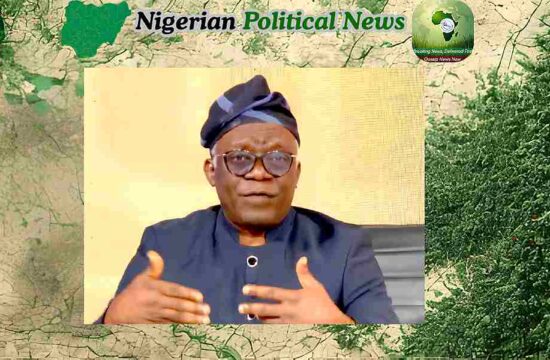
- Senior Advocate of Nigeria Olisa Agbakoba argues that INEC’s exclusive authority to declare election results does not prevent others from publishing results already in the public domain.
- He says results read at polling units can be reported by journalists and other members of the public.
- Agbakoba cites the NUJ–FEDECO case and Section 124 of the Electoral Act in support of his argument.
- He predicts that political parties may use artificial intelligence to gather results published on INEC’s IReV portal.
- He stresses the importance of distinguishing between publishing election results and formally declaring them.
Agbakoba Explains the Difference Between Declaring and Publishing Results
Senior Advocate of Nigeria (SAN) Olisa Agbakoba has argued that the Independent National Electoral Commission (INEC) has exclusive authority to declare election results, but that this does not prevent journalists and other Nigerians from publishing results that are already in the public domain.
Agbakoba made the argument during an interview on Arise Television on Wednesday, explaining that the process of collating election results is different from the final declaration of results by the electoral commission.
According to him, results read publicly at polling units can be reported by observers, journalists and other members of the public without that act necessarily amounting to an official declaration by INEC.
His comments focus on the distinction between making election results available to the public and exercising the formal authority to declare the final outcome of an election.
How Election Results Move Through the Collation Process
Agbakoba explained that election results pass through several stages, beginning at the polling unit and progressing through ward, local government, state and national collation before the final announcement.
He argued that the fact that INEC has exclusive authority to declare results does not mean that information about results already announced at polling units cannot be published by others.
To illustrate his position, Agbakoba said that when a presiding officer reads out results at a polling unit, members of the public can report what has been announced.
He maintained that the central issue is the distinction between reporting results made available through the electoral process and formally declaring the outcome of an election.
Agbakoba Predicts AI Could Speed Up Election Result Reporting
The senior advocate also predicted that political parties could use artificial intelligence (AI) systems to gather election results published on INEC’s Result Viewing Portal, known as IReV.
According to Agbakoba, IReV serves as a compilation of results coming from polling units. He suggested that political parties could develop systems capable of collecting the information and making it available more quickly.
He said the key question would be whether the results being published had been properly authenticated.
His remarks therefore point to a distinction between the speed at which election information can be collected and shared and the need to ensure that published results are genuine and accurate.
However, his comments about the possible use of AI were a prediction about what political parties could do, rather than confirmation that specific systems were already operating in the manner he described.
The NUJ–FEDECO Case and Section 124 of the Electoral Act
Agbakoba cited a previous legal case involving the Nigerian Union of Journalists (NUJ) and the Federal Electoral Commission (FEDECO), which he said affirmed the right to publish election results.
He referred to a decision involving Justice Candid Johnson in 1984 and argued that the case remained relevant to the question of whether results already in the public domain could be published.
Agbakoba also referred to Section 124 of the Electoral Act, which he said provides for punishment in connection with the publication of fake election results.
Using that provision to support his argument, he maintained that the law’s treatment of fake results should be distinguished from the publication of genuine results.
The precise scope of the cited judgment and statutory provision would need to be assessed against the relevant legal texts. The supplied account reports Agbakoba’s interpretation but does not reproduce the full judgment or the exact wording of Section 124.
Agbakoba Says Journalists Are Entitled to Publish Election Results
Agbakoba specifically maintained that the media have the right to publish election results that are already available through the electoral process.
He argued that the formal announcement of results by INEC should not automatically be treated as meaning that no one else can publish information about results previously read at polling units.
He also cited the 1993 Nigerian presidential election as an example, recalling that results were visible on a board and that people could see the figures even though, in his account, there was no final declaration.
Agbakoba said the NUJ–FEDECO case was the decision he believed should guide the interpretation of the issue, including the position of INEC.
His position centres on the distinction between publishing publicly available election information and exercising the commission’s formal authority to declare results. His statements should be understood as his legal interpretation of that distinction.
What the Argument Means for Election Reporting
The distinction raised by Agbakoba is relevant to discussions about election transparency, public access to results and the role of journalists in reporting the electoral process.
His argument is that the exclusive power to declare results should not automatically be interpreted as a prohibition on publishing results that have already been publicly announced.
At the same time, his comments highlight the importance of verifying election information before publication. He specifically warned about fake results and questioned whether the information being circulated was authenticated.
The interview does not, by itself, establish the complete legal position on every form of election-result publication. A definitive assessment would require examination of the applicable law, the cited judgment and any relevant subsequent legal decisions.
Frequently Asked Questions
1. What did Olisa Agbakoba say about INEC and election results?
Agbakoba argued that INEC has exclusive authority to declare election results, but that journalists and other people can publish results already in the public domain.
2. Does Agbakoba say journalists can publish results read at polling units?
Yes. He argued that when a presiding officer publicly reads out results at a polling unit, journalists and others can report the information.
3. What is IReV?
IReV is INEC’s Result Viewing Portal. Agbakoba described it as a compilation of results coming from polling units and predicted that political parties could use AI systems to gather the information.
4. Why did Agbakoba refer to artificial intelligence?
He predicted that political parties could use AI to collect results available through IReV, potentially speeding up the process of gathering and reporting election information.
5. Which court case did Agbakoba cite?
He cited the NUJ–FEDECO case, referring to a decision involving Justice Candid Johnson in 1984. He argued that the decision supported the right to publish election results.
6. What did Agbakoba say about Section 124 of the Electoral Act?
He referred to the provision as prescribing punishment for publishing fake results and argued that this should be distinguished from publishing genuine results. The exact statutory wording is not reproduced in the supplied report.
7. Does INEC’s authority to declare results mean other people cannot publish them?
Agbakoba argued that the two activities are different: INEC’s formal authority to declare results does not, in his view, prevent others from publishing results already made public. The full legal position would require examination of the relevant law and judicial decisions.
8. Did Agbakoba’s interview establish a final legal ruling on the issue?
The supplied report records his interpretation and the legal authorities he cited. It does not independently establish the complete legal position or verify the current status and scope of the cited judgment.
Join the Discussion
How should Nigeria balance INEC’s formal responsibility for declaring election results with the public’s interest in timely and accurate election reporting?
Share your views in the comments.
© 2025 Gossip News Now, a division of CHIEJOS HARBIAN DIGITAL MEDIA LTD.