
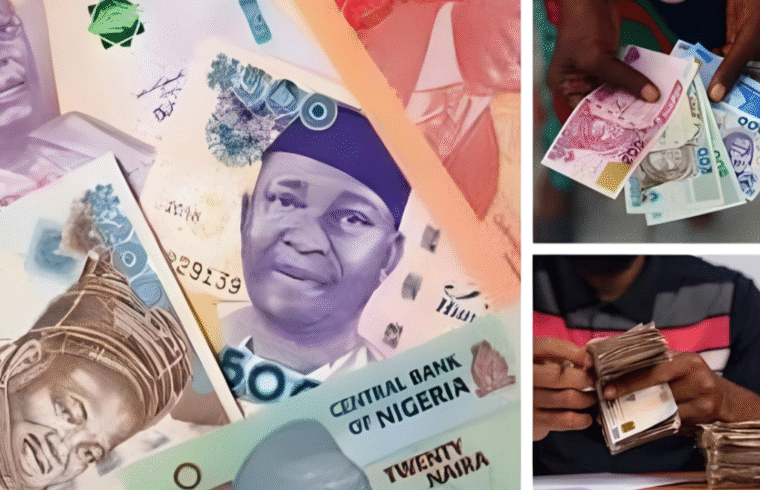
The naira remained under pressure in the parallel foreign exchange market, with fresh figures from Bureau De Change operators in Lagos showing the dollar still exchanging at a high rate against the local currency. Traders reported that the U.S. dollar was bought at ₦1,445 and sold at ₦1,469 during Friday’s trading activity.
These figures kept the black market well above the official range published by the Central Bank of Nigeria. On the formal side, the highest rate stood at ₦1,438 per dollar, while the lowest was ₦1,434. The difference once again highlighted the persistent gap between the official market and what many Nigerians encounter in everyday street-level transactions.
At the informal market, the exchange pattern showed a wider margin between buying and selling values, reflecting the influence of demand, dealer pricing, and local market conditions. In simple terms, those bringing dollars into the market received ₦1,445 for each unit, while buyers seeking the same currency had to pay ₦1,469. According to Gossip News Now, this pricing trend continues to make the black market a major reference point for many Nigerians despite official disapproval.
The Central Bank has repeatedly maintained that the parallel market is not a recognized channel for foreign exchange dealings. It continues to advise individuals and businesses to use authorized banks and approved financial institutions for forex transactions instead of relying on street traders or unregulated operators.
Even with the published figures, exchange values are rarely identical everywhere. Rates can shift depending on the city, transaction volume, urgency of demand, and the individual dealer involved. That means the actual amount a person receives or pays may differ slightly from the rates being circulated publicly.
Commentary and Analysis
The latest dollar-to-naira rates suggest that pressure on the local currency is still far from over. Although the official and black market figures are not extremely far apart in this instance, the continued attention on parallel market pricing shows that many Nigerians still see it as the more practical indicator of real exchange conditions.
This also points to a larger economic reality. Whenever the naira remains weak against the dollar, the effects usually spread beyond forex traders and into everyday life through rising costs of imported goods, business expenses, and consumer prices. As long as access to foreign exchange remains tight for many users, the black market will likely continue to shape public perception of the naira’s true value.
© 2025 Gossip News Now, a division of CHIEJOS HARBIAN DIGITAL MEDIA LTD. Contact us via admin@gossipnewsnow.online