Key Takeaways
- Sowore has responded to Basiru’s “skit maker and comedian” remark by recalling their past association.
- He claims he helped Basiru and Kunle Adegoke, popularly known as K-Rad, pursue admission to study Law at UNILAG.
- Sowore linked their history to the struggle against military dictatorship and the solidarity among student activists.
- He criticised Basiru’s position on the 2023 presidential election and the treatment of opposition candidates.
- Sowore also argued that political appointments are temporary and criticised former activists who, in his view, now defend oppression.
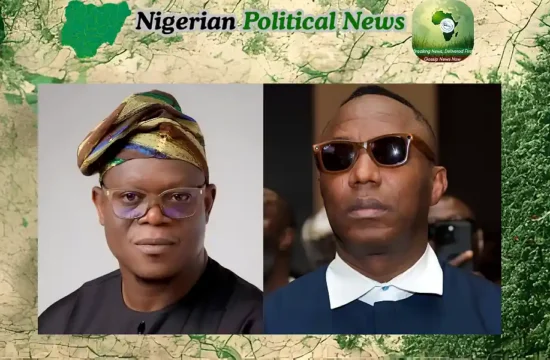
Omoyele Sowore, presidential candidate of the African Action Congress (AAC), has responded to the All Progressives Congress (APC) National Secretary, Senator Ajibola Basiru, by recalling their shared history and claiming that he helped Basiru gain admission to the University of Lagos (UNILAG) after his expulsion from the University of Ilorin (UNILORIN).
Sowore made the claim in a post on X on Thursday, following Basiru’s description of him as a “skit maker and comedian” during an interview on Channels Television’s Politics Today on Wednesday.
The human rights activist also defended his record of political activism, arguing that the struggle for justice, democracy and freedom should not be dismissed as comedy.
Sowore Recalls Basiru’s Admission to UNILAG
In his response, Sowore shared a photograph he said he took with Basiru in 1998, when he was leading the Congress of Progressive Youths (COPY) during the campaign against military dictatorship.
According to Sowore, Basiru came to UNILAG after being expelled from UNILORIN in 1992 over student activism.
Sowore said he received Basiru alongside Kunle Adegoke, popularly known as K-Rad, who is now a Senior Advocate of Nigeria (SAN). He claimed that they helped both men find an opportunity to apply for admission and study Law at UNILAG.
“I received him alongside Kunle Adegoke, popularly known as K-Rad, who is now a Senior Advocate of Nigeria. We provided them with an enabling environment to apply to re-enter the university, gain admission, and study Law at the University of Lagos,” Sowore said.
Sowore added that both men eventually graduated with flying colours.
The account forms the historical backdrop to the current exchange between the two political figures. However, the details concerning Basiru’s expulsion and the role Sowore says he played are claims attributed to Sowore in the supplied report.
Sowore Challenges Basiru’s Comments on the 2023 Election
The disagreement also centres on Basiru’s reported remarks about the 2023 presidential election, in which the Independent National Electoral Commission (INEC) declared Bola Tinubu the winner.
According to the supplied article, Basiru argued that those who contested against Tinubu should be ashamed of losing. Sowore challenged that position, maintaining that political activism and the pursuit of democratic principles should not be reduced to entertainment.
In his response, Sowore said Basiru was familiar with the struggle against military rule because he had once been part of it and had benefited from the solidarity of those involved.
“The struggle for justice, democracy, freedom and the preservation of human dignity is neither skit-making nor comedy. Ajibola knows this because he was once part of that struggle and benefited from the solidarity of those who refused to surrender to military tyranny,” he said.
The statement presents Sowore’s argument that the history of political resistance should be considered when evaluating the conduct and public positions of people who were previously involved in the struggle.
Sowore Says Political Appointments Are Temporary
Sowore also criticised what he described as a shift in the political positions of people who once opposed military oppression.
He argued that political appointments and administrations do not last forever, comparing the eventual departure of the current government to the end of military regimes that activists confronted in their youth.
He concluded his response with a criticism of people he believes have abandoned the principles they once defended.
“What is truly comical is watching yesterday’s beneficiaries of resistance become today’s defenders of the very oppression they once fought against,” he added.
The remark captures the central criticism in Sowore’s response: that people who benefited from political solidarity and resistance should remain consistent with the principles they previously supported.
His comments represent his own political assessment. The supplied article does not include a further response from Basiru to Sowore’s account.
The Political Significance of the Sowore-Basiru Exchange
The exchange brings together personal history, student activism and contemporary political disagreement. Sowore has used his account of the pair’s university history to challenge Basiru’s description of him and to defend the relevance of political resistance.
The dispute also reflects wider differences over how political figures discuss electoral outcomes, opposition candidates and the legacy of activism in Nigeria.
However, the claims about Basiru’s university admission and past involvement in student activism remain attributed to Sowore in the supplied report. Independent confirmation would be needed to establish those details beyond his account.
Frequently Asked Questions
What did Sowore say about Ajibola Basiru?
Sowore claimed that he helped Basiru gain admission to the University of Lagos after Basiru was expelled from the University of Ilorin. He also criticised Basiru’s remarks about political activism and the 2023 presidential election.
Why did Sowore respond to Basiru?
According to the supplied report, Sowore responded after Basiru described him as a “skit maker and comedian” during an interview on Channels Television’s Politics Today.
What did Sowore claim about Basiru’s admission to UNILAG?
Sowore said he received Basiru and Kunle Adegoke, popularly known as K-Rad, and helped provide an opportunity for them to apply for admission to study Law at UNILAG.
What was Sowore’s connection to student activism?
The article says Sowore was leading the Congress of Progressive Youths (COPY) in 1998 during the struggle against military dictatorship. Sowore used that history to argue that the struggle for democracy and freedom should not be dismissed as comedy.
What did Sowore say about political appointments?
He argued that political appointments are temporary and criticised people he believes have moved from opposing oppression to defending it.
Has Basiru responded to Sowore’s latest claims?
The supplied article does not report a further response from Basiru to Sowore’s account.
Conclusion
Sowore’s response to Basiru has brought their reported history at UNILAG back into public discussion, while highlighting their disagreement over political activism, democratic struggle and the 2023 presidential election.
By recalling what he described as their shared experience during the struggle against military dictatorship, Sowore challenged Basiru’s characterisation of him and questioned the political positions of people who once participated in resistance movements.
The exchange remains a dispute between two political figures, and Sowore’s account of Basiru’s university history should be distinguished from independently verified facts.