Concerns about escalating insecurity in Northern Nigeria have prompted renewed calls for urgent action from political stakeholders.
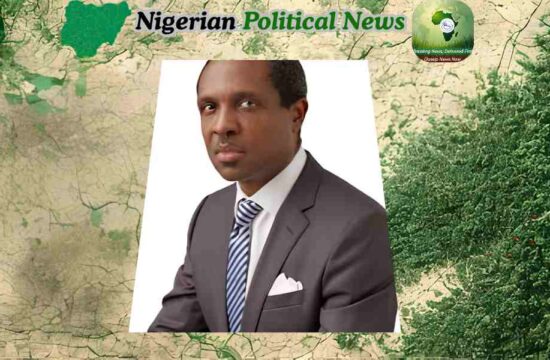
According to Gossip News Now, presidential hopeful and prominent member of the Peoples Democratic Party (PDP), Gbenga Hashim, has urged leaders across the region to confront the growing security crisis with decisive and practical steps.
In a statement released in Kaduna on Sunday, Hashim emphasized that political figures, traditional authorities, and influential community leaders must acknowledge their roles in addressing the worsening situation.
He argued that resolving the region’s challenges requires collective responsibility rather than shifting blame or offering repeated assurances without results.
Hashim also reacted to the appointment of retired General Christopher Musa as Nigeria’s Minister of Defence, describing the development as an opportunity for meaningful change if backed by strong political will.
While expressing cautious optimism, Hashim noted that the position must translate into concrete achievements rather than symbolic gestures.
During his remarks, he pointed out that the retired military officer appeared determined during his Senate screening and expressed hope that the federal government would provide the necessary support to enable him to succeed.
However, Hashim warned that Nigerians are increasingly frustrated by promises that fail to produce visible improvements.
He stressed that the country has reached a stage where citizens expect measurable progress in tackling violence, kidnappings, and extremist activities that continue to threaten communities across the North.
According to Gossip News Now, Hashim attributed part of the insecurity to deeper socio-economic challenges within the region.
He suggested that decades of governance failures at the state and local government levels have created conditions where extremist groups can easily recruit large numbers of young people.
The PDP chieftain argued that widespread poverty, unemployment, and weak governance structures have played a major role in fueling instability.
Although he acknowledged that regional factors—such as the broader Sahel security crisis—have contributed to the problem, he maintained that poor leadership within the region has significantly worsened the situation.
Hashim also drew comparisons between the present state of leadership and the political environment during Nigeria’s First Republic.
He referenced notable Northern figures from that era, including Ahmadu Bello, Aminu Kano, Joseph Tarka, and Kashim Ibrahim, describing them as leaders who upheld discipline and integrity while maintaining unity across the region.
In contrast, he lamented that many present-day politicians appear disconnected from the realities facing ordinary citizens.
Hashim criticized what he described as extravagant lifestyles among some leaders despite the widespread poverty affecting many communities.
For him, the region requires a moral and political transformation that prioritizes accountability, responsibility, and service to the people.
He urged Northern elites to support the emergence of a new generation of leaders capable of rebuilding trust and addressing the region’s pressing challenges.
Gossip News Now reports that Hashim also warned against political strategies that rely on manipulating ethnic or religious divisions to maintain power.
Commentary and Analysis
The debate about insecurity in Northern Nigeria has increasingly centered on the relationship between governance, poverty, and security challenges.
Hashim’s remarks reflect a broader concern among political observers that long-term instability cannot be resolved solely through military operations.
Many analysts argue that sustainable solutions must also include economic development, improved education, and stronger local governance structures.
His reference to historical Northern leaders suggests a growing nostalgia for a political culture perceived as more disciplined and accountable.
At the same time, calls for leadership reform highlight the importance of rebuilding public trust in institutions tasked with ensuring safety and development.
Ultimately, the effectiveness of new security strategies may depend on whether political leaders across the region are willing to address both the immediate threats and the structural issues that contribute to instability.
© 2025 Gossip News Now, a division of CHIEJOS HARBIAN DIGITAL MEDIA LTD. Contact us via admin@gossipnewsnow.online