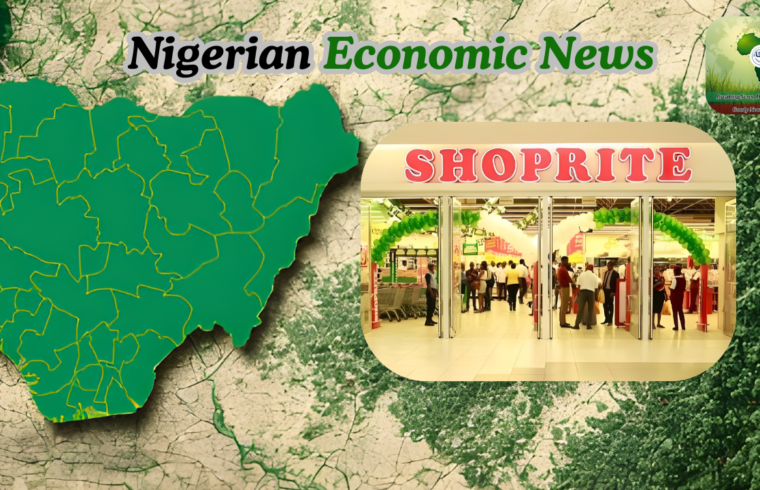
Operations at the Shoprite outlet located inside Ikeja City Mall in Lagos were temporarily halted after the Lagos State Internal Revenue Service (LIRS) enforced a closure order over alleged tax-related violations.
Officials from the state tax authority sealed the premises following claims that the business had failed to meet certain statutory obligations required under Nigerian tax laws.
Notice Cites Violation of Tax Regulations
A public notice placed at the entrance of the store informed customers and staff about the reason behind the enforcement action.
According to the document, the closure was carried out due to an alleged breach connected to Section 94 of the Personal Income Tax Act (PITA) 2011.
The notice warned that failing to comply with tax obligations could lead to serious legal consequences, including financial penalties and possible imprisonment.
Warning Against Tampering With Government Seal
Authorities also cautioned against any attempt to interfere with the official seal placed on the premises.
The notice clearly stated that removing or tampering with the seal without authorization would be considered a criminal offence under the law.
Such warnings are typically issued to prevent businesses from reopening operations before resolving compliance issues with the tax authorities.
Shoprite’s Broader Operational Challenges
The enforcement action comes at a time when Shoprite Nigeria has been facing several operational challenges across the country.
Over the past few years, the retail chain has closed some branches, including outlets in Wuse (Abuja) and Kano, citing economic pressures and changing business conditions.
Reports have also indicated that several other branches have struggled with limited stock levels, with some stores operating with noticeably reduced inventory.
Company Maintains Commitment to Nigerian Market
Despite these difficulties, the company’s Nigerian operator, Retail Supermarkets Nigeria Limited (RSNL), has repeatedly insisted that it is not planning to exit the country.
Instead, the company says it is undergoing a restructuring process aimed at adapting to Nigeria’s current economic environment.
Part of this strategy includes increasing reliance on locally sourced products.
According to the company, nearly 80 percent of the goods sold in its stores are now sourced within Nigeria, a move designed to reduce dependence on imports and stabilize operations.
Commentary and Analysis
The closure of a major retail outlet over alleged tax compliance issues highlights the increasing enforcement efforts by state authorities to ensure businesses meet statutory obligations.
For large retail brands like Shoprite, regulatory actions can also reflect the broader economic pressures facing businesses operating in Nigeria’s retail sector.
Rising operational costs, foreign exchange challenges, and shifting consumer purchasing power have forced many companies to rethink their strategies.
While Shoprite continues to adapt by localizing supply chains and restructuring its operations, incidents such as tax enforcement actions can further complicate the recovery process.
How quickly the company resolves the compliance issue at the Ikeja store may influence public perception and its ability to maintain confidence among customers and business partners.
© 2025 Gossip News Now , a division of CHIEJOS HARBIAN DIGITAL MEDIA LTD. Contact us via admin@gossipnewsnow.online