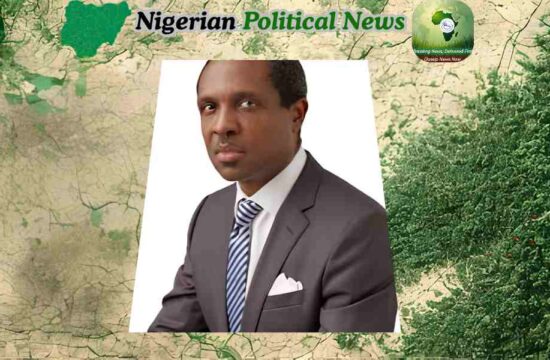
Former presidential contender Gbenga Olawepo-Hashim has voiced strong concerns over reports of a United States air operation carried out within Nigerian territory. According to him, the development raises troubling questions about the effectiveness of the country’s current security architecture.
In a statement issued on Sunday, the political figure suggested that the reported involvement of foreign forces reflects growing global anxiety about Nigeria’s security environment. He argued that such cooperation, even when done alongside local authorities, signals that the country’s internal mechanisms for managing threats may be struggling.
The criticism was directed at the administration of Bola Ahmed Tinubu, which he said must address increasing concerns about insecurity. Olawepo-Hashim maintained that the presence of foreign military action within Nigeria’s borders points to deeper systemic weaknesses.
According to him, the issue also highlights the fragile nature of the nation’s security framework under the governing All Progressives Congress. He described the current security system as overstretched and in urgent need of structural improvement.
Olawepo-Hashim further argued that Nigeria’s geopolitical importance makes it impossible for the international community to ignore developments within its borders. Because of its population size, economic influence, and regional leadership role, instability in the country could have far-reaching consequences beyond West Africa.
The former presidential aspirant also revealed that his political team had previously raised concerns about troubling security patterns in the North-West region. According to him, internal assessments conducted since 2021 warned of the possibility that extremist networks could eventually establish a foothold in the area if decisive action was not taken.
He noted that these warnings had become more urgent in the past year as intelligence trends suggested increasing risks. In his view, early intervention could have prevented some of the developments now being observed.
Olawepo-Hashim also criticized what he described as the growing tolerance of individuals who minimize or rationalize extremist activities. He warned that when such attitudes find their way into political spaces, they can create conditions that allow violent groups to expand their influence.
In his remarks, he referenced the recent explosion that occurred in Offa as another indicator of the country’s security vulnerabilities. The incident, which reportedly caused panic and property damage, was cited as evidence of gaps in intelligence gathering and emergency response coordination.
While acknowledging that foreign military operations can weaken militant groups in the short term, Olawepo-Hashim cautioned that they cannot substitute for comprehensive domestic reforms.
He argued that lasting peace will depend primarily on strengthening Nigeria’s own security institutions and improving governance structures rather than relying on external intervention.
The former presidential candidate also warned that repeated reliance on foreign forces could create sensitive debates around national sovereignty. In his opinion, security partnerships with international allies must be transparent and guided by clear legal frameworks.
He therefore called for stronger oversight mechanisms to ensure that any collaboration between Nigeria and foreign military forces remains accountable to the Nigerian public.
Commentary and Analysis
The concerns raised by Olawepo-Hashim reflect a broader debate about the balance between international security cooperation and national sovereignty. Many countries collaborate with foreign partners when confronting complex security threats, especially those involving transnational extremist networks.
However, such partnerships can also raise political questions when citizens perceive that domestic institutions are losing control over internal security matters.
Nigeria’s security challenges—particularly in regions affected by insurgency, banditry, and terrorism—have often required coordination with global intelligence and military partners. Support from allies can enhance surveillance, intelligence sharing, and operational capacity.
At the same time, critics argue that sustainable solutions require deeper reforms within Nigeria’s own security institutions, including improved intelligence systems, better coordination among agencies, and stronger community engagement.
Ultimately, the debate underscores a central issue: while foreign support can assist in confronting immediate threats, long-term stability will likely depend on strengthening domestic governance, political will, and institutional capacity.
© 2025 Gossip News Now, a division of CHIEJOS HARBIAN DIGITAL MEDIA LTD. Contact us via admin@gossipnewsnow.online