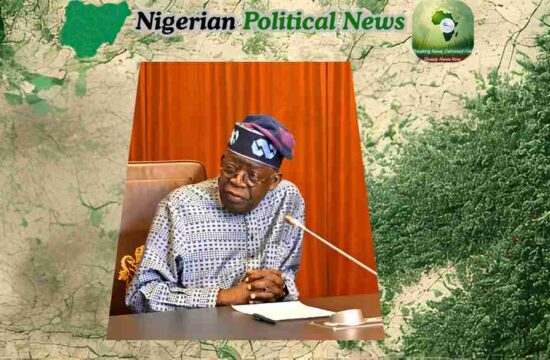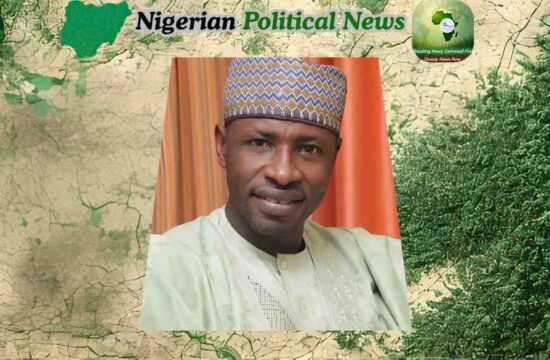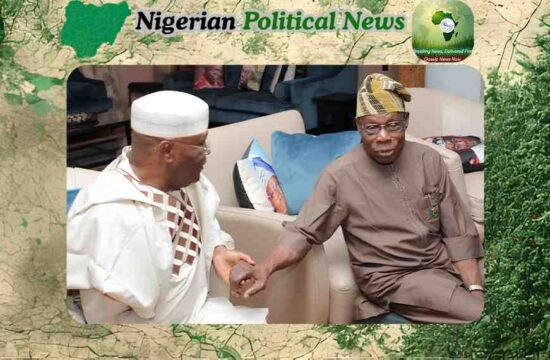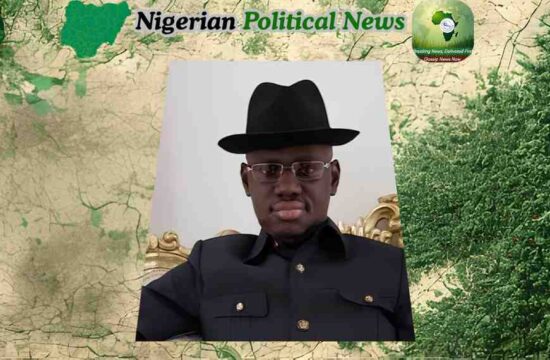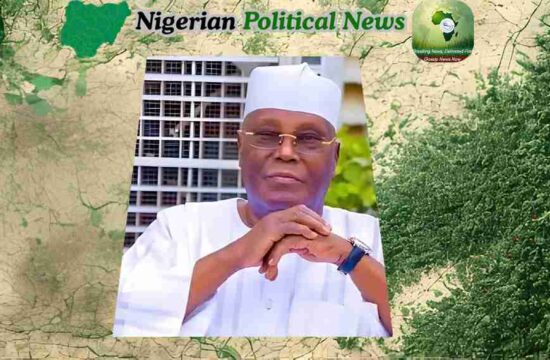
Former governorship candidate of the Labour Party, George Moghalu, has expressed doubts about the opposition’s ability to easily unseat President Bola Ahmed Tinubu and the ruling All Progressives Congress (APC) without stronger unity among rival political groups.
Speaking in Abuja, Moghalu argued that the fragmented nature of Nigeria’s opposition parties continues to weaken efforts aimed at presenting a serious electoral challenge to the current administration.
Moghalu Reflects On APC’s Rise To Power
The former APC chieftain pointed to historical political developments to support his position.
He recalled that the APC itself became successful after several opposition movements merged together ahead of the 2015 general elections.
According to him, individual opposition parties previously struggled to defeat the then-ruling PDP because they operated independently instead of building a united front.
Gossip News Now recalls that the coalition that later formed the APC combined influential political blocs across different regions before eventually securing victory at the national level.
Moghalu suggested that the same strategy may be necessary again if any opposition alliance hopes to compete effectively in future elections.
Opposition Disunity Remains Major Problem
The politician warned that internal divisions among opposition leaders continue to benefit the ruling party.
He stressed that without coordination, common purpose, and shared political direction, the APC could maintain a strong advantage over rival parties.
Moghalu reportedly emphasized that defeating an incumbent administration in Nigeria requires more than public criticism or isolated campaigns.
Instead, he believes a broad coalition built around collective interests and strategic cooperation would be more effective.
Incumbency Still Dominates Nigerian Politics
Discussing Nigeria’s political structure, George Moghalu stated that incumbency often outweighs competence within party systems.
He argued that many political office holders command enormous influence because they control government structures, state resources, and party machinery.
According to him, this political reality makes it difficult for challengers to compete fairly against those already in power.
He also noted that authority within the system often flows from the presidency down to governors and local government leaders, strengthening the dominance of incumbents nationwide.
Moghalu Rejects One-Party State Concerns
Despite concerns in some political circles, Moghalu dismissed fears that Nigeria could permanently become a one-party nation.
He pointed out that political dominance in Nigeria has historically shifted over time.
The former APC member referenced how the Peoples Democratic Party (PDP) once controlled the majority of states across the country before gradually losing influence.
For him, political strength remains temporary and dependent on changing alliances, voter sentiment, and national developments.
Politicians Defect Based On Survival, Not Ideology
Moghalu also criticized the culture of frequent political defections in Nigeria.
He argued that many politicians change parties based on personal calculations rather than ideological convictions or policy disagreements.
In his view, politicians who move from one party to another after winning elections should ideally return to the electorate for a fresh mandate.
He maintained that political parties play a crucial role during elections since voters often identify more with party platforms than individual candidates.
Future Political Direction Still Unclear
Reflecting on his own political future, Moghalu disclosed that he is still evaluating his next move.
The former governorship candidate revealed that he may remain with the Labour Party, return to the APC, or even align with the African Democratic Congress (ADC) depending on future political realities.
His comments further highlight the fluid nature of political alliances within Nigeria’s evolving democratic landscape.
Commentary And Analysis
Moghalu’s remarks underline one of the biggest challenges facing Nigeria’s opposition parties ahead of future elections — unity.
While dissatisfaction with the ruling party may exist in different parts of the country, fragmented opposition structures often weaken attempts to convert public frustration into electoral victories.
His observations about incumbency also reflect the enormous influence political office holders wield within Nigeria’s system, particularly through access to resources and institutional structures.
At the same time, his comments on defections expose the continued absence of strong ideological politics in the country, where survival and strategic positioning frequently outweigh party loyalty.
As political alignments continue shifting ahead of future contests, coalition-building may once again become a decisive factor in determining Nigeria’s electoral direction.
© 2025 Gossip News Now , a division of CHIEJOS HARBIAN DIGITAL MEDIA LTD. Contact us via admin@gossipnewsnow.online