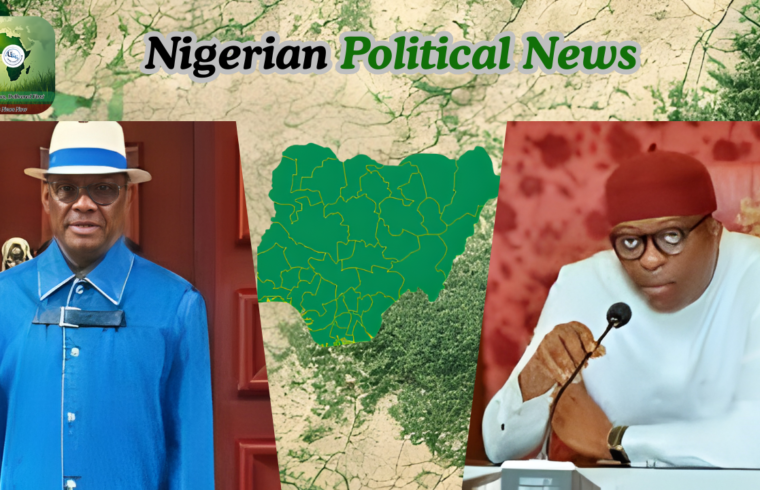
The Rivers State political landscape remains in disarray after an earlier peace accord, mediated by President Bola Tinubu, between Minister of the Federal Capital Territory, Nyesom Wike, and Governor Siminalayi Fubara, collapsed entirely.
The initial understanding was meant to end the persistent rivalry between Wike and Fubara, a tension that escalated to a state of emergency in the state on March 18, 2025. During the six-month emergency rule, retired Vice Admiral Ibok Etteh Ibas was appointed sole administrator, assuming full control of state affairs.
The Controversial 2023 Accord
The first reconciliation pact, inked on December 18, 2023, drew nationwide scrutiny. Critics argued that the terms disproportionately favored Wike, leaving Governor Fubara with limited leverage. Prominent figures such as former Governor Peter Odili and National Security Adviser Nuhu Ribadu witnessed the signing.
Under the agreement, Fubara was expected to:
- Withdraw all legal actions tied to the crisis
- Suspend ongoing impeachment processes
- Accept Martin Amaewhule and 27 lawmakers aligned with Wike as legitimate leaders of the House of Assembly
- Resubmit the 2024 budget for approval by the new Assembly leadership
- Reinstate salaries and benefits for Assembly staff and lawmakers
- Reverse the dissolution of local government councils
- Resubmit the names of resigned commissioners
Initially, sources say Fubara appeared ready to comply to restore peace. A former commissioner revealed:
“He said he was prepared to do whatever it took to bring peace back to Rivers State. He believed both sides could find common ground so the state could progress.”
Rising Public Opposition
The governor’s initial willingness to implement the agreement was soon met with fierce backlash from citizens. Public opinion described the deal as a “political trap” and a potential “suicide note” that undermined the governor’s mandate. Faced with mounting pressure, Fubara abandoned the arrangement, reigniting tensions between the two camps.
President Tinubu later convened another round of peace negotiations in June 2025. However, the new demands reportedly pushed the governor into an even more constrained position. According to insiders, he was instructed to refrain from influencing local government chairmanship appointments, dismiss his Chief of Staff Dr. Edison Ehie, and abandon any plans for a second-term bid.
Political analyst Lucky Bassey commented:
“This is not reconciliation. It is domination. It attempts to strip a sitting governor of constitutional powers and future political relevance.”
Legal Implications of Political Agreements
Questions have emerged about whether these political arrangements hold any legal validity. A former Rivers State chief of staff highlighted the limitations of such deals:
“Even when agreements exist, a force majeure can void them. Fubara’s move from the PDP to the APC automatically changes everything.”
Former House of Representatives member Ogbonna Nwuke echoed this, emphasizing citizens’ rights:
“The minister is still in the PDP, but the governor is now in the APC. Any previous agreement cannot still apply. You cannot deny a citizen their constitutional right to freedom of association.”
Nwuke further suggested that Wike’s maneuvers stemmed from political anxiety:
“If the APC offers Fubara an automatic second-term ticket, there is nothing Wike can do about it.”
Impeachment Escalates
The political crisis intensified on January 8 when the Rivers State House of Assembly formally initiated impeachment proceedings against Governor Fubara and his deputy, Ngozi Odu, citing allegations of gross misconduct. Speaker Martin Amaewhule indicated that formal notices would be served within a week.
Allegations include:
- Unauthorized spending of state funds
- Interference with legislative operations
- Appointment of officials without proper vetting
- Withholding salaries and allowances due to Assembly members
Commentary and Analysis
The unfolding situation in Rivers State highlights the fragile balance between political negotiation and constitutional authority. The repeated collapse of peace deals points to structural weaknesses in conflict resolution mechanisms for high-stakes political rivalries. Analysts warn that repeated imposition of restrictive terms on elected officials can erode public trust, create governance paralysis, and potentially destabilize democratic institutions.
Furthermore, the interplay between party allegiance and legal enforceability raises complex questions. While political agreements may guide negotiation, they do not override constitutional rights or the electorate’s mandate. Observers argue that any long-term solution must balance reconciliation with respect for democratic governance and the independence of state institutions.
© 2025 Gossip News Now , a division of CHIEJOS HARBIAN DIGITAL MEDIA LTD. Contact us via admin@gossipnewsnow.online