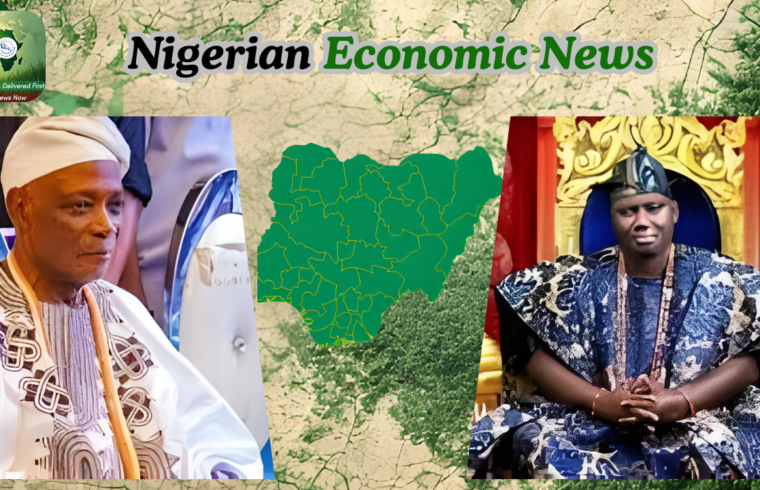
Fresh controversy is unfolding within Oyo State’s revered traditional institution after recent developments surrounding the leadership structure of the Oyo State Council of Obas and Chiefs triggered renewed debate among royal stakeholders.
The issue gained public attention following the formal inauguration of the Olubadan of Ibadanland, Oba Rasidi Ladoja, who assumed office as chairman of the council during a ceremony presided over by Governor Seyi Makinde in Ibadan. While the event was meant to symbolize unity among traditional rulers, discussions quickly shifted to what many observers described as an unexpected diplomatic signal.
Noticeably missing from the gathering was the Alaafin of Oyo, Oba Akeem Owoade. His absence immediately sparked widespread speculation, with palace sources suggesting that the decision was far from accidental. Rather, insiders hinted that it reflected deeper disagreements concerning the authority and succession framework governing the council’s leadership.
Governor Makinde, addressing dignitaries at the inauguration, reiterated that leadership of the council follows a rotational system. According to the arrangement, three prominent royal institutions — Ibadanland, Oyo, and Ogbomosoland — are expected to alternate the chairmanship position every two years. The clarification was intended to calm lingering doubts, yet it appeared insufficient to silence concerns within certain royal circles.
Behind the scenes, discussions reportedly centered on whether the rotational formula aligns with long-standing historical interpretations of traditional hierarchy in the state. Some palace aides suggested that the Alaafin opted to stay away to avoid lending legitimacy to a process that could later become subject to judicial interpretation.
Sources close to the Oyo palace indicated that legal options have not been ruled out. Observers recall that during the reign of the late Alaafin, Oba Lamidi Adeyemi, similar disagreements arose when the monarch maintained that the council chairmanship ought to remain permanently tied to the Oyo throne. At the time, court action was pursued without major resistance, setting a precedent that continues to influence present conversations.
Insiders further revealed that the absence may have been a calculated move designed to preserve royal dignity while consultations continue privately among stakeholders. According to those familiar with the situation, influential political and traditional figures are already exploring mediation pathways that could prevent escalation into prolonged litigation.
Historical relationships between key personalities have also resurfaced in public discourse. Analysts note that past political tensions dating back to Oba Ladoja’s tenure as governor — particularly during his impeachment crisis — contributed to strained relations with the former Alaafin. Those memories, though rooted in political history, appear to cast a long shadow over current royal interactions.
Now elevated as Olubadan, Oba Ladoja is seen by some observers as consolidating institutional authority within the framework approved by the state government. However, supporters of the Alaafin argue that the Oyo throne retains symbolic primacy within Yoruba traditional heritage, making the leadership question more sensitive than administrative procedure alone.
Commentary and Analysis
The unfolding situation reflects a broader challenge facing modern traditional institutions: balancing historical prestige with evolving governance frameworks shaped by contemporary state structures. While rotational leadership promotes inclusiveness among major monarchies, it also reopens long-standing debates about hierarchy, cultural precedence, and political influence.
The Alaafin’s strategic silence — expressed through absence rather than confrontation — suggests a cautious approach aimed at preserving leverage. Legal intervention remains a possibility, yet negotiation among royal fathers and government intermediaries may ultimately determine whether the matter becomes a courtroom battle or a negotiated settlement.
Beyond personalities, the controversy highlights how deeply tradition, politics, and symbolism remain intertwined in Oyo State. The coming months may reveal whether consensus can be achieved or whether the struggle for institutional recognition within the council will redefine relationships among the state’s foremost traditional rulers.
© 2025 Gossip News Now, a division of CHIEJOS HARBIAN DIGITAL MEDIA LTD. Contact us via admin@gossipnewsnow.online