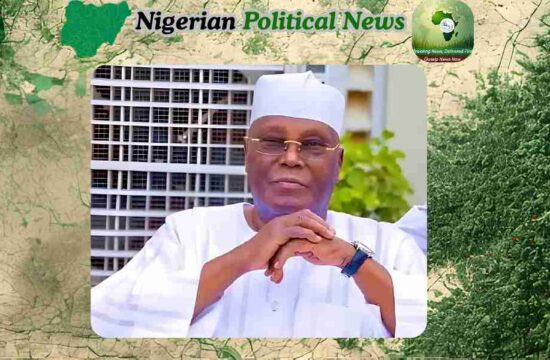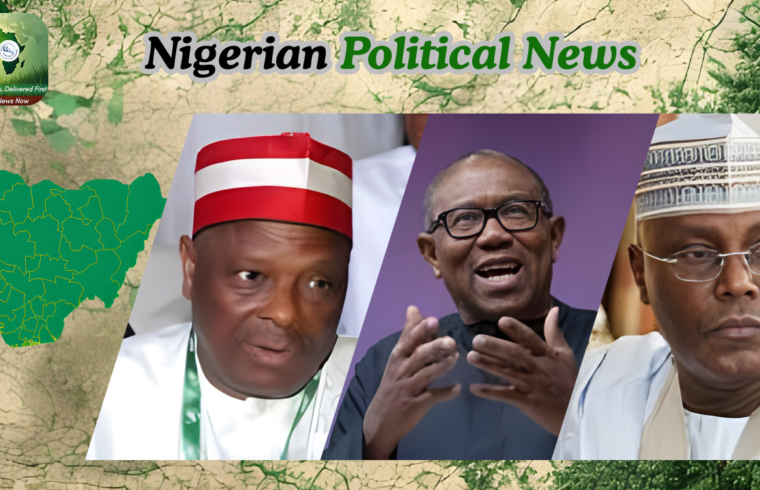
Political discussions across Nigeria’s power corridors are increasingly dominated by speculation surrounding a potential alliance involving Atiku Abubakar, Peter Obi, and Rabiu Musa Kwankwaso, a development analysts believe could significantly reshape preparations for the 2027 presidential race.
Reports circulating within political circles suggest that conversations among opposition leaders have intensified, focusing on building a broad coalition capable of challenging President Bola Ahmed Tinubu’s expected re-election bid. Though no formal agreement has been announced, insiders indicate that negotiations aimed at consolidating opposition forces are gaining momentum.
The evolving strategy appears rooted in lessons drawn from the 2023 elections, where opposition votes were widely dispersed among multiple candidates. Political actors now believe that unity rather than fragmentation could determine future electoral outcomes.
Coalition Talks Gain Momentum
Sources close to opposition negotiations claim that former President Olusegun Obasanjo has played a quiet but influential role in encouraging dialogue among key figures. Known to maintain longstanding relationships with several opposition leaders, he is reportedly advocating a unified ticket capable of presenting a single national alternative.
Atiku Abubakar and Peter Obi, previously standard-bearers of the Peoples Democratic Party (PDP) and Labour Party respectively, are said to be coordinating political structures under the African Democratic Congress (ADC) framework. Party strategists are simultaneously exploring ways to attract Kwankwaso — whose strong showing in Kano during the last election demonstrated his regional influence.
Observers note that Kwankwaso’s participation could be decisive, given his control of an established grassroots network widely associated with the Kwankwasiyya movement.
Why the Numbers Matter
Much of the anxiety reportedly emerging within ruling party circles is tied to electoral statistics from the previous presidential contest. When considered individually, opposition candidates fell short of victory. However, combined figures tell a different story.
Reframing the data reveals three important realities:
Opposition Vote Strength
- Combined support for Atiku, Obi, and Kwankwaso exceeded that of the eventual winner by several million votes.
Geographical Reach
- Opposition candidates collectively secured victories across more states and the Federal Capital Territory than the ruling party.
Regional Complementarity
- Northern political structures linked to Atiku
- Urban and youth-driven momentum surrounding Obi
- Kano-based grassroots mobilisation under Kwankwaso
Political analysts argue that merging these strengths could produce a nationwide coalition difficult for any single party to counter.
APC and Presidency Respond
Within the All Progressives Congress, reactions appear mixed. Some party insiders reportedly acknowledge that a united opposition could alter electoral calculations, particularly if rival support bases successfully merge into one political platform.
One APC strategist suggested that the primary concern is not any individual politician but the possibility of synchronized voter mobilisation. According to him, unity among opposition supporters could significantly change campaign dynamics.
Other officials, however, dismissed suggestions of panic, insisting that governance performance — rather than alliances — will ultimately determine electoral success. Publicly, party leaders maintain confidence that internal stability and policy delivery remain their strongest advantages heading toward 2027.
Interestingly, sources also indicate that the ruling party has not entirely closed the door on engaging Kwankwaso politically, although discussions are reportedly complicated by demands relating to party structures in Kano State.
Strategic Challenges Facing a Possible Alliance
Despite growing speculation, political observers caution that forming a grand coalition presents significant hurdles:
- Managing leadership ambitions among prominent figures
- Negotiating power-sharing arrangements
- Harmonising party ideologies and regional interests
- Preventing internal rivalry from undermining unity
History shows that coalition politics in Nigeria often struggles with balancing competing personalities, even when electoral arithmetic appears favorable.
Commentary & Analysis
The renewed talk of an Atiku–Obi–Kwankwaso alliance highlights how early Nigeria’s 2027 political contest has begun to take shape. Rather than waiting for campaign season, both ruling and opposition actors are already repositioning themselves through negotiations, alliances, and strategic messaging.
For the opposition, unity represents the most realistic pathway to power after years of fragmented contests. For the APC, the challenge lies in maintaining cohesion while countering any emerging coalition through governance performance and political organisation.
Ultimately, the unfolding scenario reflects a broader transformation in Nigerian politics: elections are increasingly decided not only by party loyalty but by coalition-building, demographic mobilisation, and strategic partnerships.
Whether the proposed alliance materializes or collapses under internal pressures may become one of the defining political stories leading into the 2027 elections.
© 2025 Gossip News Now, a division of CHIEJOS HARBIAN DIGITAL MEDIA LTD. Contact us via admin@gossipnewsnow.online