

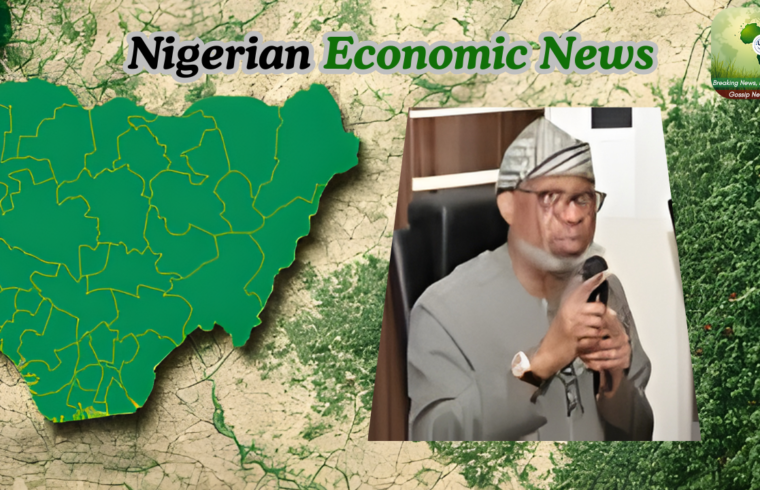
Nigeria’s Minister of Solid Minerals Development, Dele Alake, has secured another term at the helm of the Africa Minerals Strategy Group (AMSG), a development widely interpreted as a sign of growing confidence in Nigeria’s leadership within Africa’s mining policy space.
The re-election took place during the 2026 Annual General Meeting of the continental organization, convened alongside the global Future Minerals Forum in Riyadh, Saudi Arabia. Delegates from across Africa endorsed Alake’s continued leadership without opposition, extending a tenure that began when he first assumed the inaugural chairmanship in 2024.
Rather than focusing solely on leadership renewal, the gathering centered on strengthening cooperation among African nations seeking to maximize the economic benefits of their mineral wealth. The AMSG serves as a coordination platform for ministers responsible for mining, aiming to promote shared strategies, industrial processing, and stronger collective bargaining in international markets.
Participants at the meeting reviewed achievements recorded since the body’s creation and introduced structural reforms intended to deepen institutional stability. A redesigned leadership framework was approved, distributing responsibilities across Africa’s geopolitical regions to ensure balanced representation.
Under the updated arrangement, Alake continues to represent West Africa as Chairman, while new executive responsibilities were allocated across the continent. Central Africa secured the Vice-Chairmanship through the Democratic Republic of Congo, East Africa retained the Secretary-General role through Uganda, North Africa assumed the Deputy Secretary-General position via Mauritania, and Southern Africa obtained the Financial Secretary office through South Africa.
Delegates also agreed on governance reforms designed to sustain continuity within the organization. Executive committee appointments will now follow a country-based model rather than individual tenure, meaning newly appointed ministers from member states automatically inherit existing leadership roles. The executives will operate under renewable two-year terms.
Funding, Accountability and Institutional Growth
In his acceptance remarks, Alake emphasized that collaboration alone would not guarantee success unless supported by financial commitment from member countries. He urged governments to establish structured contributions capable of strengthening AMSG operations and improving transparency.
He argued that collective funding would enhance credibility, noting that stronger financial backing would naturally reinforce accountability mechanisms and boost the group’s standing among global investment partners.
To reinforce operational efficiency, ministers approved additional measures including:
- Regular quarterly ministerial consultations
- Creation of specialized committees focusing on finance, sustainability, legal affairs, and responsible mining
- Early planning toward hosting a large-scale global minerals conference on African soil
These initiatives, according to participants, are intended to position Africa as an active decision-maker rather than a passive supplier of raw materials.
Infrastructure Takes Centre Stage
Beyond administrative matters, discussions extended to the broader economic transformation of Africa’s mineral sector. Speaking at a leadership roundtable on infrastructure financing, Alake stressed that mineral extraction alone cannot deliver prosperity without integrated logistics and industrial systems.
He highlighted regional transport corridors as critical enablers of mineral development, pointing to projects such as the Lobito Corridor while identifying additional opportunities along the Lagos–Abidjan, Walvis Bay, Dar es Salaam, and Central transport routes. According to him, infrastructure must be carefully financed, governed, and structured to support long-term industrial growth rather than short-term export gains.
Commentary & Analysis
Alake’s re-election reflects an emerging continental consensus that Africa must move beyond exporting unprocessed minerals toward coordinated industrialization. For decades, African economies have supplied raw resources while value creation occurred elsewhere. The AMSG’s evolving strategy appears designed to reverse that trend through policy alignment and shared investment priorities.
The decision to tie leadership roles to countries rather than individuals also signals institutional maturity. Such continuity reduces disruption caused by cabinet reshuffles common across African governments and ensures sustained policy direction.
Equally significant is the growing emphasis on infrastructure financing. Mineral wealth alone does not guarantee economic transformation; transportation networks, energy systems, and regulatory stability remain decisive factors in attracting long-term investment.
If successfully implemented, the AMSG framework could strengthen Africa’s negotiating power in global supply chains, particularly as demand for critical minerals rises worldwide. The challenge ahead lies in translating policy commitments into tangible industrial outcomes capable of delivering jobs, technology transfer, and inclusive growth across the continent.
© 2025 Gossip News Now, a division of CHIEJOS HARBIAN DIGITAL MEDIA LTD. Contact us via admin@gossipnewsnow.online