
The Federal Government has moved to dispel speculation surrounding a proposed gold refinery reportedly linked to official plans in Lagos, insisting that recent claims suggesting federal involvement are inaccurate.
The clarification emerged after concerns were raised by the Northern Elders Forum (NEF), which had questioned whether locating such a facility in Lagos would contradict the constitutional principle of federal character. Government officials, however, stressed that the controversy stemmed from misunderstanding the nature of the project.
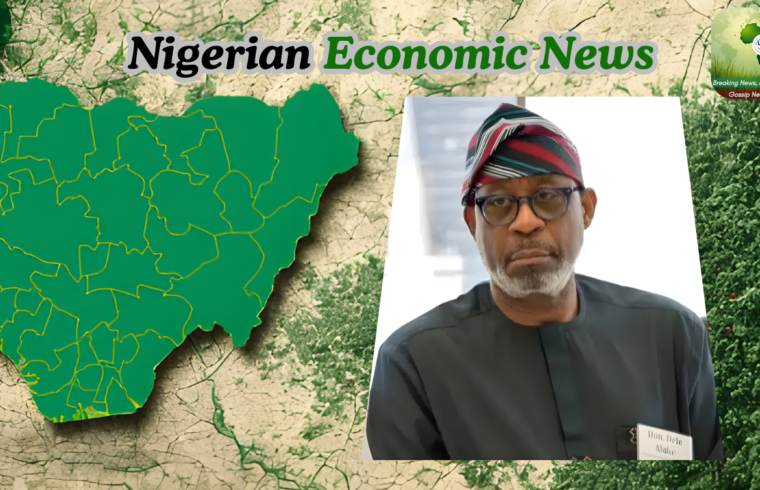
Speaking on behalf of the Ministry of Solid Minerals Development, media aide Segun Tomori explained that no federal refinery initiative exists. He emphasized that Minister Dele Alake neither announced government ownership of a refinery nor indicated plans for the state to establish one anywhere in Nigeria.
According to the ministry, the refinery attracting public attention is strictly a private-sector investment led by Kian Smith, a company operating independently of government directives. Officials maintained that private investors retain the freedom to determine suitable business locations based on logistics, commercial viability, and operational considerations.
Tomori further clarified that government agencies lack the authority to compel investors to situate industrial projects in specific regions. Instead, decisions regarding plant locations remain business-driven, shaped by infrastructure access, supply chains, and market demand.
Understanding the Policy Behind Mineral Processing
The debate surrounding the refinery ties into a broader federal strategy focused on value addition within Nigeria’s solid minerals sector. Rather than exporting unprocessed mineral resources, authorities are encouraging domestic refining and manufacturing to strengthen industrial capacity.
Recent developments cited by the ministry illustrate this shift:
- Large-scale lithium processing investments established in Nasarawa State
- Rare-earth mineral refining initiatives attracting hundreds of millions of dollars in funding
- Additional lithium processing facilities emerging within the Federal Capital Territory
Officials argue that these projects collectively demonstrate growing investor confidence resulting from regulatory reforms introduced over the past two years.
Government Reform and Private Sector Participation
The Ministry of Solid Minerals Development noted that ongoing reforms have been designed to make Nigeria’s mining industry more attractive to international and domestic investors. By simplifying licensing processes and promoting downstream processing, policymakers aim to generate employment while reducing reliance on raw mineral exports.
Authorities also framed private refinery projects as evidence that reform measures are beginning to yield results, showcasing increased industrial activity without direct government ownership.
In response to the concerns raised by the Northern Elders Forum, government representatives urged stakeholders to view mineral sector expansion as a national economic opportunity rather than a regional competition. They encouraged collaboration toward building an industrial economy capable of supporting long-term growth.
Commentary & Analysis
The controversy highlights a recurring tension in Nigeria’s development discourse — balancing regional equity with market-driven investment decisions. While federal character principles remain politically sensitive, industrial projects increasingly depend on private capital, which operates according to economic efficiency rather than administrative allocation.
By distancing itself from the refinery’s location decision, the Federal Government appears to be reinforcing a policy direction that prioritizes private-sector leadership in industrialization. This approach could accelerate growth but may continue to provoke debates about geographic distribution of economic benefits.
Ultimately, the discussion surrounding the Lagos refinery reflects a larger transformation underway in Nigeria’s mining sector: a transition from state-controlled extraction toward privately financed processing and manufacturing. Whether this model succeeds will depend on sustained reforms, investor confidence, and equitable economic outcomes across regions.
© 2025 Gossip News Now, a division of CHIEJOS HARBIAN DIGITAL MEDIA LTD. Contact us via admin@gossipnewsnow.online