
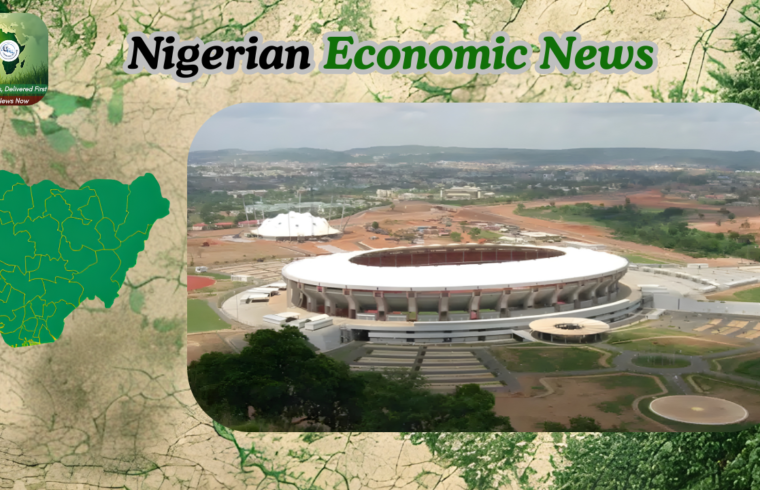
Nigeria’s Federal Government has unveiled an ambitious plan to restore the Moshood Abiola National Stadium in Abuja, committing billions of naira toward modernising one of the country’s most important sporting landmarks.
The proposed overhaul forms part of a wider strategy to reposition Nigerian sports infrastructure and improve the nation’s readiness for international competitions.
Sports Sector Receives Historic Funding Boost
Under the 2026 national budget proposal presented by President Bola Ahmed Tinubu, funding allocated to sports witnessed a dramatic increase compared to previous years. The expanded budget reflects government intentions to revive dormant facilities and strengthen athletic development nationwide.
Within the allocation to the National Sports Commission (NCS), a significant portion — totaling over ₦24 billion — has been dedicated specifically to rehabilitating the Abuja stadium complex.
Officials say the project represents a cornerstone initiative aimed at restoring Nigeria’s capacity to host global sporting events.
Why the Stadium Needs Another Overhaul
Despite undergoing renovations in recent years, the stadium has struggled to maintain international standards. Once considered Nigeria’s premier sporting arena, the facility gradually lost approval for major matches due to poor infrastructure conditions, particularly the deteriorating playing surface.
Even private sector interventions, including financial contributions from prominent business figures during earlier upgrades, failed to deliver lasting results. Within months of the last renovation, the pitch reportedly declined again, forcing the Super Eagles to move home fixtures to alternative venues.
Criticism from players and coaching staff following international matches further amplified calls for comprehensive reconstruction rather than temporary repairs.
Breakdown of the New Rehabilitation Plan
The latest budget outlines several components designed to transform the stadium into a modern sports hub:
- Main bowl reconstruction: approximately ₦18.7 billion allocated for structural rehabilitation and pitch redevelopment.
- High-performance training centre: nearly ₦5.8 billion earmarked to complete a specialised facility for elite athletes.
- Digital and connectivity upgrades: funding set aside for internet infrastructure, fibre connectivity, and advanced communication systems.
- Administrative expansion: additional resources proposed for constructing a new sports secretariat within the complex.
Authorities believe these improvements will not only restore functionality but also create an environment suitable for professional training, sports science development, and international tournaments.
A Stadium With Historic Importance
Constructed between 2000 and 2003 at a cost of roughly $360 million ahead of the African Games, the Moshood Abiola National Stadium remains Nigeria’s largest sporting facility, accommodating more than 60,000 spectators.
Its distinctive lightweight roof design once symbolised Nigeria’s sporting ambition, yet years of underuse and maintenance challenges reduced its global relevance.
The upcoming renovation aims to reverse that decline and reposition Abuja as a central destination for continental and global sporting events.
Investment Beyond Infrastructure
The sports budget also extends to Nigeria’s participation in major international competitions. Planned spending covers involvement in upcoming global tournaments, including preparations for Olympic Games appearances, Commonwealth Games participation, and continental football championships for both male and female national teams.
Government officials argue that infrastructure development and athlete participation must progress simultaneously to achieve meaningful sporting success.
Commentary & Analysis
The decision to heavily fund stadium rehabilitation signals a renewed policy shift toward sports as both an economic and social investment. Modern sporting facilities can stimulate tourism, create employment opportunities, and inspire youth engagement in athletics.
However, past renovation failures highlight a key challenge: sustainability. Analysts suggest that long-term maintenance frameworks, transparent project execution, and professional facility management will determine whether the latest intervention succeeds where earlier efforts fell short.
If effectively implemented, the Abuja stadium project could mark a turning point for Nigerian sports — transforming aging infrastructure into a platform capable of supporting elite performance and restoring national pride in international competitions.
© 2025 Gossip News Now , a division of CHIEJOS HARBIAN DIGITAL MEDIA LTD. Contact us via admin@gossipnewsnow.online