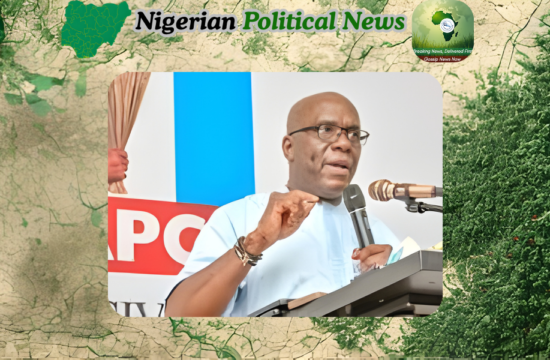


Public debate has intensified over recent demolition activities in Makoko after former Minister of Education, Oby Ezekwesili, openly challenged the Lagos State Government’s handling of the exercise, describing it as an example of governance that risks undermining citizens’ rights.
Rather than framing the issue solely as urban redevelopment, Ezekwesili positioned the controversy within a broader national conversation about accountability, social justice, and how governments treat economically disadvantaged communities. Her intervention came through a formal memorandum directed simultaneously to President Bola Ahmed Tinubu and Lagos State Governor Babajide Sanwo-Olu, signalling the seriousness of her concerns.
At the heart of her argument is the claim that development policies must not sacrifice human dignity. She maintained that actions carried out in Makoko appeared to disproportionately affect people already living on the margins of society, raising ethical questions about whether public safety initiatives are being applied fairly across social classes.
Ezekwesili argued that Makoko residents should not be viewed merely as occupants of informal settlements but as citizens contributing to Lagos’ economic ecosystem. Many households rely on fishing activities, petty commerce, and community-based enterprises for survival, she noted, stressing that economic vulnerability should never translate into diminished citizenship rights.
She further suggested that repeated clearance exercises over the years have created a pattern where poverty becomes an unofficial justification for displacement. According to her reasoning, governance loses legitimacy when urban renewal evolves into what she interpreted as systematic exclusion of low-income populations from strategic city locations.
A major point of contention, she explained, relates to communication between authorities and community representatives. Local leaders were reportedly informed earlier that only structures located within a restricted safety zone—estimated at several metres from high-tension electricity installations—would be removed. Residents allegedly complied with officials based on that understanding.
However, she criticised what she described as a sudden expansion of demolition boundaries during the operation. In her words, altering previously agreed limits without adequate notice represents an abuse of institutional power rather than lawful enforcement.
Beyond procedural concerns, Ezekwesili alleged that the exercise caused severe human consequences, including reported casualties and widespread displacement. She questioned whether the demolitions were genuinely motivated by safety considerations or whether underlying economic interests tied to valuable waterfront land played a role.
The former minister characterised the development as resembling social exclusion driven by class divisions, warning that cities risk deepening inequality when redevelopment policies primarily benefit wealthier interests while displacing poorer residents.
She also warned that the aftermath has evolved into a humanitarian emergency. Thousands of individuals are said to have lost shelter, children’s schooling has reportedly been interrupted, and many families now face heightened exposure to hunger, illness, and insecurity. According to her, once government action results in homelessness, authorities bear both constitutional and moral responsibilities to provide relief, protection, and resettlement support.
Commentary and Analysis
The Makoko controversy highlights a recurring dilemma confronting rapidly expanding cities: balancing infrastructure safety and urban modernisation with social inclusion. Lagos, like many megacities, faces pressure to address environmental risks and enforce planning regulations, yet critics argue that enforcement often appears uneven when poorer communities are involved.
Ezekwesili’s intervention introduces a governance lens that goes beyond demolition itself. Her arguments raise deeper questions about transparency, stakeholder engagement, and whether development policies sufficiently protect vulnerable citizens.
Analysts note that disputes of this nature frequently arise where informal settlements intersect with high-value urban land. Without clear compensation frameworks, resettlement plans, or community dialogue, demolition exercises can quickly shift from administrative actions to human rights controversies.
The situation therefore reflects a larger national challenge: how Nigerian cities can pursue modernization while maintaining equity, legality, and public trust among all social groups.
© 2025 Gossip News Now, a division of CHIEJOS HARBIAN DIGITAL MEDIA LTD. Contact us via admin@gossipnewsnow.online