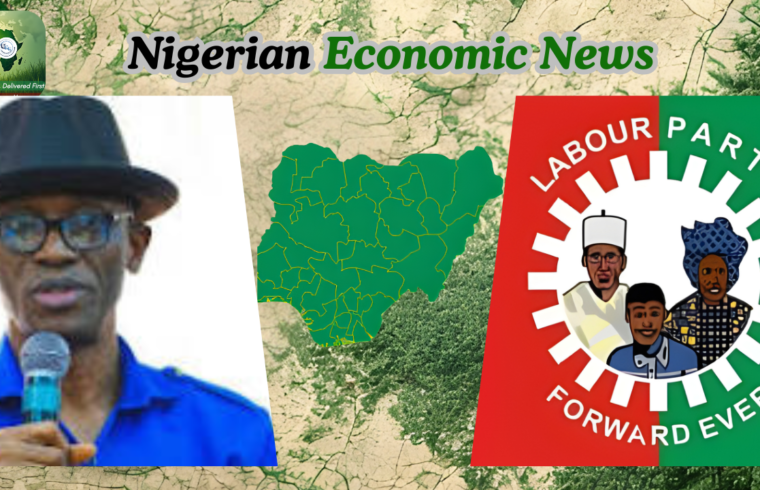
A major judicial intervention has reshaped the leadership structure of the Labour Party following a ruling by the Federal High Court in Abuja, which settled the lingering dispute over who legitimately controls the party’s national leadership.
The court decision effectively ended the tenure of Julius Abure as national chairman, paving the way for a caretaker arrangement headed by former minister Senator Nenadi Usman. The judgment has immediate political implications, especially as internal divisions within the party had intensified in recent months.
Justice Lifu, who presided over the matter, delivered the verdict during proceedings attended by legal practitioners and party stakeholders. Among those present was human rights lawyer Inibehe Effiong, who later confirmed the outcome of the case and clarified the legal reasoning behind the decision.
Rather than focusing solely on administrative changes, the court anchored its ruling on earlier judicial pronouncements. According to Effiong, the judge relied on an existing Supreme Court decision which established that Abure’s mandate had already expired prior to the current dispute, leaving no legal basis for him to continue in office.
Court Directives Following the Judgment
The ruling produced a series of consequential directives reshaping party administration:
- The Independent National Electoral Commission (INEC) was ordered to treat the caretaker committee as the recognised authority of the Labour Party.
- Senator Nenadi Usman was affirmed as the head of the interim leadership structure.
- All official dealings involving the party are expected to reflect the new leadership recognition without delay.
These instructions signal the court’s intention to eliminate ambiguity regarding representation and party legitimacy.
Effiong publicly disclosed details of the judgment shortly after proceedings ended, noting that the court had validated the caretaker leadership as the only lawful structure empowered to act on behalf of the party. His announcement on social media emphasized that electoral authorities must comply immediately with the ruling.
Political Context Behind the Crisis
The Labour Party has experienced prolonged leadership disagreements, with competing factions claiming authority over party affairs. Analysts say the absence of a universally accepted leadership created operational challenges, including disputes over party administration, candidate endorsements, and institutional recognition.
By invoking prior Supreme Court interpretations, the Federal High Court sought to bring finality to arguments surrounding tenure extension and internal governance procedures.
Commentary & Analysis
Legal observers interpret the ruling as a strong reaffirmation of judicial oversight in political party administration. Courts traditionally avoid internal party disputes unless constitutional or statutory violations arise; however, once tenure legality becomes contested, judicial clarification becomes unavoidable.
The recognition of a caretaker committee suggests a transitional phase rather than permanent leadership settlement. Political analysts believe the Usman-led structure may now focus on reconciliation among factions, preparation for future conventions, and restoring organizational stability.
Beyond internal politics, the decision also places responsibility on INEC to enforce institutional compliance. How swiftly electoral authorities implement the directive may determine whether tensions within the party subside or evolve into further legal battles.
For Labour Party supporters and Nigeria’s broader political landscape, the judgment represents more than a leadership change—it underscores how legal interpretation increasingly shapes party power dynamics in the country’s evolving democracy.
© 2025 Gossip News Now, a division of CHIEJOS HARBIAN DIGITAL MEDIA LTD. Contact us via admin@gossipnewsnow.online