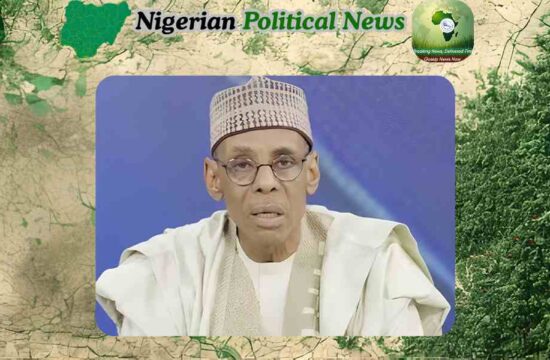
Nigeria’s political environment is too competitive and personality-driven to sustain a one-party structure, according to Ibrahim Gambari, who believes the ambitions of political actors themselves make such a system impractical.
Speaking in Abuja during an interaction with journalists, the former presidential aide dismissed growing concerns that Nigeria could evolve into a one-party state. He argued that both history and political behaviour patterns demonstrate that dominance by any single party is always temporary.
Political Ambition as a Barrier to One-Party Rule
Gambari, now serving as Chairman of the Board of the Savannah Centre for Diplomacy Democracy and Development, explained that Nigeria’s political class thrives on competition and personal influence. According to him, the wide-ranging ambitions of politicians naturally generate multiple centres of power, making long-term political monopoly unrealistic.
He noted that the country’s democratic evolution has consistently produced strong opposition movements whenever a ruling party appears too dominant.
Lessons Drawn From Nigeria’s Political History
Referencing past political eras, Gambari observed that several dominant parties once believed they would permanently control Nigeria’s political landscape. However, those expectations never materialised.
He pointed to earlier experiences across different republics, highlighting how political dominance repeatedly gave way to fragmentation, internal rivalry, and eventual decline. These historical cycles, he said, illustrate why attempts at consolidating all political forces under one platform rarely endure.
Rather than fearing a one-party outcome, Gambari suggested Nigerians should recognise that political competition remains deeply rooted in the country’s democratic culture.
Concern Over Frequent Political Defections
While rejecting fears of one-party rule, the diplomat expressed concern over the rising trend of politicians frequently switching political affiliations. He proposed stricter legal frameworks to regulate defections, arguing that elected mandates are often tied to party platforms rather than individual politicians.
In many established democracies, he noted, lawmakers who abandon the parties that sponsored their elections are required to relinquish their seats — an approach he believes could strengthen accountability and ideological consistency in Nigeria.
Strengthening Political Institutions
Gambari also warned that weak party structures pose a greater threat to democracy than dominance by any ruling party. He encouraged citizens, particularly members of the elite class, to actively participate in political parties instead of remaining detached observers.
According to him, democracy functions best when party membership is meaningful, organisational processes are respected, and political engagement extends beyond election periods.
Commentary & Analysis: Competition as Nigeria’s Democratic Safeguard
Gambari’s position highlights a paradox within Nigerian politics: while fears of political dominance often emerge, internal rivalry among political elites simultaneously prevents lasting monopolies. The very ambition sometimes criticised in Nigerian politics may also serve as a safeguard against authoritarian consolidation.
However, his warning about defections raises a critical institutional challenge. Frequent party switching weakens ideological development, blurs policy identity, and erodes voter trust. Without stronger party discipline, political competition risks becoming personality-based rather than policy-driven.
The broader implication of his remarks is that Nigeria’s democratic stability depends less on limiting political competition and more on improving party organisation, civic participation, and political accountability. A vibrant multi-party system, supported by active citizens and structured institutions, may ultimately remain Nigeria’s strongest defence against political stagnation.
© 2025 Gossip News Now , a division of CHIEJOS HARBIAN DIGITAL MEDIA LTD. Contact us via admin@gossipnewsnow.online