

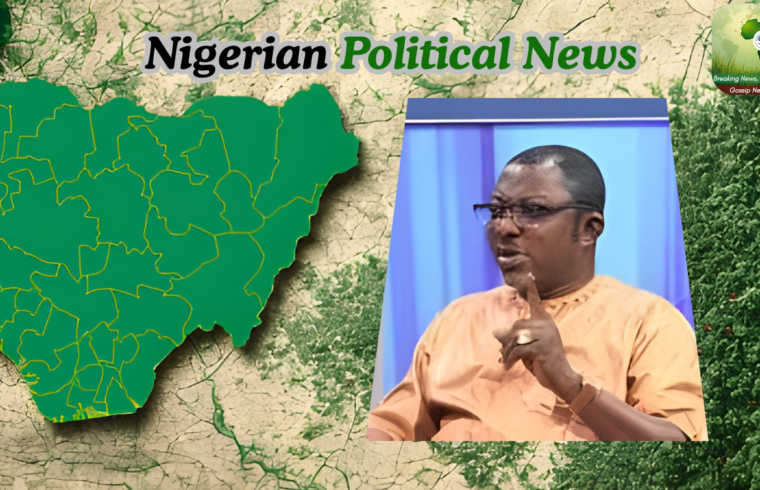
Fresh controversy has emerged within Nigeria’s opposition space as Labour Party National Vice Chairman (South West), Abayomi Arabambi, rejected widespread claims that former presidential candidate Peter Obi has abandoned the party. Addressing the matter during a television interview, Arabambi insisted that no formal communication confirming Obi’s resignation exists.
According to him, political speculation cannot substitute for constitutional procedure. He maintained that until an official resignation letter is submitted, Obi legally remains a member of the Labour Party regardless of public narratives suggesting otherwise.
Arabambi also challenged the growing perception that Obi’s political influence defines the party itself. In his view, the Labour Party existed long before the 2023 elections and should not be portrayed as dependent on any individual personality.
Dispute Over Party Authority
The party chieftain accused Obi and Abia State Governor Alex Otti of attempting to assume control over party structures through what he described as irregular processes. He alleged that a recent National Executive Council meeting linked to their camp lacked legitimacy because it was not convened according to constitutional provisions.
He argued that decisions involving leadership appointments or structural changes must follow clearly defined procedures within the party’s constitution. Any gathering organised outside those rules, he said, cannot produce binding outcomes.
Reframing one of his strongest remarks, Arabambi suggested that political movements or informal alliances cannot replace legally recognised party systems, noting that Nigerian electoral laws recognise registered political parties rather than loose coalitions.
Who Built Whom? The Core Argument
At the centre of Arabambi’s position lies a broader political argument: the Labour Party, he said, provided the platform that propelled Obi into national prominence during the 2023 presidential race.
He explained that the surge in support witnessed during that election cycle reflected widespread dissatisfaction among Nigerians with traditional political forces. From his perspective, voters were motivated primarily by a desire for change rather than personal loyalty to any single candidate.
By emphasising this point, Arabambi sought to counter narratives portraying the Labour Party as merely an extension of Obi’s political movement. Instead, he presented the relationship as one where both the candidate and the platform benefited from prevailing public sentiment.
Legal Battles and Leadership Questions
Arabambi reaffirmed the party’s recognition of Julius Abure as national chairman pending the outcome of ongoing judicial proceedings. He stressed that the Labour Party intends to resolve all disputes through legal channels rather than political confrontation.
He expressed confidence that the courts would provide clarity soon, adding that adherence to due process remains essential to protecting internal democracy within political organisations.
The party official further reassured supporters that internal disagreements would not threaten its participation in future elections, insisting that preparations for the 2027 polls remain firmly on track.
Commentary & Political Analysis
Arabambi’s remarks reveal a deeper struggle common within rapidly expanding political movements: balancing institutional authority with the popularity of influential figures. The Labour Party’s growth during the last election cycle introduced new power centres that now compete over legitimacy and direction.
Political analysts observe that when charismatic candidates energise dormant parties, questions often arise about ownership of political capital. While supporters may associate success with a personality, party leaders frequently emphasise institutional continuity to preserve organisational control.
The ongoing dispute also highlights Nigeria’s broader political reality, where legal interpretation and party constitutions play decisive roles in determining leadership authority. As court rulings approach, the outcome could reshape alliances not only within the Labour Party but across the opposition landscape.
Ultimately, the debate over whether a party creates a candidate or a candidate transforms a party may define how political movements evolve ahead of the next electoral cycle.
© 2025 Gossip News Now , a division of CHIEJOS HARBIAN DIGITAL MEDIA LTD. Contact us via admin@gossipnewsnow.online