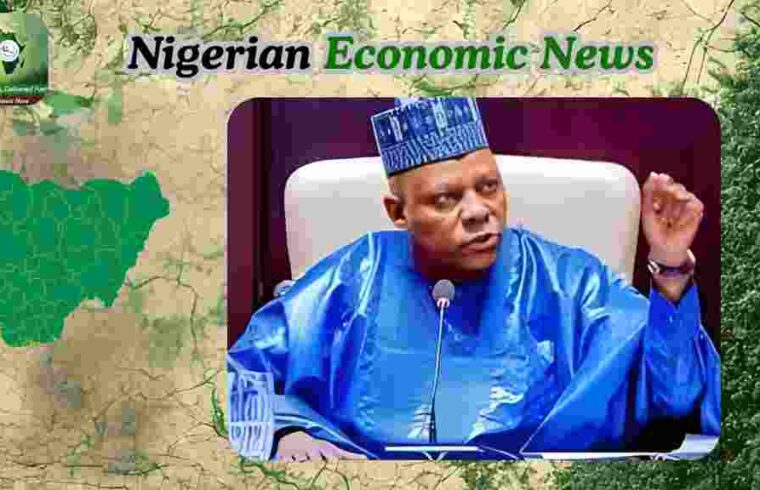
Federal Government Targets Women and Youth in Major Economic Empowerment Programme
The Federal Government has launched an ambitious financial literacy and inclusion programme designed to reach 10 million Nigerians, with a strong focus on empowering women, young people, entrepreneurs, and underserved communities.
Led by Vice-President Kashim Shettima, the initiative seeks to improve financial knowledge, expand digital capabilities, and equip participants with practical skills needed to make informed economic decisions and build sustainable wealth.
Strategic Partnership Formed to Drive Programme
To support the nationwide rollout, the Office of the Vice-President entered into a formal partnership with six leading professional institutions through a Memorandum of Understanding (MoU).
The agreement establishes a framework for developing training materials, professional certification pathways, mentorship opportunities, and digital learning platforms that will help participants strengthen their financial and business competencies.
Officials say the collaboration is intended to create a stronger foundation for economic participation across various sectors of society.
Key Professional Bodies Join the Initiative
Several respected institutions have been selected to contribute their expertise to the programme. These include the Institute of Chartered Accountants of Nigeria (ICAN), Chartered Institute of Bankers of Nigeria (CIBN), Chartered Institute of Stockbrokers (CIS), National Institute of Credit Administration (NICA), the Chartered Risk Management Institute, and the Nigerian Institute of Innovation and Entrepreneurship.
Together, the organizations will support curriculum development, skills training, enterprise education, and professional guidance for participants across the country.
Shettima Highlights Importance of Human Capital Development
Speaking during the signing ceremony, Kashim Shettima described the initiative as a long-term investment in Nigeria’s future rather than a routine administrative exercise.
He emphasized that infrastructure alone cannot drive national prosperity, stressing that a skilled and knowledgeable population remains essential for sustained economic progress.
According to the Vice-President, Nigeria’s youthful population represents a major advantage, but that advantage can only translate into growth if citizens possess the skills necessary to thrive in an increasingly digital economy.
Financial Inclusion Goes Beyond Access
A major theme of the programme is the belief that financial inclusion should extend beyond simply opening bank accounts or providing financial services.
Shettima noted that individuals must also understand how to manage resources effectively, evaluate financial opportunities, and navigate modern economic systems with confidence.
He warned that inadequate skills and limited financial awareness could slow the country’s broader development goals, including aspirations for significant economic expansion in the coming years.
Focus on Youth Empowerment and Small Businesses
The initiative is expected to support multiple areas of economic development, including entrepreneurship, digital transformation, advocacy efforts, and the growth of small and medium-sized enterprises.
Particular attention will be given to young Nigerians and women, who have been identified as primary beneficiaries of the programme.
Government officials believe that strengthening these groups will create broader opportunities for employment, innovation, and financial independence nationwide.
Call for Practical Results
Rather than viewing the agreement as a ceremonial document, Shettima urged all participating organizations to focus on measurable outcomes and effective implementation.
He encouraged stakeholders to ensure that the programme delivers tangible benefits by preparing participants for real-world economic challenges and opportunities.
During the event, the Vice-President formally declared the commencement of the free training programme on behalf of President Bola Ahmed Tinubu, signaling the start of the nationwide initiative.
Stakeholders Express Support
Support for the programme was also expressed by leaders of participating organizations.
Malam Haruna Yahaya, President of ICAN, commended the administration’s economic reform efforts and pledged the institute’s commitment to the successful execution of the initiative.
Similarly, Emmanuel Lennox, Chief Executive Officer of WAWU Africa, assured stakeholders that the organization would provide the digital infrastructure and technological support required for smooth implementation.
Experts Stress Need for Skills-Based Inclusion
Contributing to discussions at the event, Dr Nurudeen Zauro, Technical Adviser to the President on Economic and Financial Inclusion, emphasized that meaningful inclusion involves both access and capability.
He explained that citizens and institutions must possess the knowledge required to use financial tools responsibly, productively, and sustainably if long-term economic benefits are to be achieved.
Formal Agreement Marks Official Launch
Gossip News Now reports that the signing of the Memorandum of Understanding served as the defining moment of the event, officially activating the nationwide programme.
The agreement paves the way for large-scale training, mentorship, and capacity-building efforts that could impact millions of Nigerians over the coming years.
Analysis: Why the Programme Matters
The launch reflects a growing recognition that economic growth depends not only on policy reforms but also on the financial competence of citizens. By combining financial literacy, digital education, and professional mentorship, the programme seeks to address knowledge gaps that often limit economic participation.
If effectively implemented, the initiative could help strengthen entrepreneurship, improve financial decision-making, and expand opportunities for millions of Nigerians. The emphasis on women and youth also aligns with broader efforts to harness the country’s demographic potential and create a more inclusive economy.