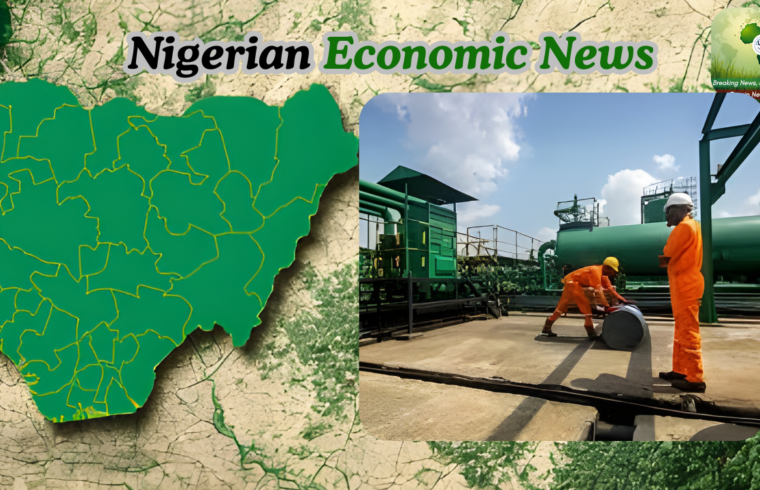
Nigeria has continued to dominate Africa’s crude oil landscape, retaining its position as the continent’s highest oil producer after recording a modest improvement in production levels at the start of 2026. Although the increase signals positive movement for the country’s energy sector, production remains slightly below the volume allocated to Nigeria under international supply agreements.
Data from the Organization of Petroleum Exporting Countries (OPEC) confirmed that Nigeria’s daily crude output climbed to 1.459 million barrels in January 2026. This figure reflects a noticeable increase compared to the 1.422 million barrels per day recorded in December 2025, showing a gradual rebound of approximately 37,000 barrels per day within one month.
Despite this improvement, Nigeria was unable to meet its official production quota of 1.5 million barrels per day. This shortfall of roughly 50,000 barrels per day extends a trend that has seen the country remain below its allocated output limit for six consecutive months, highlighting ongoing operational and structural difficulties within the oil industry.
Interestingly, alternative assessments from independent monitoring agencies and energy analysts estimated Nigeria’s January production slightly higher, at around 1.47 million barrels daily. Such variations are common in global oil reporting, as different data collection methods and sources often produce slightly different results.
Even with these challenges, Nigeria remains ahead of Libya, its closest competitor on the continent. Libya recorded an output of approximately 1.37 million barrels per day during the same period, allowing Nigeria to maintain its leadership in Africa’s crude oil production rankings.
Economic Significance and Fiscal Implications
The increase in production brings cautious optimism for Nigeria’s economic outlook. Oil exports remain a primary source of government income and foreign exchange, both of which play crucial roles in funding national development and stabilizing the country’s currency.
Energy sector specialists believe that any consistent rise in crude output could help improve government revenues and strengthen Nigeria’s financial position. However, they emphasize that sustaining higher production levels will require addressing persistent obstacles such as aging infrastructure, pipeline vandalism, and underinvestment in exploration and production activities.
Experts have stressed that improving efficiency across upstream operations and encouraging new investments are essential steps toward closing the production gap and ensuring long-term stability in oil output.
Nigeria’s Ambitious Production Goals
Looking ahead, Nigeria has outlined aggressive targets for expanding its crude oil production capacity. The country aims to increase output to 2 million barrels per day by 2026, with further plans to reach 2.5 million barrels per day by 2027.
Achieving these goals will depend heavily on strengthening security in oil-producing regions, improving operational infrastructure, and attracting sustained investment into the sector. Without addressing these key factors, meeting such ambitious production targets could prove difficult.
Commentary and Analysis: Progress With Caution
Nigeria’s latest production increase represents an encouraging step, but it also underscores the fragile state of its oil sector. The country’s inability to consistently meet its OPEC quota reflects deeper systemic issues that require long-term solutions rather than temporary improvements.
Security concerns, infrastructure limitations, and investment gaps continue to restrict Nigeria’s full production potential. While the current upward trend is positive, maintaining and expanding this progress will depend on strategic reforms and stronger industry management.
Ultimately, Nigeria’s continued leadership in Africa’s oil production demonstrates its strategic importance in global energy markets. However, the country must overcome its operational challenges to fully capitalize on its vast petroleum resources and achieve its ambitious future production targets.
© 2025 Gossip News Now , a division of CHIEJOS HARBIAN DIGITAL MEDIA LTD. Contact us via admin@gossipnewsnow.online ,