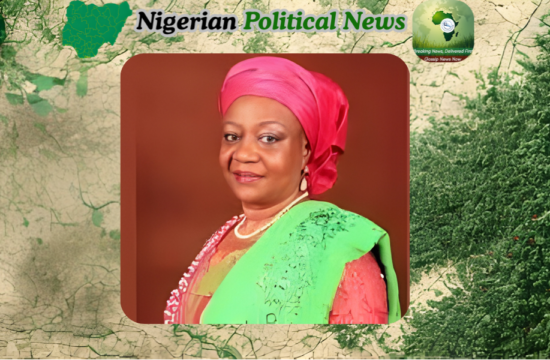


A debate has emerged following the announcement of a newly constituted policy committee by the African Democratic Congress (ADC), after civil society advocate Yemi Adamolekun publicly declined participation in the initiative.
The activist, known for her previous leadership role at the advocacy group Enough is Enough (EiE), stated that she was neither consulted nor informed before her name appeared on the committee list.
ADC Introduces National Policy Committee
Earlier in the week, the ADC unveiled a 50-member “Wise Men and Women” Policy and Manifesto Committee.
The initiative received approval from the party’s National Working Committee and its National Chairman, Senator David Mark.
According to the party, the committee was designed to assemble individuals with extensive experience in governance, policy development, and national planning.
The group includes figures drawn from diverse sectors such as academia, public service, civil society, and the professional community.
Leadership Structure of the Committee
The ADC selected prominent personalities to steer the policy initiative.
Key leadership roles include:
- Chief John Odigie-Oyegun – Chairman
- Professor Pat Utomi – Deputy Chairman
- Salihu Lukman – Secretary
Party officials say the committee’s task is to produce a comprehensive policy framework that reflects the aspirations of Nigerians while positioning the ADC as a credible governing alternative.
Mandate and Objectives
According to the party, the committee was created to develop ideas and strategies capable of addressing Nigeria’s key governance challenges.
Members are expected to contribute expertise in areas such as:
- economic policy and development
- democratic reform and governance
- security and institutional strengthening
- social welfare and national planning
The ADC hopes that the committee’s work will form the backbone of its future manifesto.
Adamolekun Rejects Appointment
Shortly after the committee was announced, Yemi Adamolekun reacted publicly, distancing herself from the initiative.
In a message shared on her verified social media account, she questioned how her name appeared on the committee list without her knowledge.
She stressed that she had not joined the ADC and had not agreed to participate in the committee’s activities.
Her response suggested concern about the credibility of the selection process.
Social Media Reaction
In her post, Adamolekun criticised the process and challenged the party to clarify the circumstances under which her name was included.
She wrote:
“ADC! ADC!! ADC!!! How many times did I call you? This is not how to build credibility. Please show me proof of when I joined your party.”
The remark quickly attracted attention online, sparking discussions about transparency in political appointments.
ADC Responds to the Controversy
Reacting to the issue, Bolaji Abdullahi, the ADC’s National Publicity Secretary, explained that the committee was intentionally designed to include professionals beyond the party’s membership.
According to him, the party believes that policy development should involve experts from various fields rather than only politicians.
He emphasized that the goal was to bring together a wide range of perspectives capable of producing meaningful solutions to national challenges.
Invitation Extended Beyond Party Lines
Abdullahi clarified that some individuals listed on the committee were not members of the ADC.
The party’s approach, he said, was meant to ensure that policy discussions benefit from diverse viewpoints.
He also maintained that the party believed those invited had been informed during the vetting stage.
Despite the controversy, he expressed hope that Adamolekun might reconsider and contribute her expertise.
Commentary and Analysis
The episode highlights the delicate balance political parties must maintain when engaging professionals and civil society actors in policy development.
While the ADC appears to be attempting a broader, technocratic approach by involving experts from outside traditional politics, the controversy underscores the importance of clear communication and consent when announcing such appointments.
For civil society advocates like Adamolekun, credibility and independence remain essential, making unsolicited political affiliations potentially problematic.
At the same time, the incident reflects the growing effort by political parties to strengthen their policy platforms ahead of future elections by incorporating voices beyond their internal structures.
Whether Adamolekun ultimately agrees to participate or maintains her refusal, the debate has already drawn attention to the ADC’s attempt to position itself as a policy-driven political alternative.
© 2025 Gossip News Now, a division of CHIEJOS HARBIAN DIGITAL MEDIA LTD. Contact us via admin@gossipnewsnow.online