
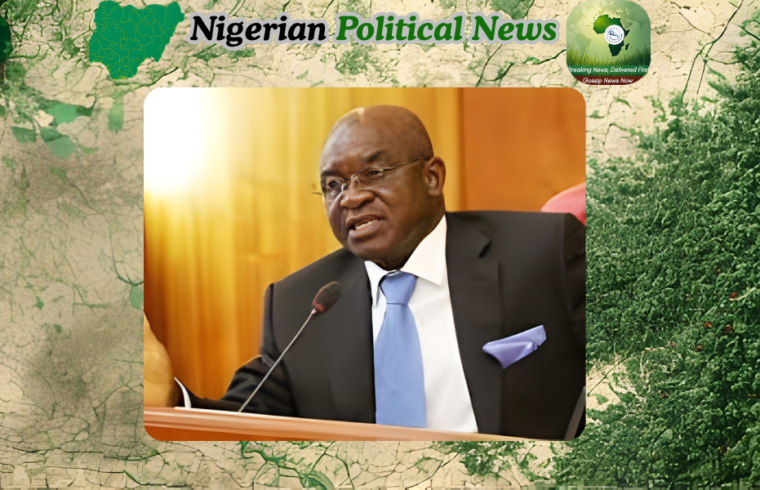
The internal turmoil within the African Democratic Congress (ADC) has taken a new turn as key opposition figures quietly convened in what observers describe as a significant political engagement ahead of the 2027 elections. At the centre of the development is David Mark, whose leadership of the party remains under intense scrutiny.
Away from public attention, the meeting brought together influential stakeholders from the ADC and the Peoples Redemption Party (PRP). The presence of notable political actors added weight to the discussions, further fueling speculation about possible alliances forming within Nigeria’s opposition space.
Among those in attendance were Hakeem Baba-Ahmed, who currently leads the PRP, alongside Bolaji Abdullahi, Muhammed Ishaq, and Salihu Lukman, a former APC chieftain. Their gathering signals a convergence of experienced political voices at a time when party alignments are becoming increasingly fluid.
Notably, Baba-Ahmed’s return to active politics has drawn attention in recent months, following his exit from a federal advisory role tied to Vice President Kashim Shettima. His re-emergence in partisan politics appears to be shaping new conversations within opposition circles.
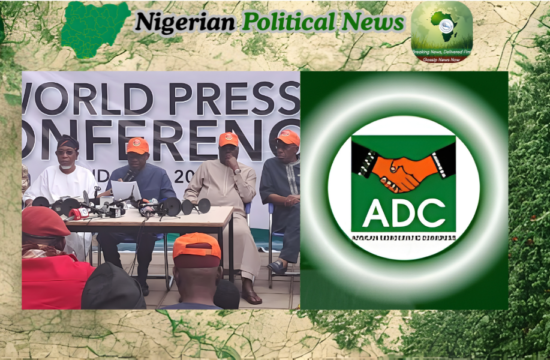
Although no formal communiqué was released after the meeting, insiders suggest that the discussions largely revolved around the leadership dispute within the ADC and its implications. Gossip News Now reports that the PRP used the opportunity to express strong backing for the Mark-led faction amid its ongoing disagreement with the Independent National Electoral Commission (INEC).
During the interaction, sentiments were reportedly shared highlighting concerns over actions perceived as undermining democratic structures. The position conveyed emphasized that challenges facing opposition parties could weaken the broader political system if not addressed responsibly.
In response, David Mark is said to have acknowledged the PRP’s support, describing the relationship between both parties as one built on mutual political understanding. He also hinted at the importance of collaboration in safeguarding national interests, suggesting that unity among opposition groups could play a crucial role moving forward.
However, the crisis within the ADC continues to intensify. A newly emerged faction within the party has openly opposed Mark’s leadership, aligning instead with INEC’s decision to withdraw recognition based on a court ruling. This development has further complicated an already fragile situation.
The dissenting group has also distanced itself from claims made by Nafiu Bala Gombe, rejecting his leadership ambition and questioning the legitimacy of his emergence. In addition, accusations have surfaced against former party leader Ralph Nwosu, with allegations that party structures were being redirected toward individuals outside the established membership base.
Adding another layer to the unfolding drama, the faction claims to have held its own valid executive meeting in Abuja, where it reportedly outlined a separate leadership direction for the party. These parallel claims to authority underscore the depth of division currently facing the ADC.
Commentary & Analysis
The quiet meeting between ADC and PRP leaders reflects a broader strategic recalibration among opposition parties in Nigeria. With internal conflicts threatening party cohesion, leaders appear to be exploring alliances as a means of preserving political relevance ahead of future elections.
The ADC’s situation highlights the risks of prolonged leadership disputes, particularly when multiple factions emerge with competing claims. Such fragmentation not only weakens internal structures but also creates opportunities for external political shifts.
At the same time, the PRP’s show of support suggests a willingness among smaller parties to play a more prominent role in shaping opposition dynamics. Whether this evolves into a formal alliance or remains a symbolic gesture will depend largely on how the ADC resolves its internal crisis.
As the 2027 elections approach, the ability of opposition parties to unify—or at least stabilize—may ultimately determine their competitiveness in Nigeria’s evolving political landscape.
© 2025 Gossip News Now, a division of CHIEJOS HARBIAN DIGITAL MEDIA LTD. Contact us via admin@gossipnewsnow.online