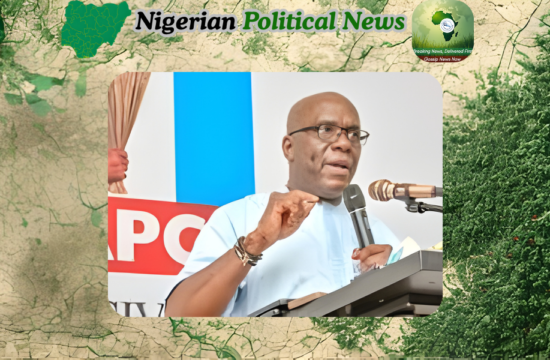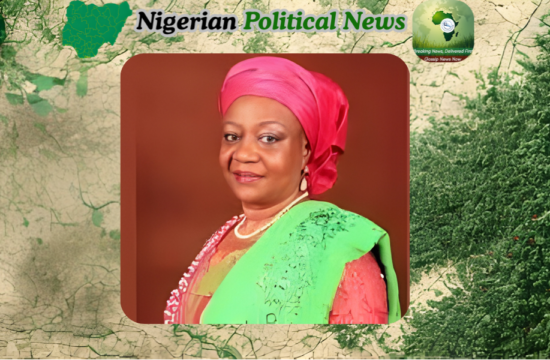

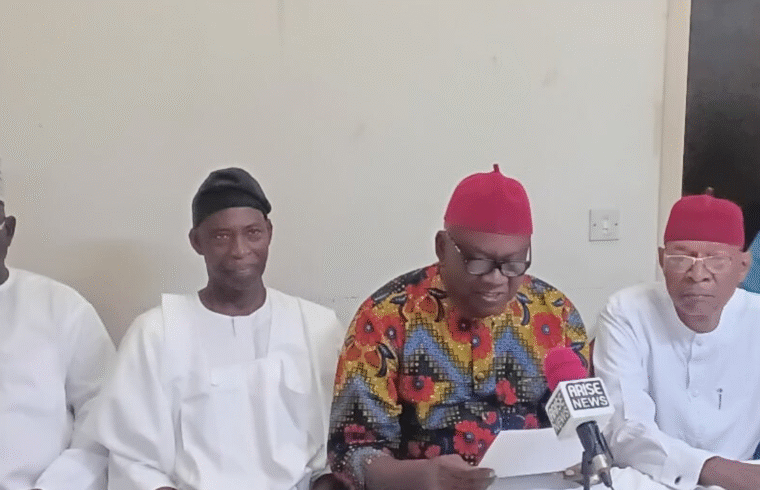
A faction made up of former members of the defunct All Nigeria Peoples Party has pushed for a major political concession within the All Progressives Congress, insisting that its support for President Bola Tinubu’s expected 2027 re-election campaign should be matched with a commitment on the party’s 2031 presidential succession plan. The group says the ANPP wing deserves the next shot at the presidency after Tinubu’s tenure.
The demand was presented in Abuja during a leadership gathering organised by the Association of Former ANPP Members. At the meeting, the group argued that although it played an important role in the coalition that created the APC in 2013, it has not received what it considers fair treatment in appointments, influence, and leadership opportunities since the merger took effect.
Their position is rooted in the belief that the party’s major founding blocs should have a more balanced share of political power. The association maintained that the Congress for Progressive Change produced Muhammadu Buhari, while the Action Congress of Nigeria bloc currently holds the presidency through Tinubu. From that perspective, the former ANPP faction says fairness demands that the next presidential ticket after 2031 should go to its side of the coalition.
Beyond the presidential question, the group also renewed its insistence that the vice-presidential slot should remain within its reach, arguing that it was among the strongest contributors to the alliance that ended the PDP’s long stay in power. According to Gossip News Now, the bloc believes its relevance in the APC’s founding history should be reflected more clearly in both present appointments and future power arrangements.
The association’s national chairman, Prof. Vitalis Ajumbe, used the occasion to appeal directly for broader inclusion of former ANPP members in national positions. He called for greater representation in cabinet appointments, diplomatic assignments, federal agencies, boards, and other strategic institutions, saying the bloc has sacrificed much for the party but has not been rewarded proportionately.
Even with those grievances, the group did not withhold support for Tinubu. Instead, it pledged to stand behind the President’s second-term ambition in 2027 and promised to begin mobilising across the country in support of the APC. Its leaders said they were ready to activate structures at the grassroots and work through all 774 local government areas as part of a nationwide campaign effort.
The meeting also produced a strategy aimed at increasing the faction’s visibility and political strength. Members resolved to revive their organisational networks across the federation, sustain regular consultations, and stage a major rally in Abuja to publicly affirm their loyalty to Tinubu and their continued relevance within the ruling party.
A number of prominent figures reportedly attended the gathering, underscoring the seriousness of the bloc’s attempt to reassert itself in APC politics. Their presence signaled that the agitation is not merely symbolic, but part of a broader push to secure leverage ahead of future internal negotiations.
The APC, however, has moved to cool down the conversation. Party leaders acknowledged the historical role played by the ANPP in the formation of the ruling coalition, but they insisted that debates about the 2031 ticket are arriving too soon. Senior party figures said attention should remain fixed on the nearer task of strengthening the APC and preparing for the 2027 elections rather than opening succession battles prematurely.
That response reflects a desire by the party leadership to keep internal zoning and succession talks from overshadowing current governance and campaign priorities. APC officials stressed that politics often involves negotiation, but said any conversation about post-2027 power-sharing would only be meaningful at the proper time.
Gossip News Now recalls that the ANPP was one of the notable political forces of Nigeria’s Fourth Republic and later became a pillar of the coalition that birthed the APC alongside the ACN, CPC, a faction of APGA, and the new PDP. That alliance ultimately paved the way for Buhari’s 2015 victory and ended the PDP’s 16-year hold on power.
Still, the sense of exclusion among some former ANPP figures has not disappeared. Over the years, voices from the bloc have repeatedly complained that their contribution to the APC’s success has not translated into equivalent influence within the party’s power structure. The latest demand appears to be another attempt to reopen that conversation in more direct terms.
Commentary and Analysis
This development shows that the struggle inside the APC is no longer only about elections, but also about legacy, succession, and recognition among the party’s founding groups. By tying support for Tinubu in 2027 to expectations about 2031, the former ANPP faction is trying to convert loyalty into bargaining power.
The move also reveals an important political calculation. Rather than opposing Tinubu, the bloc is choosing to align with him while simultaneously staking an early claim to the future. That makes the demand both strategic and delicate, because it supports the current leadership while subtly pressuring it.
At the same time, the APC leadership’s response suggests the party does not want internal succession debates to distract from immediate political goals. Opening the 2031 discussion too early could deepen rivalry among other blocs and create avoidable tension in a coalition already built on sensitive power balancing.
In practical terms, the former ANPP members may not get a formal guarantee this early, but their message has been delivered clearly: they want recognition, appointments, and a serious place in the conversation about the party’s future. Whether the APC accommodates that pressure now or later may shape internal alignments in the years ahead.
© 2025 Gossip News Now, a division of CHIEJOS HARBIAN DIGITAL MEDIA LTD. Contact us via admin@gossipnewsnow.online