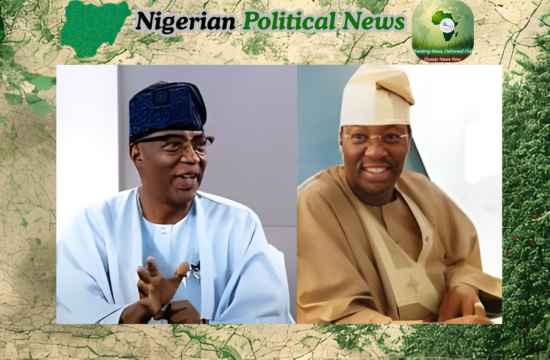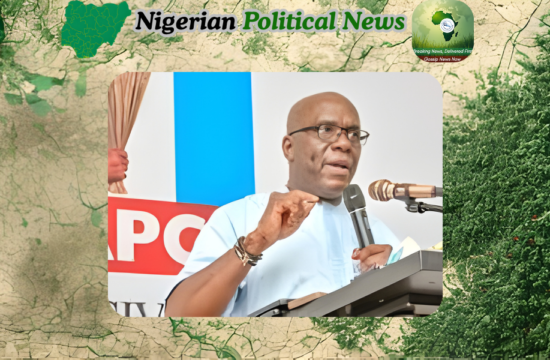

Concerns about the future of Nigeria’s main opposition party have resurfaced after Farouk Aliyu, a former Minority Leader in the House of Representatives and prominent member of the All Progressives Congress (APC), suggested that the Peoples Democratic Party (PDP) may need to consider a political alliance to regain its strength.
During an interview on Sunrise Daily, a Channels Television programme, Aliyu argued that the PDP’s political influence has been steadily eroding, making it increasingly difficult for the party to function effectively as a formidable opposition force.
Rather than continuing with internal disputes, he advised PDP leaders to explore the possibility of a strategic partnership with the African Democratic Congress (ADC) ahead of the 2027 general elections.
Aliyu believes that such collaboration could offer the PDP an opportunity to rebuild its political base and present a stronger challenge in Nigeria’s evolving political environment.
He pointed out that persistent disagreements within the opposition party have weakened its structure and diminished its capacity to compete effectively.
In his view, cooperation between opposition groups could revive political momentum that has been lost due to years of factional disputes.
The APC chieftain also stressed that a healthy democracy depends on the presence of strong opposition parties capable of scrutinizing government policies and providing alternative ideas.
According to him, prolonged fragmentation within the PDP not only harms the party itself but also affects the overall quality of democratic governance in the country.
Aliyu acknowledged that both the PDP and the ADC include experienced politicians and respected public figures who have contributed significantly to Nigeria’s political development.
He therefore described the continued division between such groups as unfortunate, especially at a time when political unity could strengthen democratic competition.
Opposition Unity Not APC’s Responsibility
While discussing the idea of a merger, Aliyu dismissed suggestions that the ruling APC should be expected to facilitate reconciliation among opposition parties.
He noted that political alliances are decisions that must be initiated and driven by the parties involved, not by their competitors.
To illustrate his argument, he recalled how the APC itself was formed through the coming together of several political movements.
Among the major groups that eventually merged to create the ruling party were the All Nigeria Peoples Party (ANPP), the Congress for Progressive Change (CPC) and the Action Congress of Nigeria (ACN).
Aliyu questioned why the PDP could not adopt a similar strategy if it believes its political strength is declining.
At the same time, he insisted that the APC is not intimidated by the possibility of a united opposition front.
He emphasized that governance in Nigeria is a shared responsibility among citizens and leaders across different political affiliations.
Commentary and Analysis
Aliyu’s remarks come at a time when Nigeria’s political landscape is experiencing significant realignments. Defections of governors, lawmakers and influential politicians have continued to reshape party structures ahead of future elections.
For the PDP, the challenge goes beyond electoral competition. The party is currently dealing with internal leadership disputes that have created rival factions claiming authority over its national structures.
These conflicts have weakened the cohesion of the party that governed Nigeria from 1999 to 2015, raising questions about its ability to reorganize before the next election cycle.
A merger with another opposition platform such as the ADC could theoretically consolidate resources, leadership and voter support. However, political alliances also require compromise among competing interests—something that has historically proven difficult in Nigerian politics.
Whether opposition parties will pursue such cooperation remains uncertain, but the discussion highlights the growing debate about how Nigeria’s political opposition can regain strength in the years leading to the 2027 elections.
© 2025 Gossip News Now, a division of CHIEJOS HARBIAN DIGITAL MEDIA LTD. Contact us via admin@gossipnewsnow.online