
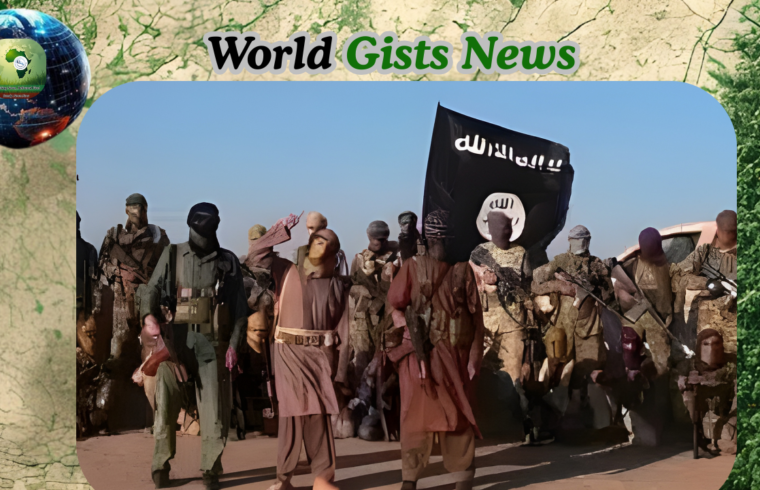
A strong message separating Islam from criminal violence emerged during a major international Islamic gathering held in Lagos, where scholars from multiple continents firmly rejected efforts to associate their religion with acts such as terrorism and banditry. They emphasized that such associations misrepresent Islamic teachings and fuel unnecessary divisions within society.
The four-day conference, organized by the Daaru Na’im Academy for Shariah Sciences, drew over 20,000 participants from Africa, the Middle East, Europe, and the United States. The event focused on strengthening authentic Islamic beliefs while addressing modern challenges that threaten proper religious understanding. Participants agreed that preserving doctrinal clarity is essential to preventing confusion and countering harmful narratives.
According to the academy’s Chief Imam and Director-General, Sheikh Abdul Mojeed Imran Eleha, the objective was to remind Muslims of the importance of maintaining sound belief systems in rapidly changing societies. He noted that groups falsely claiming religious legitimacy often distort Islam’s true message, creating misunderstanding both among Muslims and the broader public. He also urged religious leaders to avoid unnecessary disputes and instead strengthen unity and collaboration in defending accurate teachings.
Reinforcing this perspective, Uganda’s Deputy Mufti, Sheikh Mohammad Ali Wahiso, highlighted that Islam prioritizes peace, justice, and respect for human life. He warned that young people are increasingly exposed to misleading interpretations online and stressed the urgent need for scholars to use modern communication tools to provide reliable guidance. He remarked that if scholars fail to address the digital space, misinformation will continue to shape young minds.
The conference also underscored the importance of peaceful coexistence within Nigeria’s diverse society. Professor Abdul Mojeed Rasaq Alaro of the University of Ilorin called for national unity, reminding citizens that protecting the country is a shared responsibility regardless of religious or ethnic differences. He emphasized that belief should never be imposed on others, stating that mutual respect must guide relationships between individuals of different faiths. According to him, meaningful dialogue remains the best path toward lasting peace.
Addressing the impact of such gatherings on future generations, Justice Kamaldeen Abdulateef of the Kwara State Sharia Court of Appeal said the conference offered valuable lessons for young Muslims. He explained that exposure to authentic teachings would encourage discipline, strengthen moral values, and promote constructive engagement between religious communities and public institutions.
The event brought together influential voices, including academics, diplomats, traditional leaders, and government representatives. Their collective presence reinforced the view that accurate religious education plays a vital role in promoting social stability and preventing extremist ideologies from taking root.
Meanwhile, in a separate development, prominent cleric Ahmad Gumi expressed concern over foreign military involvement in Nigeria’s internal security matters. He urged authorities to reconsider cooperation with external forces, arguing that such interventions may carry unintended consequences. He cautioned that innocent civilians often suffer in counterterrorism campaigns and warned that foreign participation could complicate the nation’s already sensitive religious and political environment.
One of his remarks reflected this concern clearly, as he suggested that external powers engaged in counterterrorism efforts may not always act without hidden interests, adding that the presence of foreign forces could risk worsening tensions instead of resolving them.
Commentary and Analysis: Why This Conference Matters
The Lagos conference highlights an ongoing effort by Islamic scholars to reclaim the narrative surrounding their religion. In recent years, criminal groups have exploited religious identity to justify violence, leading to global misconceptions. By directly addressing these distortions, religious leaders are attempting to separate faith from criminality and restore public trust.
Equally important is the emphasis on technology and youth engagement. With many young people turning to the internet for religious guidance, the absence of credible scholarly voices online leaves room for misinformation. The scholars’ call for digital engagement shows recognition that the future of religious education will depend heavily on credible online presence.
The broader political dimension, including debates about foreign military involvement, reveals how religion, security, and sovereignty intersect in Nigeria. While combating terrorism remains essential, religious leaders are urging caution to ensure that efforts to improve security do not inadvertently create new tensions or deepen divisions.
Ultimately, the conference reflects a coordinated attempt by global Islamic scholars to promote peace, reinforce authentic teachings, and encourage unity across religious and national lines. Their message was clear: Islam stands for peace, and those who commit violence in its name do not represent its true principles.
© 2025 Gossip News Now , a division of CHIEJOS HARBIAN DIGITAL MEDIA LTD. Contact us via admin@gossipnewsnow.online ,