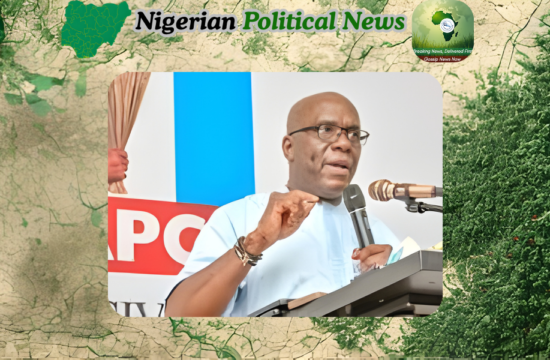


Former Speaker of Nigeria’s House of Representatives, Aminu Tambuwal, has rejected attempts to portray the country’s security crisis as a religious conflict, insisting that the perpetrators of violence are simply criminals.
Speaking during a media interaction in Sokoto, Tambuwal argued that armed groups responsible for attacks across parts of northern Nigeria cannot be described as representatives of any faith.
According to him, the actions of bandits and terrorists show no allegiance to religious identity, as their victims come from various backgrounds and communities.
He explained that the violence occurring in states such as Zamfara, Katsina, Sokoto and Kebbi demonstrates that these groups target whoever is vulnerable rather than any particular religious group.
Tambuwal warned against attempts by political actors or foreign observers to frame the crisis along religious lines, stressing that such narratives could worsen tensions within the country.
In his remarks, the former Sokoto State governor also reacted to Nigeria’s recent classification as a Country of Particular Concern by Donald Trump.
Tambuwal described the decision by the United States government as unfortunate, suggesting that the designation may have been made without a full understanding of the realities on the ground in Nigeria.
He emphasized that the security challenges facing the country should be viewed primarily as criminal activity and a national security issue rather than a religious conflict.
The politician noted that the insecurity has affected both Muslim and Christian communities, pointing out that places of worship—including mosques and churches—have been attacked.
He therefore argued that it is inaccurate to interpret the violence as directed at any specific religion.
Tambuwal also referenced the perspective of the Pope Francis, noting that the Vatican had previously acknowledged that Nigerians of different faiths are suffering from the same wave of insecurity.
According to him, this observation reflects the true nature of the crisis, which cuts across religious and ethnic divisions.
He stressed that the problem should be approached as a national emergency requiring unity among Nigerians regardless of political or religious affiliations.
Tambuwal further urged international partners to reconsider their stance and instead focus on supporting Nigeria’s efforts to confront the growing threat posed by criminal armed groups.
While calling for global assistance, he emphasized that the fight against insecurity should not be reduced to partisan politics or criticism of any single government.
He appealed to countries such as the United States, France, the United Kingdom and Canada to contribute support that could help Nigeria strengthen its security response.
Commentary and Analysis
Tambuwal’s remarks reflect an ongoing debate about how Nigeria’s security crisis should be interpreted internationally. Some external observers have framed the violence as religious persecution, while many Nigerian officials insist it is largely driven by criminal networks, economic factors and weak security infrastructure.
The distinction matters because how the crisis is described can influence international policy responses and diplomatic engagement.
By rejecting the religious narrative, Tambuwal appears to be advocating for a broader understanding of the conflict—one that focuses on law enforcement, governance challenges and regional instability.
At the same time, his call for international support suggests that Nigeria’s security situation requires both domestic reforms and global cooperation.
Ultimately, addressing banditry and terrorism in the country will likely require coordinated efforts involving security agencies, political leadership and international partners working together toward long-term stability.
© 2025 Gossip News Now , a division of CHIEJOS HARBIAN DIGITAL MEDIA LTD. Contact us via admin@gossipnewsnow.online