

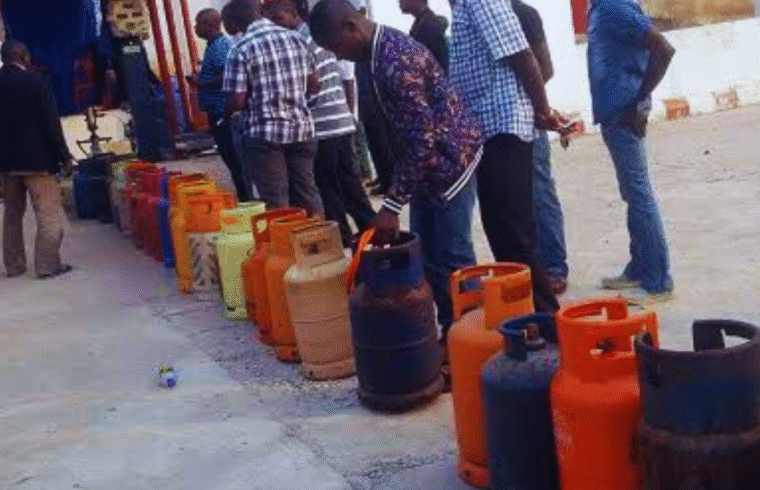
The cost of refilling cooking gas in Nigeria continues to fluctuate, leaving many households and small businesses closely monitoring daily price changes. Liquefied Petroleum Gas (LPG), a key energy source for cooking, is now priced differently depending on where and how it is purchased.
Where Gas Is Cheapest Right Now
According to Gossip News Now, some outlets currently offer relatively lower rates compared to others. Stations such as BOVAS and Ise-Olorun are among the most affordable, selling LPG at approximately ₦990 per kilogram.
However, not all suppliers operate at the same rate. Other providers, including Rainoil, have slightly higher pricing, while independent vendors often charge even more due to additional costs.
Price Variations Across Sellers
A quick look at the current market shows noticeable differences:
- Around ₦990/kg at selected major outlets
- About ₦1,020/kg at Rainoil stations
- Between ₦1,100 and ₦1,150/kg from independent distributors
These variations highlight how supply chain factors and operational expenses influence final consumer prices.
What It Costs to Refill Different Cylinder Sizes
Using the base rate of ₦990/kg, the cost of refilling various cylinder sizes can be estimated as follows:
- Smaller cylinders like 1kg cost just under ₦1,000
- Medium-sized options such as 5kg fall close to ₦5,000
- Larger household cylinders (10kg to 12.5kg) range from roughly ₦9,900 to over ₦12,000
This breakdown helps consumers plan their budgets based on usage and household needs.
Why Cooking Gas Prices Keep Changing
Several underlying factors contribute to the constant changes in LPG pricing across Nigeria. Instead of a fixed cause, the situation is shaped by multiple influences:
- The cost of purchasing gas from depots plays a major role in determining retail prices
- Transportation expenses, driven by fuel costs and distance, affect distribution
- Exchange rate instability impacts the importation of gas and related materials
- Demand levels vary by region, pushing prices higher in some areas
- Independent sellers often include additional margins to cover business expenses
Reframing the Situation
In a simplified perspective, LPG pricing is not controlled by a single element but by a combination of economic and logistical pressures. This explains why prices can differ even within the same city.
Commentary and Analysis
The ongoing variation in cooking gas prices reflects broader economic realities in Nigeria, including energy costs and currency fluctuations. For many households, LPG remains a preferred alternative to traditional fuels, but rising prices continue to strain budgets.
Improving supply chains, stabilizing the naira, and addressing transportation challenges could help reduce price disparities over time. Until then, consumers may need to compare vendors carefully to get the best value.
What Consumers Should Watch
As the market evolves, buyers are advised to stay updated on local prices and consider purchasing from more competitive outlets when possible. Awareness remains key to managing household energy costs effectively.
© 2025 Gossip News Now , a division of CHIEJOS HARBIAN DIGITAL MEDIA LTD. Contact us via admin@gossipnewsnow.online