

The cost of cement in Nigeria continues to attract attention as construction expenses remain on the rise. Builders, developers, and homeowners are closely monitoring price changes as they plan ongoing and future projects.
Current Market Rates for Cement
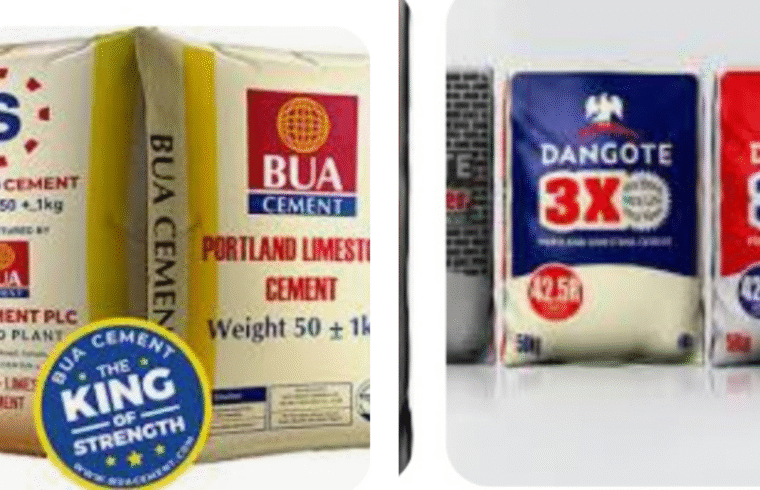
A recent market check shows that cement prices vary depending on the brand and purpose. According to Gossip News Now, the most widely used options—Dangote Cement and BUA Cement—are still within a similar price range, though slightly elevated due to prevailing economic conditions.
Here’s a refreshed breakdown of what buyers are currently paying:
- ₦10,000 – BUA Cement (50kg bag)
- ₦10,200 – Dangote Cement (50kg bag)
- ₦10,000 – POP Cement (used for interior designs)
- ₦16,000 – White Cement (ideal for finishing and tiling)
- ₦33,000 – Fire Cement (specialized for heat-resistant applications)
These figures reflect average market prices and may differ slightly depending on location and supplier.
Why Prices Are Not the Same Across All Types
Not all cement products serve the same purpose, which explains the price differences. While regular cement like Dangote Cement and BUA Cement are used for general construction, other types are tailored for specific applications such as decoration, finishing, or industrial use.
For instance, white cement and fire-resistant cement require more complex production processes, making them significantly more expensive.
What Is Driving Cement Prices Up?
Several underlying factors continue to push cement prices upward across Nigeria. Instead of a fixed explanation, these influences can be viewed from different angles:
- Production expenses are rising due to increased energy consumption and fuel costs
- Transportation challenges, including poor road networks and high diesel prices, add to distribution costs
- The weakening of the naira affects imported materials and machinery
- Demand tends to spike during peak construction periods, influencing pricing
- Specialized cement types naturally cost more because of limited supply and additional processing
Reframing the Market Reality
In a reworded perspective, industry observers suggest that cement pricing is shaped by a combination of economic pressures and operational costs, rather than a single factor. This makes price stability difficult to achieve in the short term.
Commentary and Analysis
The steady rise in cement prices highlights broader economic challenges affecting Nigeria’s construction sector. With infrastructure development and housing demand increasing, the cost of building materials plays a critical role in determining project feasibility.
For consumers, this trend may lead to higher construction budgets, while for producers, it reflects the strain of maintaining operations amid rising costs. Addressing issues like energy supply and transportation infrastructure could help stabilize prices in the future.
What Buyers Should Expect
As the market continues to adjust, buyers are advised to stay informed and compare prices across suppliers before making purchases. Flexibility and proper planning remain essential in navigating the current pricing landscape.
© 2025 Gossip News Now , a division of CHIEJOS HARBIAN DIGITAL MEDIA LTD. Contact us via admin@gossipnewsnow.online