

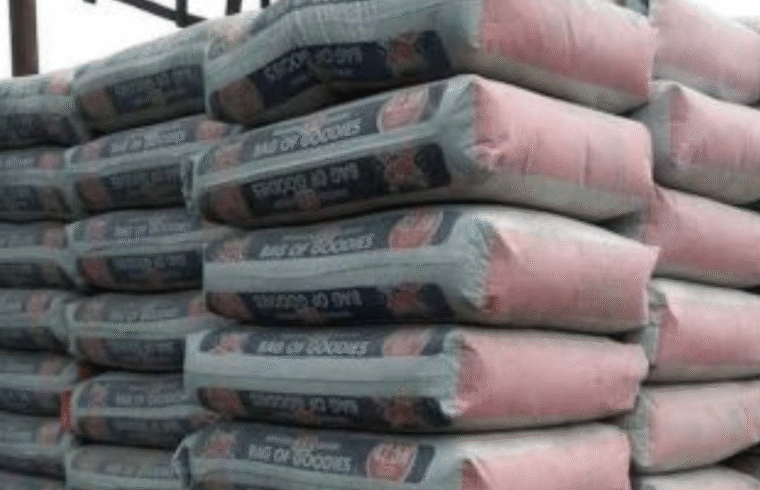
Nigeria’s construction sector continues to feel the impact of rising building material costs, particularly cement. Major producers such as Dangote Cement, BUA Cement, and Lafarge Africa remain dominant suppliers in the market, yet retail prices for their products remain high across many states and distribution outlets.
Across different building material markets, the cost of cement varies slightly depending on location, distribution channels, and retailer margins. However, most dealers report that prices have stayed within a relatively similar range over the past few weeks.
A recent survey of building material dealers indicates that a standard 50-kilogram bag of Dangote Cement is currently being sold at around ₦10,200 to ₦10,400 in many retail locations.
For buyers considering alternatives, BUA Cement appears slightly cheaper in some areas. Market checks suggest the product is trading between ₦10,100 and ₦10,300 per bag.
Meanwhile, Lafarge Cement is priced marginally higher in some markets, with dealers selling it for roughly ₦10,400 to ₦10,600 for the same 50 kg packaging size.
Market Price Snapshot
Instead of a uniform nationwide price, the current cement market can be summarized as follows:
| Brand | Estimated Retail Range (50kg bag) |
|---|---|
| Dangote Cement | ₦10,200 – ₦10,400 |
| BUA Cement | ₦10,100 – ₦10,300 |
| Lafarge Cement | ₦10,400 – ₦10,600 |
These figures reflect typical retail observations rather than fixed national prices.
Why Cement Prices Remain High
Several economic and operational pressures continue to influence the price of cement in Nigeria. Gossip News Now recalls that manufacturers have repeatedly cited rising production costs and logistical challenges as major reasons prices have remained elevated.
One significant factor is the depreciation of the naira, which affects the cost of importing certain components used in cement production. Equipment parts, packaging materials, and specialized additives are sometimes priced in foreign currencies, making production more expensive when the exchange rate rises.
Energy consumption is another major cost driver for cement producers. Factories rely heavily on electricity and fuel for grinding, processing, and transportation. When diesel prices increase or power supply becomes unstable, operating expenses rise significantly.
Logistics also plays a crucial role. Cement must be transported from factories to warehouses, wholesalers, and retail outlets across the country. Long travel distances, road infrastructure challenges, and security concerns in certain regions often add to the cost of distribution.
Demand patterns in the construction industry also influence pricing trends. When housing projects, government infrastructure works, and private real estate developments increase, demand for cement rises rapidly. If production or distribution cannot match that demand, prices tend to climb.
Government intervention has occasionally attempted to address the issue. Authorities have previously urged manufacturers to consider reducing cement prices to around ₦7,000 per bag. However, producers maintain that such reductions would be difficult without addressing the broader cost pressures affecting the industry.
Commentary and Market Outlook
For contractors, developers, and individual home builders, the continued rise in cement prices remains a major concern. Cement is one of the most essential materials in construction, and even small increases can significantly affect overall building costs.
Industry observers believe that meaningful price reductions may depend on improvements in energy supply, exchange rate stability, and better transportation infrastructure. Without such changes, cement prices are likely to remain sensitive to fluctuations in fuel costs and currency value.
As Nigeria’s housing and infrastructure needs continue to grow, the cement market will remain one of the most closely watched sectors in the country’s construction economy.
© 2025 Gossip News Now , a division of CHIEJOS HARBIAN DIGITAL MEDIA LTD. Contact us via admin@gossipnewsnow.online