
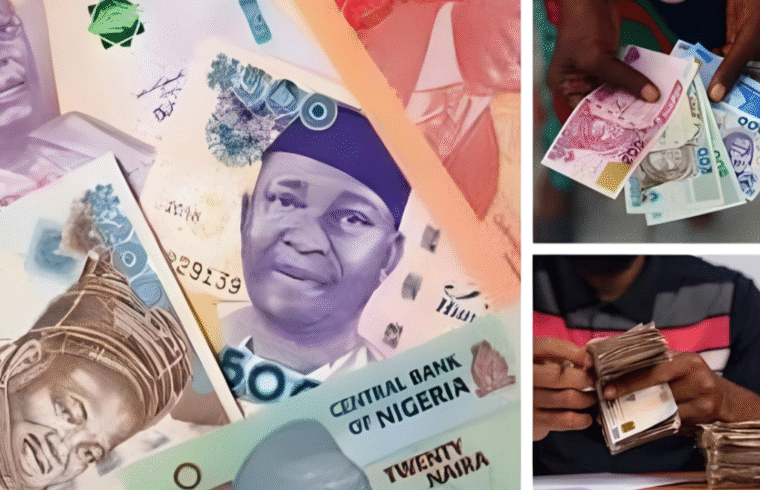
Nigeria’s foreign exchange landscape continues to reflect a noticeable gap between official and informal trading windows, with the naira facing pressure in the parallel market. Recent figures show that the local currency is still struggling to maintain parity against the U.S. dollar in unofficial channels, despite relative calm in the regulated segment.
According to Central Bank of Nigeria guidelines, all foreign exchange dealings are expected to pass through authorized institutions. However, real-world demand and supply challenges have kept the parallel market active across cities like Lagos.
Parallel Market Shows Upward Pressure
Data gathered from Bureau De Change operators indicates that the dollar continues to trade at significantly higher levels outside the official window. In this segment, sellers are offering the currency close to the ₦1,500 mark, while buyers negotiate slightly lower rates.
Rather than presenting it in the usual format, here’s a simplified breakdown of how the exchange is currently structured in the informal market:
- Cash buyers are exchanging naira at approximately ₦1,475 per dollar
- Sellers are releasing dollars at around ₦1,499
These figures highlight the persistent demand for foreign currency, especially among individuals and small businesses unable to access official allocations.
Official Market Maintains Narrow Range
While the black market reflects volatility, the official window remains relatively stable. Rates recorded within the regulated system show only minor fluctuations, staying within a tighter band compared to the parallel segment.
A quick snapshot of the official range reveals:
- Peak exchange level hovering around ₦1,464
- Lower bound settling near ₦1,458
This stability suggests ongoing efforts by monetary authorities to control excessive swings, even as external pressures continue to weigh on the currency.
Policy Stance and Market Reality
The Central Bank of Nigeria has consistently discouraged participation in the black market, emphasizing transparency and accountability in official transactions. Still, many Nigerians turn to informal channels due to accessibility challenges and urgent demand for foreign currency.
In essence, there is a clear disconnect between policy direction and market behavior—one that continues to shape exchange rate dynamics.
Understanding the Variations
It is worth noting that exchange rates are not fixed across all locations. Several factors influence daily pricing, including:
- Geographic location of the transaction
- Volume of demand at a given time
- Individual dealer margins and negotiation power
Because of this, slight differences in rates are expected across cities and trading points.
Market Insight and Outlook
Gossip News Now recalls that fluctuations in Nigeria’s currency market often mirror broader economic conditions, including foreign reserves, import demand, and investor confidence. The widening gap between official and parallel rates remains a key concern for analysts.
If demand for dollars continues to outpace supply in formal channels, the pressure on the naira could persist. However, sustained regulatory interventions may help narrow the disparity over time.
© 2025 Gossip News Now , a division of CHIEJOS HARBIAN DIGITAL MEDIA LTD. Contact us via admin@gossipnewsnow.online