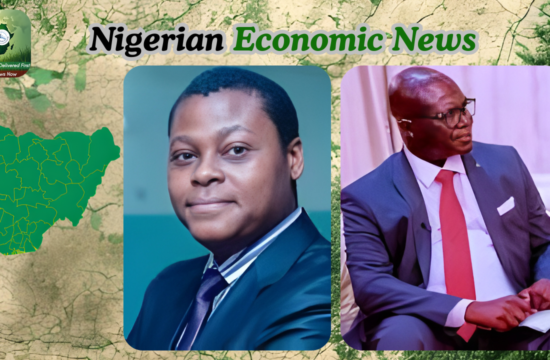

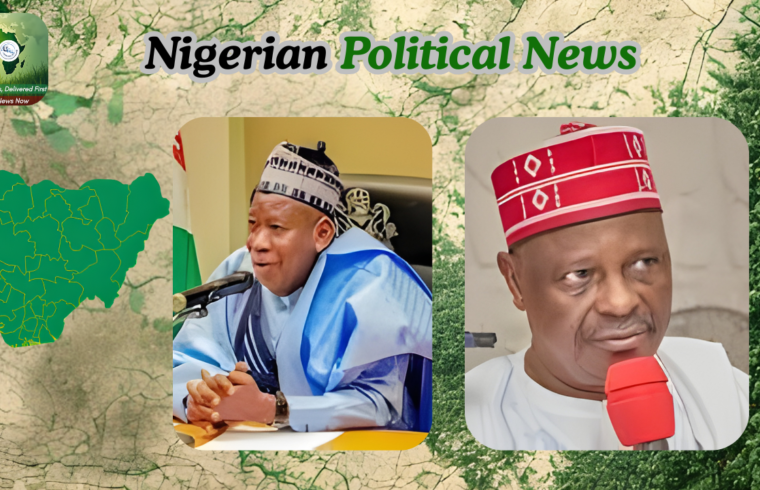
Former National Chairman of the All Progressives Congress (APC) and ex-governor of Kano State, Abdullahi Ganduje, has indicated that reconciliation with Rabiu Musa Kwankwaso, a prominent leader of the New Nigeria Peoples Party (NNPP), is still a possibility despite their long-standing political rivalry.
In a recent interview with the BBC, Ganduje explained that personal and religious values influence his approach to political disagreements. According to him, Islam encourages forgiveness and reconciliation, making it difficult for him to permanently shut the door on resolving differences with political adversaries.
He noted that politics should not destroy long-standing relationships, especially among individuals who have shared a political journey for many years.
Long History of Political Collaboration
Reflecting on their past, Ganduje acknowledged that he and Kwankwaso had worked closely together for a long time within Kano’s political landscape. Their partnership once played a significant role in shaping the state’s political direction.
He emphasized that regardless of their current political differences, their history cannot simply be erased.
The former governor also expressed optimism about recent developments in Kano politics, suggesting that they may create a new environment for improved political cooperation.
Impact of Recent Political Realignment
Ganduje’s remarks come shortly after a major political shift in the state involving Governor Abba Kabir Yusuf, who reportedly moved from the NNPP to the APC. The defection has reshaped alliances and altered the balance of political influence in Kano.
According to Ganduje, the governor himself appeared pleased with the decision, describing the development as one that has energized the party’s supporters.
He suggested that the evolving political environment could create opportunities for broader unity within the state’s political class.
Internal Party Structure to Be Determined Through Elections
Discussing party leadership, Ganduje stressed that positions within the APC are not permanently assigned but are determined through internal democratic processes.
He explained that party leadership structures are built gradually, beginning from grassroots levels and progressing upward through different tiers of the party.
The process, he said, follows this sequence:
- Ward-level leadership elections
- Local government party structures
- State-level leadership arrangements
- National leadership positions
According to him, these steps ensure that every faction within the party can eventually find representation within the broader structure.
Moving Beyond Past Disagreements
While acknowledging that disagreements existed in the past, Ganduje suggested that political circumstances have now changed.
He described the current moment as an opportunity to move forward and focus on collective progress, particularly in advancing development projects and governance within Kano State.
In his words, political success in the state should be seen as a shared responsibility among leaders and stakeholders.
Power-Sharing Rumours Addressed
Ganduje also responded to speculation about a supposed political arrangement that allegedly gives Governor Yusuf a larger share of influence within the party’s structure.
Reports had circulated suggesting that a 60-40 power-sharing formula existed between different factions, but the former APC chairman dismissed such claims.
According to him, no official documentation confirming such an agreement has been presented.
He explained that if any arrangement of that nature were to exist, it would normally come from the national leadership of the party in formal terms.
Focus on Governance and Development
The former governor concluded by emphasizing that the main priority should remain the welfare of Kano residents rather than internal political rivalry.
He stated that the success or failure of the government should be viewed collectively, noting that the benefits of good governance extend to everyone.
In his view, political leaders should concentrate on delivering policies that improve the lives of citizens, particularly those from disadvantaged communities.
Commentary and Analysis
Ganduje’s comments reflect a strategic attempt to ease tensions within Kano’s complex political landscape. The rivalry between him and Kwankwaso has long defined the state’s politics, often dividing supporters into competing camps.
By signaling openness to reconciliation, Ganduje may be trying to reduce polarization while strengthening the APC’s position in the region.
Political analysts believe that the recent defection of Governor Yusuf has significantly shifted the balance of power, potentially creating new alliances and forcing political actors to reconsider their strategies.
If reconciliation between Ganduje and Kwankwaso were to occur, it could reshape Kano’s political environment in dramatic ways, possibly ending one of the state’s most influential political rivalries.
However, whether such reconciliation becomes reality will depend on broader negotiations, political interests, and the evolving dynamics within both parties.
© 2025 Gossip News Now, a division of CHIEJOS HARBIAN DIGITAL MEDIA LTD. Contact us via admin@gossipnewsnow.online