
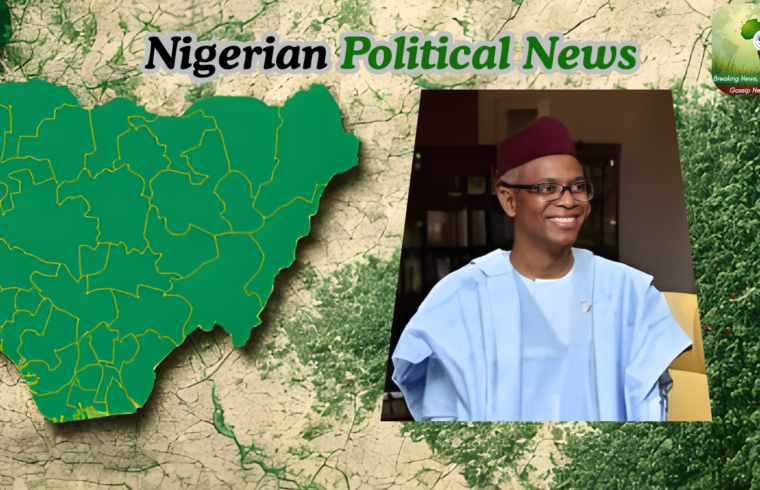
Nigeria’s political landscape could witness another major shift in leadership after 2027, according to former Kaduna State governor Nasir El-Rufai, who believes no ruling party can retain dominance indefinitely within the country’s democratic system.
Speaking during the 23rd Daily Trust Dialogue focused on evaluating Nigeria’s Fourth Republic, El-Rufai reflected on the evolving nature of political competition, arguing that electoral power in Nigeria has repeatedly changed hands and is unlikely to remain with one party permanently.
Rather than presenting his remarks as a direct attack on the All Progressives Congress (APC), the former Federal Capital Territory minister framed his prediction within historical context. He pointed out that the Peoples Democratic Party (PDP), once considered politically unassailable, governed Nigeria for sixteen years before eventually losing control of the presidency.
At another stage of his contribution to the discussion, El-Rufai suggested that the same political reality could confront the APC. In his view, democratic progress in Nigeria lies partly in the absence of a permanent ruling party, making electoral turnover a defining feature of the nation’s political evolution.
He argued that Nigeria stands out within Africa because power alternation remains possible, unlike political systems where dominant parties maintain uninterrupted control for decades. However, he cautioned that competitive elections alone have not automatically delivered stronger governance outcomes.
Concerns About Party Structure and Governance
El-Rufai used the platform to highlight what he considers structural weaknesses within Nigeria’s political parties. According to him, many parties operate around influential personalities rather than coherent ideological foundations, limiting their capacity to promote accountability.
Instead of outlining criticisms in a traditional sequence, his observations centered on broader democratic challenges:
- Political rivalry exists but does not always produce effective governance
- Parties often prioritise alliances and interests over institutional development
- Electoral competition has yet to fully translate into public accountability
- Democratic maturity requires stronger party systems beyond individual leaders
He suggested that meaningful governance reforms will depend on building institutions capable of surviving beyond political personalities.
Absence From Abuja Explained
El-Rufai participated remotely in the dialogue, addressing attendees from Brussels, Belgium. He explained that health-related issues prevented his physical attendance in Abuja and offered an apology to organisers and participants for his absence.
Despite speaking from abroad, his remarks quickly gained political attention due to their implications for Nigeria’s next electoral cycle and the future prospects of the ruling party.
Commentary & Analysis
El-Rufai’s prediction touches on a recurring theme in Nigerian politics: the cyclical nature of political power. Since the return to civilian rule in 1999, Nigeria has experienced at least one major transition between ruling parties, reinforcing the perception that electoral dominance is temporary.
Political analysts note that statements from prominent figures within or formerly aligned with ruling parties often signal internal debates about performance, public perception, and electoral strategy. Such commentary may influence both opposition mobilisation and ruling party reforms ahead of future elections.
His observation that political competition has not fully produced accountability also reflects broader public concerns. Many citizens expect democratic rivalry to yield improved governance, transparency, and economic outcomes—expectations that remain contested in practice.
As preparations for the 2027 elections gradually begin, El-Rufai’s remarks may contribute to ongoing discussions about party renewal, voter expectations, and the durability of political alliances in Nigeria’s Fourth Republic.
© 2025 Gossip News Now, a division of CHIEJOS HARBIAN DIGITAL MEDIA LTD. Contact us via admin@gossipnewsnow.online