
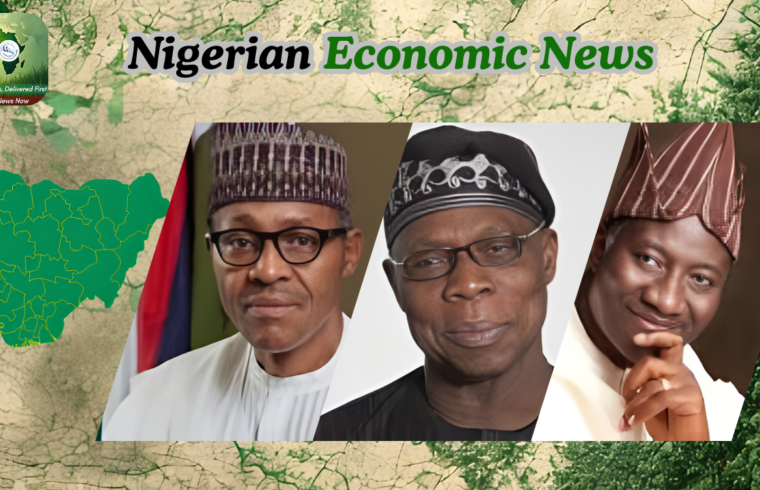
Nigeria’s public spending priorities have again come under scrutiny following revelations that the Federal Government is projected to expend more than ₦38 billion on statutory benefits for former presidents, vice presidents, and their families between 2005 and 2026.
Investigations into federal budget records indicate that the welfare scheme for past national leaders has steadily grown since its introduction two decades ago. What began as a modest annual provision eventually evolved into a fixed budgetary commitment running into billions of naira each year, reflecting the institutionalization of post-office benefits for former occupants of the nation’s highest political offices.
Government documents show that allocations initially started at relatively low levels before expanding sharply during the early 2010s. The most significant spike occurred during the administration of former President Goodluck Jonathan, when yearly provisions reached their peak. In contrast, earlier years recorded far smaller allocations, demonstrating how the scheme expanded alongside Nigeria’s evolving governance structure and compensation policies.
Over time, the annual figure stabilized, with successive budgets maintaining nearly identical allocations for more than a decade. The 2026 national budget proposal retained this consistent pattern under a dedicated expenditure category covering pensions, allowances, operational support, and other statutory privileges granted to retired heads of state and their deputies.
Who Benefits From the Scheme?
The welfare framework covers both civilian and military-era leaders. Among the living beneficiaries are former presidents such as Olusegun Obasanjo, Muhammadu Buhari, and Goodluck Jonathan, as well as past military heads of state including Ibrahim Babangida, Yakubu Gowon, and Abdulsalami Abubakar.
Former vice presidents and equivalent military office holders also fall within the program. Individuals who previously occupied the nation’s second-highest office—from Atiku Abubakar to Yemi Osinbajo—remain eligible for lifetime support under the law.
Importantly, the policy extends beyond living leaders. Families of deceased national figures—from early post-independence leadership to military-era administrations—continue receiving constitutionally recognized welfare assistance.
Beyond routine allowances, government spending has occasionally included logistical support such as vehicle procurement. Records show hundreds of millions of naira allocated at different periods to provide official vehicles for former leaders, who also earn stipends whenever they participate in meetings of the Council of State.
Legal Foundation Behind the Benefits
Nigeria’s system of post-presidential welfare did not emerge informally. The policy originated under a military decree issued in 1999 and was later codified through legislation passed in 2001 regulating remuneration for former top public officials. Subsequent amendments empowered fiscal authorities to periodically review payments in response to economic conditions.
Constitutional provisions and salary legislation for public office holders reinforce the framework, ensuring that benefits remain legally binding rather than discretionary political gifts. Over the years, remuneration adjustments have typically mirrored salary increases granted to serving presidents and vice presidents.
What Former Presidents Receive
Support packages granted to retired presidents combine financial payments with institutional backing. Typical provisions include:
- Dedicated administrative staff and personal aides
- Security protection involving police officers and intelligence personnel
- Official vehicles replaced periodically with government-funded maintenance
- Comprehensive medical care within Nigeria or overseas when necessary
- Residential accommodation and furnished office space
- Annual vacation privileges at home or abroad
These entitlements aim to maintain dignity of office while enabling former leaders to continue participating in national advisory roles.
Benefits Extended to Former Vice Presidents
Former vice presidents receive a slightly reduced but comparable welfare structure. Their package generally provides:
- Administrative assistance and secretarial support
- Security details with armed personnel
- Government vehicles renewed at specified intervals
- Medical coverage for themselves and immediate families
- Official housing and office facilities
- Annual leave arrangements similar to those granted to ex-presidents
In addition, families of deceased leaders remain entitled to annual stipends, educational support for children, and spousal allowances, although payments may cease under specific personal circumstances such as remarriage.
Financial Trend Across Two Decades
A review of spending patterns reveals a gradual transformation from modest early allocations to sustained multi-billion-naira yearly commitments. Early years recorded figures below ₦150 million annually, followed by rapid expansion between 2011 and 2012 when expenditures crossed the billion-naira threshold.
From 2013 onward, government budgets largely standardized annual provisions at about ₦2.3 billion, a trend expected to continue into 2026. Additional spending on vehicles and operational logistics pushed cumulative expenditure to approximately ₦38.188 billion over 22 years—equivalent to more than $140 million at prevailing exchange rates.
Commentary and Analysis
The disclosure of long-term welfare spending for former leaders reignites a recurring national conversation: how should Nigeria balance respect for past leadership with demands for fiscal prudence?
Supporters argue that lifetime benefits protect institutional stability, prevent former leaders from seeking financial influence after leaving office, and preserve national dignity. Many countries, they note, maintain similar arrangements to safeguard the independence and security of former heads of government.
Critics, however, question the sustainability of such expenditures in a developing economy facing infrastructure deficits, unemployment challenges, and social welfare demands. The debate increasingly centers not on whether former leaders deserve benefits, but on the scale, transparency, and long-term affordability of the system.
Ultimately, the issue reflects a broader policy dilemma—how democratic systems reward public service while ensuring that national resources align with contemporary economic realities and citizen expectations.
© 2025 Gossip News Now, a division of CHIEJOS HARBIAN DIGITAL MEDIA LTD. Contact us via admin@gossipnewsnow.online