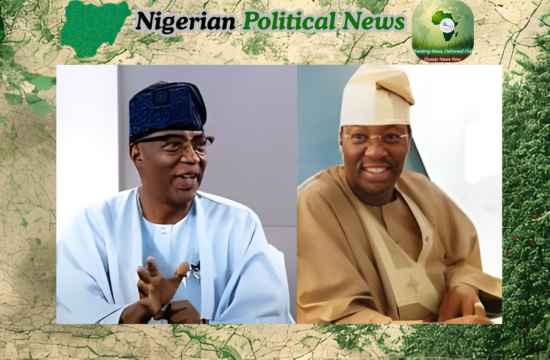

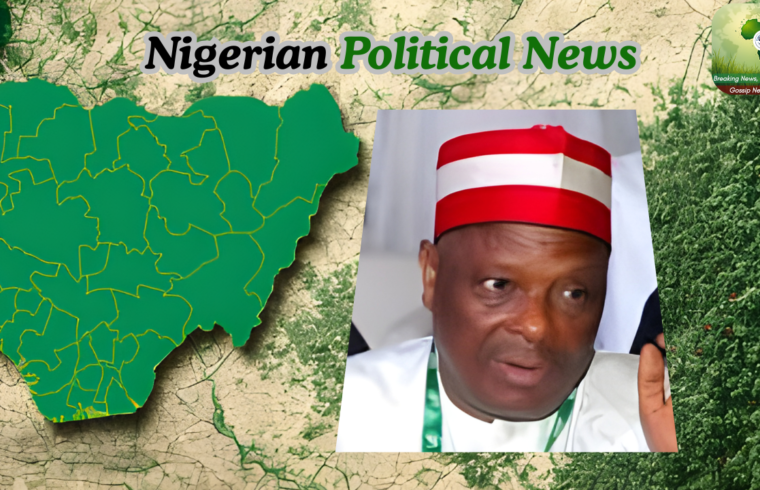
A political controversy has emerged in Kano State following remarks by former Deputy Governor Hafizu Abubakar, who disputed widely held claims regarding the creation of the influential Kwankwasiyya Movement. Speaking at a public gathering in Kano Government House, Abubakar argued that the movement’s history has been inaccurately attributed solely to former governor and presidential candidate Rabiu Musa Kwankwaso.
The event, which featured the distribution of hundreds of motorcycles to selected social media influencers, quickly turned into a political reflection on the evolution of one of northern Nigeria’s most recognisable grassroots political structures. Addressing attendees, Abubakar offered a personal account of how the movement began, insisting it was the product of collective effort rather than individual invention.
According to him, the Kwankwasiyya Movement emerged during Kwankwaso’s first tenure as governor as a response to internal political resistance within the Peoples Democratic Party (PDP). He explained that a small group of political allies designed the initiative to stabilise support and counter opposition that threatened the administration at the time.
Abubakar claimed that six individuals — himself included — conceptualised the movement as a strategic mobilisation platform rather than a separate political organisation. The intention, he said, was to strengthen political loyalty and create unity among supporters navigating difficult party dynamics.
Symbolism And Naming Controversy
Providing details rarely discussed publicly, the former deputy governor asserted that both the name and visual identity associated with Kwankwasiyya originated from collective brainstorming sessions. He stated that he personally proposed the movement’s name, while the famous red cap symbol reportedly emerged during political engagements in Gwale Local Government Area.
He emphasised that the founders intentionally avoided forming a new political party, believing that building a structured support movement within an existing platform offered a more effective path to overcoming internal political challenges.
At another point in his remarks, Abubakar expressed frustration over what he described as a gradual rewriting of history. He suggested that the original contributors to the movement had been sidelined despite their foundational role.
Using an analogy to explain his disappointment, he compared the situation to builders who constructed a house together only to be removed after allowing someone else to occupy it — a metaphor highlighting feelings of exclusion among early participants.
Political Implications
The statement introduces renewed debate over ownership and legacy within Kano’s political landscape, where the Kwankwasiyya Movement remains a powerful force influencing voter mobilisation and party loyalty. Analysts note that disputes over political origins often surface during periods of realignment or heightened competition for influence.
Commentary & Analysis
Abubakar’s claims underscore how political movements can evolve beyond their founders, sometimes creating contested narratives about authorship and identity. In Nigerian politics, symbolism — such as colours, attire and slogans — frequently becomes intertwined with individual personalities, making collective contributions less visible over time.
The controversy also reflects broader tensions between political branding and grassroots organisation. While charismatic leaders often become the public face of movements, behind-the-scenes architects may feel their roles are overlooked as popularity grows.
Whether Abubakar’s assertions reshape public perception remains uncertain, but the discussion highlights the enduring significance of Kwankwasiyya as both a political ideology and a symbol of mobilisation in Kano politics.
© 2025 Gossip News Now, a division of CHIEJOS HARBIAN DIGITAL MEDIA LTD. Contact us via admin@gossipnewsnow.online