
Growing political tension between Europe and the United States has unexpectedly entered the football arena after a prominent German football administrator suggested that participation in the 2026 FIFA World Cup should no longer be taken for granted. The debate emerged amid diplomatic disagreements linked to statements made by U.S. President Donald Trump, prompting renewed discussion about how global politics intersects with international sport.
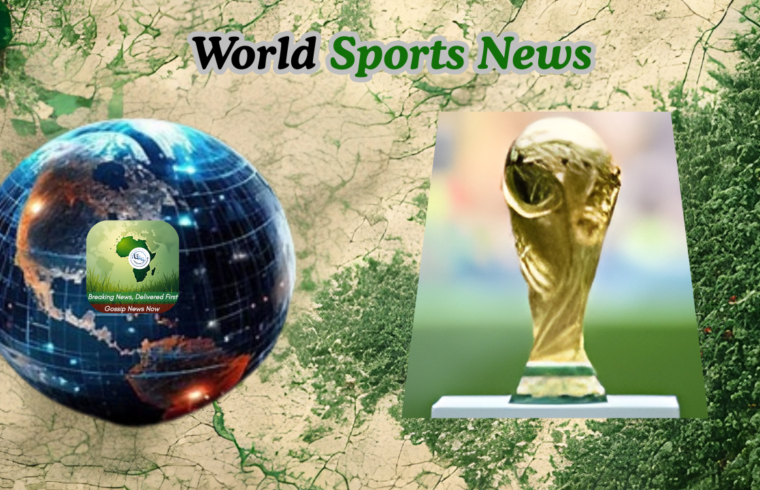
The upcoming World Cup, jointly organised by the United States, Canada and Mexico, is expected to be the largest edition in tournament history, featuring more than one hundred matches. A significant majority of fixtures are scheduled for American venues, placing the U.S. at the centre of organisational and political attention ahead of the competition.
Concerns intensified across Europe following controversial geopolitical remarks attributed to Washington regarding Greenland, a Danish autonomous territory. The comments triggered backlash among European governments, particularly in Denmark, and contributed to a widening diplomatic rift that later expanded into trade disputes after tariff threats were directed at several European economies, including Germany.
Against this backdrop, Oke Göttlich, vice-president of the German Football Association and president of Bundesliga side St. Pauli, publicly argued that football authorities should not ignore broader ethical considerations. In his view, discussions surrounding a potential boycott are no longer hypothetical but necessary, insisting that sport cannot detach itself entirely from global political realities.
Rather than presenting the idea as an immediate decision, Göttlich framed his remarks as an invitation for reflection within European football governance. He questioned when governing bodies draw moral boundaries and suggested that waiting until crises escalate may undermine the credibility of institutions claiming to uphold shared values.
Mixed Reactions Across Europe
The suggestion immediately divided opinion among European stakeholders. French officials indicated that a boycott is not currently under consideration, favouring diplomatic engagement instead. Meanwhile, Denmark’s football authorities acknowledged the sensitivity of the issue without committing to any drastic sporting action, especially as their national team continues its qualification pursuit.
Göttlich drew parallels with Cold War-era sporting protests, recalling Olympic boycotts of the 1980s as examples where nations used sport to express political opposition. He argued that historical precedents show international competitions have long reflected political tensions rather than existing outside them.
Germany’s History of Football Activism
The debate also revived memories of Germany’s confrontation with FIFA during the 2022 World Cup in Qatar. At that time, several European teams planned to promote inclusivity through the OneLove armband initiative before FIFA intervened with disciplinary warnings. German players responded symbolically by covering their mouths during a pre-match photograph — a gesture interpreted as criticism of restrictions on political expression.
Göttlich referenced that episode while questioning whether football applies moral standards consistently. He suggested that if political issues influenced debates surrounding previous tournaments, ignoring similar concerns now could appear selective or contradictory.
Values, Sport and Political Responsibility
According to the German official, the core issue extends beyond a single tournament or political figure. He argued that sports organisations must define clear ethical thresholds, asking when actions or rhetoric become serious enough to warrant institutional response. Without defined limits, he warned, governing bodies risk appearing indifferent to issues they once claimed were central to their identity.
His remarks also called for accountability from leading football administrators, including German FA leadership and FIFA executives, urging transparent dialogue about where sport stands when confronted with controversial political developments.
Commentary & Analysis
The unfolding conversation illustrates a long-standing dilemma in global football: whether sport should remain politically neutral or serve as a platform for moral expression. Mega-events like the World Cup inevitably attract geopolitical scrutiny because they represent more than competition — they symbolise international cooperation, cultural exchange and national image.
A boycott remains unlikely at this stage, but Göttlich’s intervention has reopened debate about football’s ethical consistency. As international tournaments grow in scale and influence, governing bodies may increasingly face pressure to balance commercial interests with political accountability.
Ultimately, the discussion signals that modern football cannot fully escape global politics. Whether European federations pursue further action or allow tensions to cool, the controversy underscores how decisions made far from the pitch can shape the narrative surrounding the world’s most watched sporting event.
© 2025 Gossip News Now, a division of CHIEJOS HARBIAN DIGITAL MEDIA LTD. Contact us via admin@gossipnewsnow.online