
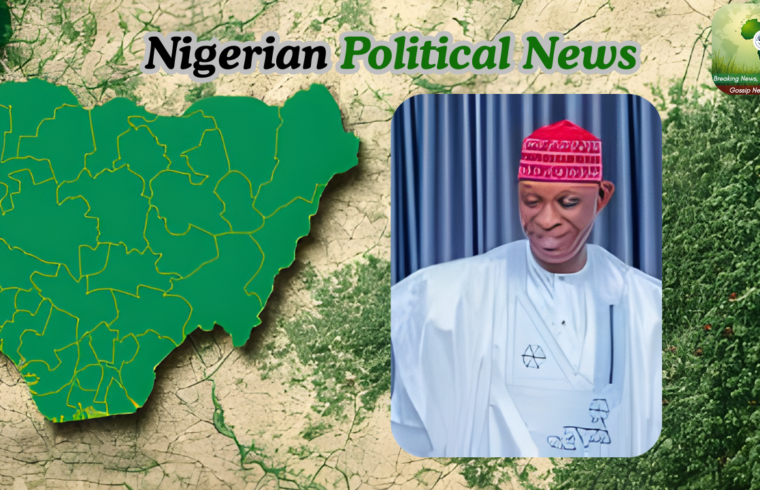
Fresh political tensions have surfaced within the New Nigeria Peoples Party (NNPP) following the decision of Kano State Governor Abba Yusuf to leave the party for the All Progressives Congress (APC).
The development has triggered sharp exchanges among key figures linked to the party and the Kwankwasiyya political movement, highlighting deep divisions over the circumstances surrounding the governor’s exit.
Party Defends Governor Yusuf
Leaders of the NNPP faction associated with the party’s founder, Boniface Aniebonam, have rejected accusations that Governor Yusuf abandoned the party for personal reasons.
Instead, the group argues that the governor’s departure was the result of internal pressures allegedly aimed at weakening his authority.
According to the party, the political atmosphere surrounding Yusuf had become increasingly difficult due to what it described as attempts to dominate the administration from outside the state government structure.
Statement From Party Leadership
The party’s North-West National Vice Chairman, Sani Danmasani, issued a statement addressing the controversy.
He suggested that repeated attempts by Yusuf to promote unity within the party were met with resistance.
Danmasani claimed that efforts to stabilise the party leadership structure failed because of what he described as excessive ambition and personal interests among some influential figures.
Reaction to Galadima’s Comments
The NNPP response came after remarks reportedly made by Buba Galadima, Secretary of the party’s Board of Trustees, who criticised Yusuf’s decision to leave the party.
Danmasani argued that the reactions from Galadima and Rabiu Musa Kwankwaso indicated strong dissatisfaction with the governor’s defection.
According to him, their public statements reflected frustration over the political shift.
Concerns Raised Over Emotional Reactions
The party official went further to suggest that the developments may have placed emotional pressure on some party leaders.
He urged close associates of Kwankwaso and Galadima to provide support, saying their responses suggested that the situation had deeply affected them.
Danmasani stated that the intensity of the reactions showed how significant Yusuf’s departure had been for the movement.
Recalling Events Before the 2023 Elections
The NNPP also revisited earlier political events leading up to the 2023 general elections.
Danmasani referenced a journey allegedly undertaken by Galadima to Anambra State, where he met the party’s founder in search of a platform for Kwankwaso and his allies.
According to the account, the trip involved travelling late at night from Enugu Airport to Umuawulu, Aniebonam’s hometown.
The party suggested that this episode highlighted the earlier cooperation between the political figures now engaged in disagreements.
Allegations of Internal Power Struggles
Danmasani argued that the individuals currently accusing Yusuf of betrayal had themselves relied heavily on the NNPP structure during previous elections.
He accused them of attempting to take control of the party after benefiting from its platform.
According to the statement, ongoing disputes over the party’s leadership structure contributed to the current crisis.
Defection Framed as Political Survival
The party leadership ultimately portrayed Yusuf’s decision to join the APC as an effort to maintain independence in governing Kano State.
Danmasani suggested that the governor sought to avoid continuous interference in the affairs of his administration.
From the party’s perspective, the move was less about political ambition and more about preserving authority within the state government.
Commentary and Analysis
The dispute surrounding Governor Yusuf’s defection reflects the complex nature of alliances within Nigeria’s political environment.
Movements built around influential personalities often face internal tensions when political interests begin to diverge.
In the case of Kano politics, the relationship between the Kwankwasiyya movement, the NNPP, and emerging political alignments appears to be entering a new phase.
Observers note that such realignments could reshape political dynamics in the region ahead of future elections.
The episode also highlights how party defections can trigger broader debates about leadership influence, party control, and political loyalty within Nigeria’s evolving democratic system.
© 2025 Gossip News Now, a division of CHIEJOS HARBIAN DIGITAL MEDIA LTD. Contact us via admin@gossipnewsnow.online