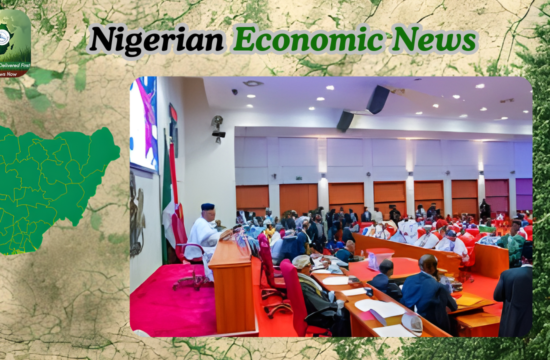


Fresh revelations emerged at the Federal Capital Territory High Court in Maitama, Abuja, as proceedings continued in the criminal trial involving former Central Bank of Nigeria governor, Godwin Emefiele. A prosecution witness narrated how substantial financial movements amounting to more than ₦1.6 billion were allegedly carried out following directives attributed to the former apex bank chief.
The case, instituted by the Economic and Financial Crimes Commission (EFCC), centres on accusations ranging from conspiracy and breach of trust to alleged forgery and possession of properties believed to be connected to unlawful funds estimated at ₦7.83 billion. The matter is being presided over by Justice Yusuf Halilu.
Background of the Witness and Banking Links
Taking the stand as the third prosecution witness, Richard Agulu explained his professional history to the court. Although currently employed by the Nigerian Communications Commission, he previously spent over a decade working at Zenith Bank’s Maitama branch in Abuja.
During questioning led by EFCC counsel Rotimi Oyedepo, the witness described how his role at the bank placed him in contact with individuals connected to Emefiele, including Eric Ocheme, said to have served as a personal aide to the former CBN governor after both men had earlier worked at Zenith Bank.
How the Funds Were Allegedly Moved
Agulu told the court that instructions concerning cash handling and transfers were usually relayed through Ocheme rather than directly from Emefiele. According to him, funds were temporarily stored within banking facilities or routed through third-party accounts instead of being paid into the defendant’s personal accounts.
An account linked to a company identified as Ifeabigo Integrated Services featured prominently in the testimony. The witness said he used the account — owned by an associate — to execute several deposits and transfers between 2020 and 2022 on behalf of the former governor.
Rather than occurring in a single transaction, the movements reportedly happened through a sequence of deposits and electronic transfers conducted over several months.
The ₦1.6 Billion Transfer Explained
Providing specific details before the court, the witness described one notable transaction carried out in August 2021. Acting on communicated instructions, he said funds were moved in multiple tranches to MG Properties Limited:
- ₦600 million transferred from one account
- ₦300 million moved shortly afterward from the same source
- ₦700 million routed from another company account
Combined, the transfers allegedly reached ₦1.6 billion. The witness maintained that he acted based on directives conveyed through an intermediary and stated that he was unaware of the intended purpose of the funds.
Interestingly, testimony indicated that additional withdrawals and cash handovers continued into early 2022, suggesting what prosecutors described as a pattern of structured financial activity.
Earlier Testimony Introduced Banking Records
Before Agulu’s appearance, another prosecution witness, Olomotam Egoro, a compliance officer from Access Bank, informed the court that financial documents requested by investigators had been supplied. The records concerned transactions linked to an account operated by Ace Frozen Foods Ventures.
Under cross-examination, however, Egoro clarified that the former CBN governor’s name did not appear directly on the account documentation submitted to investigators — a point expected to form part of the defence’s arguments as proceedings advance.
Court Adjournment and Next Phase
Following the day’s testimony, Justice Halilu adjourned the matter until February 16, 2026, when cross-examination and continuation of evidence presentation are scheduled to resume. The adjournment allows both prosecution and defence teams additional time to review documents and testimony already presented.
Commentary & Analysis: What the Testimony Means for the Case
The ongoing trial highlights the complexity often associated with high-profile financial crime cases in Nigeria. Prosecutors appear focused on establishing a chain of instructions and financial control rather than direct ownership of accounts. In such cases, proving intent and authority behind transactions can be as significant as tracing the money itself.
A major issue likely to dominate future hearings is whether intermediary actors and third-party accounts sufficiently connect the alleged transactions to the defendant. The defence may rely heavily on the absence of direct account ownership, while prosecutors may attempt to demonstrate operational control through witnesses and transaction patterns.
Beyond the courtroom, the case carries broader implications for financial governance and institutional accountability in Nigeria. As a former head of the country’s central bank, Emefiele’s trial continues to attract national attention, reflecting public expectations for transparency in the management of public institutions and financial systems.
Legal analysts suggest that the outcome could influence future enforcement approaches by anti-corruption agencies, particularly in cases involving complex financial networks and indirect transaction structures.
© 2025 Gossip News Now , a division of CHIEJOS HARBIAN DIGITAL MEDIA LTD. Contact us via admin@gossipnewsnow.online