
Nigeria’s electoral body, the Independent National Electoral Commission (INEC), has officially recognised a new leadership structure within the Labour Party following a directive from the Federal High Court in Abuja.
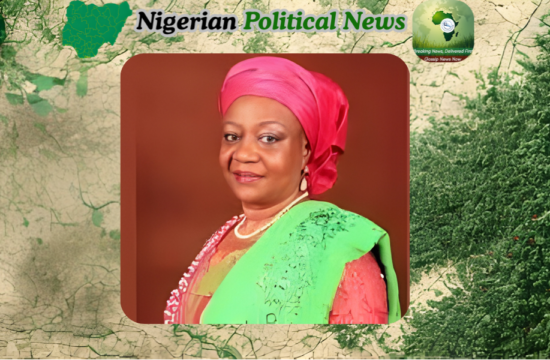
A review of INEC’s public records indicates that the commission has updated its official website to list Nenadi Usman as the chairperson of the party’s caretaker committee. The change reflects compliance with a judicial order issued earlier this year.
The newly acknowledged National Working Committee includes several other party officials occupying key roles within the organisation.
Among those listed alongside Usman are Senator Darlington Nwokocha, who serves as National Secretary, Hamisu Santuraki as National Treasurer, Aisha Madije as National Financial Secretary, and Eric Ifere as the party’s National Legal Adviser.
Court Ruling Behind INEC’s Decision
The electoral commission’s action follows a ruling delivered on January 21 by Justice Peter Lifu of the Federal High Court in Abuja.
In his judgment, the court affirmed Nenadi Usman’s authority to lead the party’s caretaker committee and instructed INEC to recognise the leadership structure she heads.
Justice Lifu based the decision on an earlier pronouncement by the Supreme Court that identified Usman as the appropriate figure to steer the party’s affairs.
According to the court, the leadership transition became necessary after the tenure of Julius Abure as national chairman was deemed to have expired.
Interim Leadership Pending Party Convention
The court ruling also clarified that the caretaker committee is expected to function as an interim leadership body.
Justice Lifu directed that the committee should oversee the party’s operations until a properly conducted national convention elects a new leadership.
This arrangement, the court noted, aligns with the need to stabilise the party’s internal structure following ongoing disputes over its leadership.
Abure Faction Rejects the Decision
Despite the court’s directive and INEC’s recognition of the Usman-led committee, the leadership struggle within the Labour Party remains unresolved.
Supporters of Julius Abure have rejected the ruling and signaled their intention to challenge it through the appellate courts.
The faction’s spokesperson, Obiorah Ifoh, criticised the Federal High Court judgment, arguing that it contradicts previous decisions made by the Supreme Court regarding party leadership disputes.
According to him, courts generally avoid intervening in internal party matters, particularly when it comes to determining who leads a political party.
Key Arguments Raised by the Abure Group
Members of the faction loyal to Abure outlined several reasons for their disagreement with the judgment:
- They argue that internal party leadership decisions should not be determined by the courts.
- The group claims earlier appellate rulings recognised the Abure-led National Working Committee.
- They insist the Federal High Court decision conflicts with established legal principles regarding party autonomy.
- Plans have been announced to challenge the ruling at the Court of Appeal.
These arguments indicate that the legal and political dispute over the party’s leadership is likely to continue.
Background to the Labour Party Leadership Crisis
The leadership conflict within the Labour Party has been ongoing since the aftermath of the 2023 general elections.
During that election cycle, the party gained unprecedented national attention after its presidential candidate, Peter Obi, secured more than six million votes across the country.
Since then, the party has experienced internal disagreements over leadership authority and strategic direction.
Recent political developments have also reshaped the landscape surrounding the party.
Peter Obi has reportedly declared political alignment with the African Democratic Congress (ADC), while the Labour Party has named Abia State Governor Alex Otti as its national leader.
Commentary and Political Analysis
The recognition of the Usman-led caretaker committee by INEC adds a new dimension to the Labour Party’s internal power struggle.
Leadership disputes within political parties often arise after major elections, especially when different factions attempt to control party structures ahead of future contests.
In Nigeria’s political environment, such disputes frequently move from internal negotiations to courtroom battles, as seen in the Labour Party’s case.
With the 2027 general elections gradually approaching, control of party structures will likely become even more critical.
Political observers note that unresolved leadership crises can weaken a party’s ability to organise effectively and present a unified front during national elections.
Whether the legal challenge promised by the Abure faction alters the current situation remains to be seen, but the Labour Party’s internal dynamics will likely continue to shape its political future.
© 2025 Gossip News Now, a division of CHIEJOS HARBIAN DIGITAL MEDIA LTD. Contact us via admin@gossipnewsnow.online