
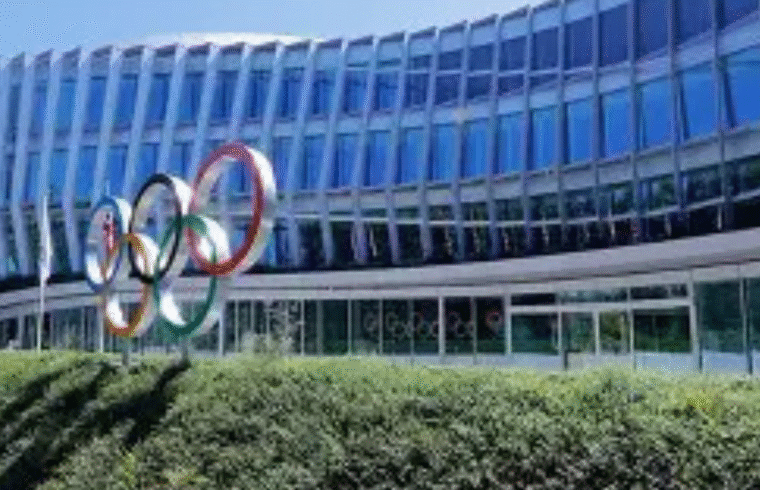
A major policy shift appears to be taking shape in global sport, with the International Olympic Committee reportedly preparing a new standard that would stop transgender women from competing in female categories across Olympic-linked competitions. If adopted, the measure would mark one of the most significant changes yet in the debate over sex, gender, and fairness in elite athletics.
Rather than continue leaving the issue mainly in the hands of separate sporting federations, the IOC is now said to be leaning toward a single international framework. That approach reflects a broader effort to create consistency in rules that have long varied from one sport to another.
According to Gossip News Now, the planned regulation is expected to come into force in 2026, although reports indicate it would not affect the 2026 Winter Olympics. The broader target appears to be putting the policy in place ahead of the Los Angeles 2028 Games.
The push has been closely associated with IOC President Kirsty Coventry, who has reportedly made protection of women’s competition a central part of her leadership direction. As part of that effort, a dedicated working group has been set up to examine how best to preserve what the committee views as the integrity of female sporting events.
Even though the IOC has publicly maintained that no final conclusion has been reached, reports suggest that internal discussions have already advanced considerably. Sources cited in recent coverage indicate that a sweeping restriction is now seen as the most likely outcome following medical and scientific review.
Part of the reasoning behind the reported move comes from preliminary findings presented by the IOC’s medical leadership. Those early assessments suggest that athletes assigned male at birth may continue to retain physical advantages even after lowering testosterone, a point that has become central to the fairness argument.
Coventry has repeatedly stressed that the Olympic body should not remain passive on the matter. Her position, as reflected in earlier remarks, is that the IOC is in the strongest position to lead the global conversation and help strike what it considers the right balance between inclusion and competitive equity.
In the past, many sports allowed transgender women to compete once certain hormone-related requirements were met. The new direction signals a departure from that model and suggests the IOC now wants a more uniform rule backed by wider institutional agreement. Reports also say committee members have shown strong support for preserving female-only categories.
Still, the proposed path has not gone unchallenged. Critics of a universal restriction argue that sport is too complex for a one-size-fits-all solution. That view has been echoed by the president of the International Paralympic Committee, who reportedly cautioned against blanket measures and instead favored judging such cases individually.
Commentary and Analysis
This reported shift shows that international sport is moving away from fragmented eligibility rules and toward a more centralized approach. That alone would be a major development, because it could reshape how national federations and global competitions handle one of the most contested issues in modern athletics.
The debate itself is unlikely to fade soon. Supporters of stricter rules frame the issue around competitive fairness and the protection of women’s categories, while opponents warn that broad bans may ignore important differences between sports and individual cases.
What makes the IOC’s position especially important is its global influence. Once the Olympic body adopts a clearer standard, other sporting institutions may feel pressure to follow the same direction, whether fully or in part.
In practical terms, this means the conversation is no longer just about participation rules. It is also about who gets to define fairness in sport, how science is interpreted by governing bodies, and whether uniform policy can satisfy concerns on all sides of the argument.
© 2025 Gossip News Now, a division of CHIEJOS HARBIAN DIGITAL MEDIA LTD. Contact us via admin@gossipnewsnow.online