
Administrative activities within the Kano State Government have reportedly entered a period of uncertainty following an internal directive that temporarily halted the movement of official documents to the governor’s office, raising questions about governance continuity and policy execution.
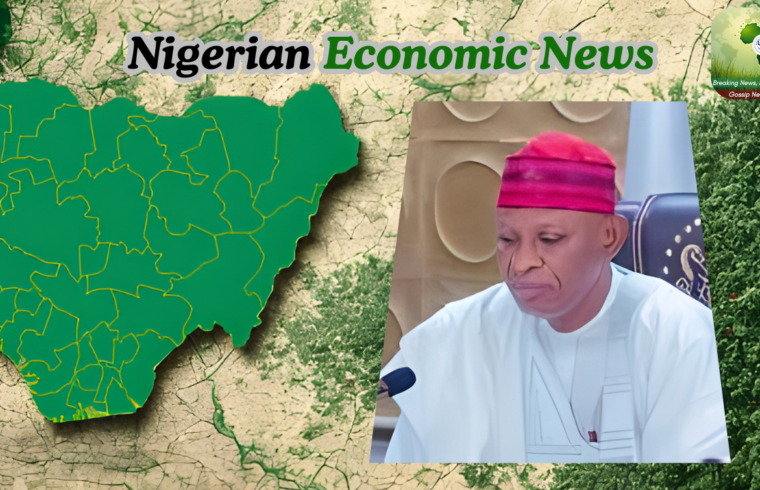
Sources within the civil service revealed that ministries, departments, and agencies were instructed to suspend submission of files requiring executive approval. The decision, communicated shortly after a State Executive Council session chaired by Governor Abba Kabir Yusuf, has significantly slowed routine governmental processes.
Although no formal public explanation accompanied the order, insiders linked the development to ongoing political consultations involving the governor across Kano and Abuja. These meetings have coincided with persistent rumours suggesting a possible political realignment, fueling speculation about broader strategic considerations behind the administrative pause.
Reports indicate that files already awaiting action—some dating back several months—were returned to originating MDAs, while the Government House registry reportedly stopped accepting new submissions altogether. Civil servants described the situation as an unusual break from standard administrative practice.
One senior government official, speaking anonymously, noted that governance largely depends on continuous documentation flow. According to the official, halting file submissions effectively places executive decision-making on hold, an occurrence rarely experienced under previous administrations.
Concerns have also emerged regarding the potential impact on urgent public matters. Observers warned that delayed files could involve critical sectors such as emergency procurement, public health interventions, or rapid response measures required during unforeseen crises.
Legal analyst Sagir Gezawa criticized the directive, arguing that administrative files represent the backbone of governance because they carry decisions affecting citizens’ welfare and property rights. He stressed that governance efficiency is often measured by how swiftly such documentation moves through approval channels.
Gezawa further explained that prolonged delays may extend beyond government offices, affecting commercial transactions and investor confidence. Processes tied to land allocation, certificates of occupancy, mortgage approvals, and development permits rely heavily on timely executive authorization, meaning bureaucratic stagnation could ripple into the private sector.
From a governance standpoint, experts emphasize that development planning, policy implementation, and committee recommendations all depend on uninterrupted administrative workflow. Interrupting that system, they argue, risks slowing economic activity and undermining institutional stability.
Efforts to obtain official clarification from the Secretary to the State Government, Farouk Ibrahim, were unsuccessful at the time of reporting, leaving civil servants and political observers to rely largely on internal accounts and unofficial explanations.
Commentary and Analysis
The situation in Kano highlights how administrative decisions can quickly evolve into political signals. While file suspension may appear procedural on the surface, it often reflects deeper political calculations, particularly when it coincides with high-level consultations and shifting political alliances.
Governance systems depend not only on elected leadership but also on bureaucratic momentum. When documentation flow stops, policy execution stalls, affecting everything from healthcare procurement to economic investment approvals. Even temporary pauses can generate uncertainty among public servants, businesses, and development partners.
If the directive is linked to political repositioning, it underscores the delicate balance between governance responsibilities and political strategy. Citizens typically judge leadership not only by political maneuvering but by continuity in service delivery.
Ultimately, the coming weeks will determine whether the slowdown represents a short administrative reset or a sign of broader political transformation within Kano State’s leadership structure.
© 2025 Gossip News Now, a division of CHIEJOS HARBIAN DIGITAL MEDIA LTD. Contact us via admin@gossipnewsnow.online